

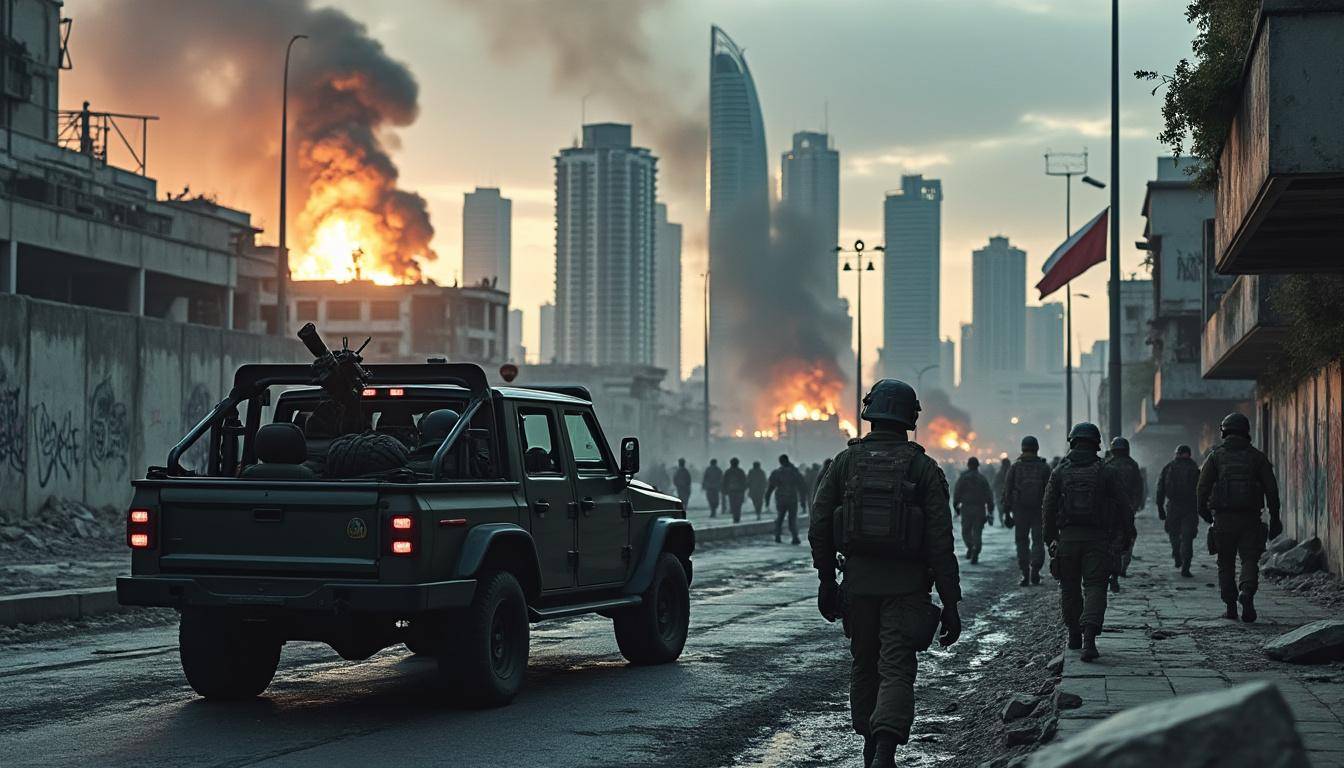
The following dispatch synthesizes verified developments and field reports on the Iran Conflict Update as the US and Israel enter Day 11 of combined military actions. Front-line strikes continue to shape political calculus across capitals, while Tehran endures heavy bombardment and mass demonstrations rally around the new Supreme Leader. Civilian tolls, disrupted oil flows, and rapidly shifting regional alliances are producing cascading effects across markets and security frameworks. This update maps the operational footprint, highlights the humanitarian and economic fallout, and examines how military and diplomatic signals from Washington, Jerusalem, and allied Gulf states are redefining the conflict’s trajectory. For readers tracking risk to portfolios, supply chains, or humanitarian corridors, the narrative below combines tactical detail with situational examples from the field and a practical lens oriented to decision-makers in New York and beyond.
Iran Conflict Update: Strategic Overview on Day 11 of US-Israel Military Actions
On Day 11 the operational tempo remains high. Command assessments from Washington and Tel Aviv describe sustained air and precision strikes that have targeted Iranian military infrastructure, ballistic missile launch facilities, and industrial sites. The United States and Israel have characterized the campaign as aimed at degrading Iran’s offensive capabilities while limiting broader regional escalation. Iranian officials reject those narratives and warn of protracted resistance.
From a military standpoint, joint operations emphasize synchronized air campaigns and long-range stand-off missiles. Commanders report the destruction of hundreds of launchers and degradation of drone production hubs, though Tehran maintains resilient dispersal practices and adaptive manufacturing that complicate total neutralization. An example from the field: an American task force commander briefed lawmakers on the interdiction of a missile convoy near Isfahan, while Iranian media acknowledged strikes near Arak that damaged residential infrastructure.
Operational Goals and Constraints
The declared strategic goals include: neutralizing Iranian strike assets, disrupting supply chains for advanced munitions, and deterring proxy escalation. Constraints remain political and logistical. The US has been explicit about targeting military nodes while alleging that adversaries sometimes embed capabilities in civilian complexes — a claim Tehran denies. A senior defense analyst I spoke with in New York, Ethan Cole, framed the dilemma: “Precision means you must accept residual risk to civilian life when adversaries deliberately colocate systems. That complicates both the operational ethics and the geopolitical messaging.”
Rules of engagement have shifted in pockets to allow deeper strikes on hardened sites, but coalition leaders remain wary of actions that could trigger a wider regional conflagration. Intelligence-sharing between the US and Israel is tighter than at any point in recent memory, with cooperative ISR (intelligence, surveillance, reconnaissance) networks tracking missile deployments and naval movements in the Persian Gulf. This cooperation has yielded tactical gains, but also fuels Iranian rhetoric of foreign aggression.
Political Signaling and Leadership Dynamics
The succession of Mojtaba Khamenei as Supreme Leader and the mass rallies in Tehran are central to Tehran’s narrative of domestic resilience. The US president’s public statements — signaling that the war could end “pretty quickly” while simultaneously articulating a desire for “ultimate victory” — introduce both strategic ambiguity and pressure. Iran’s foreign ministry countered with claims that the US intends to partition the country and seize oil, signaling the intensity of Tehran’s domestic messaging. These competing narratives shape escalation ladders and the diplomatic space for ceasefire negotiations.
Key insight: The operational campaign aims to reduce Iran’s conventional and asymmetric strike options, but the political dimension — leadership transitions, mass rallies, and messaging on both sides — will strongly influence how long kinetic actions persist and what bargaining space opens for diplomacy.
Humanitarian Impact and Civilian Consequences in the Middle East
The human cost of the conflict is growing. Reports indicate significant casualties across Iran and neighboring states due to both direct strikes and intercept debris. In Iran, multiple residential attacks were reported: a strike in Arak damaged apartment blocks, and an earlier attack in eastern Tehran reportedly killed dozens. Iranian authorities now attribute more than 1,255 deaths and roughly 10,000 injuries to the campaign—numbers that continue to be verified by independent sources.
For context, hospitals in Tehran and provincial cities have shifted to mass-casualty modes. Medical staff face shortages of critical supplies and oxygen in some damage-affected areas. Humanitarian corridors are intermittently disrupted by airspace restrictions and security concerns, complicating the delivery of food, medicine, and shelter to displaced populations. A practical example: a joint NGO convoy attempting to reach suburb neighborhoods outside Shiraz was delayed after air defense systems temporarily closed local airspace, forcing aid agencies to reroute through more dangerous land corridors.
Regional Civilian Effects and Displacement
Gulf states have also suffered collateral damage. Bahrain reported civilian deaths from strikes on residential buildings in Manama, while Saudi and Emirati air defenses intercepted missiles and drones that threatened urban and energy infrastructure. The fallout includes temporary suspension of commercial flights, disrupted ports, and internal displacement. Lebanon’s escalating cross-border exchanges have produced a humanitarian crisis with nearly 700,000 displaced people and hundreds of civilian casualties. Anecdotally, a Lebanese family I spoke with recounted fleeing their village after repeated shelling, only to find relief centers overwhelmed with basic needs.
International humanitarian law questions are increasingly salient. Accusations of indiscriminate strikes and use of dual-use facilities complicate both legal assessments and on-the-ground relief. Independent verification remains difficult where access is restricted, but the pattern of strikes on populated areas has prompted strong parliamentary responses in multiple countries and calls for immediate ceasefire talks by diplomatic intermediaries such as China, Russia, and France.
Key insight: Civilian suffering is accelerating pressure on mediators to secure pauses for aid delivery. Until protection of non-combatants is demonstrably improved, the humanitarian crisis will drive secondary effects—migration, regional instability, and extended economic shockwaves across the Middle East.
Regional Military Movements and Gulf State Responses
Gulf states have been forced into active defense postures. Saudi Arabia, the UAE, Kuwait, and Bahrain reported intercepting missiles and drones attributed to Iranian launches or proxy forces. In Saudi Arabia, a drone debris strike near Az Zulfi caused material damage but no fatalities, while air defenses shot down threats over Kuwaiti territory. These events underline a pattern of cross-border kinetic activity that risks unintended escalation.
Naval deployments and port security have become priorities. The Strait of Hormuz and Gulf shipping lanes have seen intensified naval patrols and convoying operations to protect commercial traffic. France and allied navies have discussed missions to keep the Hormuz corridor open, while Russia has signaled readiness to engage with European purchasers to stabilize energy flows. These developments complicate force posture calculations for NATO and regional security organizations.
Proxy Dynamics and Non-State Actors
Hezbollah in Lebanon and various Iranian-aligned militias in Iraq and Syria have been active in firing rockets and coordinating strikes. The Israeli military’s warnings and evacuation orders in southern Lebanon, along with heavy Israeli operations in northern frontier zones, have produced high civilian tolls and displacement. In Iraq, Baghdad maintains that its territory will not be used for offensive operations, reflecting the fragility of sovereignty under cross-border pressures.
Intelligence reports show Iran employing a mix of ballistic missiles, cruise missiles, and unmanned aerial systems, some launched directly and some supplied to proxies for plausible deniability. A case study: the interception of an IRGC-launched ballistic missile over Turkish airspace that Turkish and NATO systems engaged illustrates how cross-national defense networks are being tested and how single missiles can draw multiple governments into a response.
Key insight: The diffusion of military activity across state and non-state actors raises the probability of miscalculation. Gulf states’ enhanced defenses reduce immediate risk to strategic assets but do not eliminate the prospect of broader regional conflagration.
Economic Implications: Energy Markets, Trade and Financial Risk
The conflict’s pressure on energy markets is among the most tangible economic impacts. Bombardment of Iranian oil facilities and the threat to shipping lanes has produced volatile crude pricing swings. At its peak, Brent neared previous highs with intraday jumps reflecting supply fears. After political signals and threatened escalations, crude settled around $90–$120 per barrel in volatile trading windows. These fluctuations have direct pass-through effects on inflation, refining margins, and global trade costs.
For investors and financial institutions, the Day 11 outlook introduces layered risks: physical asset exposure in the Gulf, counterparty risk for energy trading houses, and market sentiment shocks. A New York-based portfolio manager, Anna Rivera, reassessed exposure to Gulf-linked equities and increased cash buffers in short-term instruments, illustrating a typical tactical shift for institutional funds during acute geopolitical shocks.
Policy Responses and Market Stabilizers
G7 finance ministers signaled willingness to release strategic reserves to stabilize energy markets, while central banks monitor inflationary spillovers. Russia’s statement about engaging with European customers aimed to calm short-term supply fears, and France’s mention of a mission to secure the Strait of Hormuz revealed the interplay between military action and economic policy. In parallel, some Gulf producers temporarily halted production at vulnerable facilities, creating near-term supply squeezes.
Table: Selected Economic Indicators and Conflict Effects
| Indicator | Pre-Conflict Level | Current Trend |
|---|---|---|
| Brent Crude Price | $85–$95 per barrel | Volatile; intraday spikes up to $120 |
| Regional Oil Output | Stable | Selective halts in Gulf facilities |
| Insurance Premiums for Shipping | Elevated | Surging for Gulf transits |
For professionals seeking deeper financial training on crisis risk management and portfolio stress testing, reputable resources help sharpen strategy. Consider exploring a comprehensive guide to top graduate finance programs or a detailed graduate finance ranking to upskill teams and analysts in geopolitical risk modeling: top graduate finance programs and graduate finance ranking.
Key insight: Energy market volatility will persist until credible, sustained assurances of maritime security and production continuity emerge. Financial actors should prioritize liquidity, scenario planning, and active hedging to navigate near-term shocks.
Military Tactics, Intelligence Assessment and Outlook for Day 11 and Beyond
On Day 11, commanders continue to apply layered tactics: stand-off precision strikes, electronic warfare to degrade command-and-control, and interdiction of supply chains. Intelligence suggests Iran has dispersed critical production underground and into smaller workshops, complicating targeting and prolonging the campaign’s duration. Sleeper cell concerns raised by US leaders heighten domestic security measures and complicate intelligence priorities.
A useful lens is to follow a fictional composite character, “Major Rachel Hargrove,” an operations planner who represents the coordination challenges facing allied forces. Major Hargrove must balance target value, collateral risk, and political permissibility. Her planning cycles reveal how actionable intelligence, legal assessments, and diplomatic clearances converge on each strike decision. This case underlines how operational success is as dependent on interagency procedures as on munitions and aircraft.
Intelligence, Cyber, and Information Operations
Cyber operations and information campaigns are a significant front. Both sides are conducting narratives aimed at winning domestic and international audiences. Disinformation risks complicate verification efforts for journalists and analysts. Real-world examples include conflicting casualty counts and disputed footage of incidents, requiring triangulation across multiple sources. Cybersecurity teams in banks and energy companies report heightened phishing campaigns timed to exploit news-driven volatility, further illustrating the conflict’s cross-sectoral reach.
Looking forward, plausible scenarios include partial de-escalation through mediated ceasefires, substitution of kinetic pressure with sanctions and diplomatic isolation, or sustained cyclical exchanges that periodically surge market and humanitarian impacts. Each trajectory requires different preparations: diplomatic channels need reinforcement; humanitarian agencies require protected corridors; and markets demand hedging and liquidity management.
Key insight: The next phase hinges on whether diplomatic actors can convert battlefield pauses into durable cessation talks. Until that happens, military, humanitarian, and economic shocks will intersect and complicate recovery.