

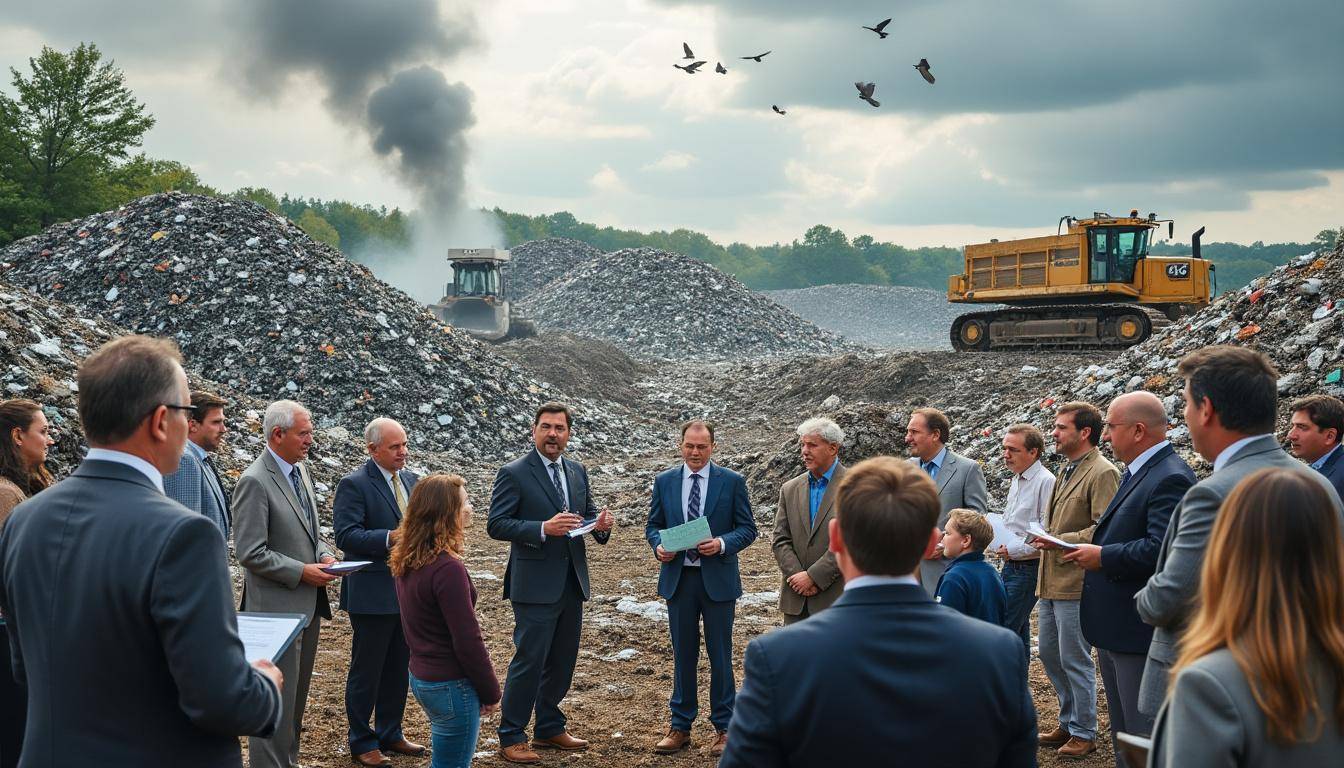
In the midst of a national conversation about greenhouse gases and community health, a fresh wave of landfill regulation proposals has emerged that will shape how states and the federal government manage solid waste for years to come. From new federal hints of updated Clean Air Act standards targeting methane to state-level battles over siting, expansion, and the degree of local control, the debate is as much political as it is technical. Stakeholders — including municipal planners, private operators, environmental groups, and residents who live near disposal sites — are weighing public health concerns, economic impacts, and long-term sustainability.
This article navigates the latest policy moves and legislative drafts, illustrating how changes in waste management policy ripple through markets and communities. It follows a fictional company, Hudson Waste Solutions, and a resident advocate, Maria Lopez, as they confront shifting rules, public hearings, and the uncertainties that now define landfill governance. Expect detailed analysis on federal signals, New Hampshire’s contentious site evaluation proposals, California’s strict methane updates, the financial side of capacity changes, and practical policy pathways aimed at balancing environmental protection with operational realities.
Federal Signals and the Clean Air Act: What National Regulation Means for Landfill Emissions
The federal regulatory landscape is signaling renewed attention to municipal solid waste facilities. A late-summer fact sheet from the Biden administration indicated that the U.S. Environmental Protection Agency is preparing to revise Clean Air Act emission standards for both new and existing municipal solid waste landfills, with the rulemaking process expected to move forward after 2025. Translation: operators and investors must prepare for heightened scrutiny of methane and other harmful emissions that contribute to climate forcing and localized air quality problems.
From an operational perspective, methane mitigation changes the economics of landfill gas recovery systems. Larger operators like our hypothetical Hudson Waste Solutions will have to weigh capital investments in additional wells, upgraded collection headers, and more robust flaring or energy recovery systems. The economics are straightforward: equipment costs and maintenance increase, but so do potential carbon credit revenues and avoided compliance penalties. Municipalities that host sites must re-evaluate host-fee structures to ensure adequate funding for monitoring and remediation.
Technical Priorities Under Federal Review
EPA-level rulemaking typically emphasizes measurement, control, and transparency. Expect three core themes: improved detection of fugitive methane through lower leak thresholds and faster response times; standardized reporting and digitization of emissions data to enable regulatory oversight; and revised performance standards that reflect improved technology. This combination raises the bar for continuous monitoring: infrared cameras, sensor networks, and routine third-party audits will likely be recommended or required.
Consider how a tighter federal standard interacts with state initiatives. If EPA moves aggressively, it will set a national floor; states can still add stricter requirements. For Hudson Waste Solutions, the interplay means developing compliance strategies that are resilient across multiple jurisdictions — an investment in operational flexibility.
Community and Investor Implications
Residents like Maria Lopez who live near a landfill will notice two immediate outcomes: more frequent inspections and potentially faster responses to leaks or fires. That can alleviate health anxieties if implemented well. From the investment side, stricter standards increase short-term capital needs but also reduce long-term environmental liability risk. Financial institutions evaluating bonds or loans tied to landfill projects will push for enhanced disclosure and mitigation plans before they commit funds.
A final point: federal clarity reduces uncertainty for project planning and financing. The key insight is that a robust federal standard can harmonize expectations across states, delivering predictable compliance timelines and reducing litigation risk — but it will require operators to modernize monitoring and recovery systems promptly.
New Hampshire’s Site Evaluation Committee Proposals: State-Level Debate on Siting and Local Control
New Hampshire presents a live case study of how state legislatures wrestle with landfill regulation proposals. Multiple bills on the legislative calendar propose creating a seven-member site evaluation committee to assess applications for new landfills or expansions. Proponents argue the state needs a multidisciplinary body to weigh economic and environmental tradeoffs; opponents warn it could undercut local authority and accelerate capacity expansion favored by private waste firms.
The proposed committee memberships are illustrative of the policy fault lines. Most drafts would include the commissioners of Business and Economic Affairs and Environmental Services, a conservation commission representative, a private waste industry expert, and a municipal planner. The final two seats vary across drafts: some prioritize public health or environmental science expertise, while others add business representatives or waste facility designers. Appointments by the Governor and Executive Council are common across the bills, concentrating selection power at the state level.
Comparative Table of Major New Hampshire Bills
| Bill | Prime Sponsor | Main Objective | Capacity vs Local Control | Legislative Status |
|---|---|---|---|---|
| HB 1189 | Rep. Peter Bixby | Create site evaluation committee; chair by Waste Management Council | Neutral; aims for balanced review | In committee |
| SB 536 | Sen. David Rochefort | Seven-member committee with broad expertise appointment | Neutral; broad criteria | Workshopped |
| HB 707 (Amended) | Rep. Kelley Potenza (amendment by Sen. Pearl) | Favors expansion preference; state preemption over some local rules | Pro-Expansion, Limits Local Control | Held by Finance Committee |
| SB 593 | Sen. Kevin Avard | Prioritize capacity expansion at existing sites | Pro-Expansion | Pending committee action |
| HB 1622 | Rep. Linda Haskins | Preference for expansion and siting on contaminated sites | Pro-Expansion; environmental prioritization for brownfields | Before Finance Committee |
This table shows how subtleties in language shift outcomes. For example, HB 707’s amendment would override certain local ordinances when the state deems an expansion in its best interest — a red line for towns that have used local zoning or agreements to block growth at nearby sites. Municipalities that have fought expansions, such as residents near the Bethlehem landfill, view such preemption as an existential threat to self-determination.
Hudson Waste Solutions is portrayed here negotiating a proposed expansion. The company must present engineering plans, public benefit analyses, and community mitigation commitments under several of the bills. Under HB 215, applicants might need to demonstrate a substantial public benefit, which requires quantitative estimates of jobs, infrastructure investment, and net economic gains versus impacts on property values and tourism. Hudson’s permit timeline stretches longer in the face of multiple committee reviews and potential appeals.
For residents like Maria, the committee composition matters. Appointments that include conservation and health experts increase the chances that non-economic harms receive real weight. That deliberative process, however, introduces uncertainty for operators and investors who need predictable approval timelines.
Key insight: the tension in New Hampshire highlights a central policy trade-off — achieving statewide waste management capacity while preserving local autonomy. How those lawmakers resolve appointment authority and decision criteria will set a template for other states facing similar pressures.
California’s Methane Tightening: Practical Rules That Reshape Waste Management Sustainability
On the other coast, California’s Air Resources Board (CARB) has proposed stringent amendments to its Landfill Methane Regulation, designed to drive methane emissions 40% below 2013 levels by 2030. The proposed changes focus on leak detection, faster response times to subsurface fires, and stricter controls on landfill gas collection systems. Regulators emphasize standardizing, digitizing, and streamlining reporting to strengthen enforcement and transparency.
The policy intent is unmistakable: California seeks aggressive reductions in a potent climate pollutant. Practically, this requires operators to upgrade monitoring technology, adopt continuous methane sensing in critical areas, and incorporate independent hydrogeological assessments where landfill proximity to water bodies is a concern. CARB staff estimate aggregate additional costs for public landfills at roughly $6 million annually — a meaningful sum, but framed as necessary to avoid larger public health and climate damages.
Operational Challenges and Examples
One real-world problem prompting the update is the incidence of underground landfill fires and chronic methane leaks at some sites. These events not only emit greenhouse gases but create localized hazards requiring swift mitigation. Under the proposed rules, detection timelines shorten, and mandated responses are more prescriptive. For instance, a leak that might previously trigger a 30-day repair window could require corrective action in under a week.
Take the case of a mid-sized California landfill that experienced a subsurface smoldering event. Under older rules, monitoring logs and intermittent inspections delayed full recognition of the fire’s extent. With new protocols, remote methane sensors and automated alerts would have accelerated detection and confined the incident earlier, reducing emissions and smoke impacts on neighboring communities.
List: Core Regulatory Changes in CARB Proposal
- Shorter detection and response times for gas leaks and subsurface heating anomalies.
- Standardized reporting and digitization of monitoring data to allow real-time regulatory oversight.
- Expanded monitoring in previously under-monitored zones, including lateral subsurface sensors.
- Mandatory third-party verification of hydrogeological assessments and gas collection system performance.
- Enforceable documentation for methane control system designs and contingency plans.
These changes raise compliance costs but also create market opportunities for technology providers and experienced operators. Companies that invest early in advanced sensor networks and data platforms can position themselves as lower-risk partners for municipalities seeking reliable waste disposal and energy recovery solutions.
California’s approach acts as a crucible: it demonstrates how rigorous environmental regulation can spur technical innovation while requiring detailed preparedness from operators. The insight is clear — stringent standards reduce long-term environmental risk but demand upfront commitment to monitoring and rapid response systems.
Economic Impact, Market Responses, and Financial Risks of Evolving Landfill Policy
Policy shifts ripple through economics quickly. Limits on out-of-state waste, enhanced monitoring costs, or preferences for expansion at existing sites all alter cash flows, municipal budgets, and investment decisions. New Hampshire proposals to cap out-of-state receipts — with figures around 30% by 2030 for existing sites and 15% for new facilities — directly influence gate revenues and transport logistics.
For Hudson Waste Solutions, several pressures converge: a potential surcharge on solid waste (which some states enacted starting Jan. 1 of a recent policy cycle) already increased operating costs; caps on out-of-state volumes would lower high-margin loads; and investment in methane controls raises capital expenditures. Together, these changes influence pricing strategies, contract renegotiations with municipalities, and capital allocation for expansions or closures.
Financial Instruments and Risk Management
Municipal financing tools — revenue bonds, general obligation notes, and public-private partnership structures — must adapt. Lenders will demand stronger covenants: enhanced reporting, performance gates tied to methane capture metrics, and reserves for remediation. Rating agencies may view stricter regulation as both a credit risk (due to added costs) and a credit improvement (because reduced environmental liability decreases the chances of crippling litigation).
Market participants can pursue several mitigation strategies: diversify revenue streams through waste-to-energy projects; establish long-term disposal contracts to insulate against short-term policy swings; or hedge exposure via carbon credits tied to captured methane. For example, Hudson hedges by investing in a biogas-to-power module that locks in renewable energy sales while lowering net emissions.
Policy Uncertainty and Investment Timing
Uncertainty about final rule language slows decision-making. Capital projects require multi-year timelines; developers cannot wait indefinitely. Yet acting early in favor of enhanced controls can be advantageous if regulations ultimately tighten, because early adopters gain operational know-how and potential compliance cost savings. For investors, the critical question is timing: when to commit capital versus when to wait for regulatory clarity.
From a public finance lens, municipalities need transparent cost-benefit analyses when considering whether to host expansions. HB 215’s “substantial public benefit” test will force a thorough accounting of economic gains relative to environmental and social costs. The final insight: aligning financial incentives with environmental outcomes — through surcharges, grants for methane capture, or performance-based contracts — is the pragmatic route to reduce uncertainty and accelerate sustainable investments.
Policy Options, Practical Steps, and Paths Toward Sustainable Waste Management
Given fragmented proposals across states and new federal direction, pragmatic policy design is essential. Lawmakers can combine stronger technical standards with measures that preserve community voice and ensure fiscal responsibility. The bills under discussion offer several building blocks: independent hydrogeological assessments, explicit consideration of human health in permitting, and limits on out-of-state waste volumes to protect in-state disposal capacity.
A constructive policy package includes: 1) a transparent site evaluation process that balances economic needs with health and environmental protection; 2) mandatory digitized reporting of gas emissions and leak repairs; 3) financial mechanisms — surcharges, grants, or bond structures — that support remediation and technology upgrades; and 4) pathways to prioritize brownfield siting where possible to minimize new greenfield impacts.
Practical Steps for Municipalities and Operators
Municipal leaders should adopt clear community engagement plans to address concerns early. Hudson Waste Solutions’ playbook includes neighborhood advisory boards, independent health studies paid for by the operator, and contractual commitments to invest in methane capture. These steps shorten dispute timelines and build trust.
Operators should prioritize modular investments that can be scaled as regulations firm up. Platforms for continuous monitoring and third-party verification reduce regulatory friction and improve investor confidence. Lastly, municipalities should insist on enforceable community benefits that are measurable and tied to permit milestones.
Final Policy Insight
The evolving suite of landfill regulation proposals reflects a necessary recalibration: closing regulatory gaps that previously allowed methane and local health risks to persist, while confronting hard choices about capacity and local control. Policymakers, operators, and residents must co-design solutions that reduce uncertainty, protect health and the environment, and support durable sustainability outcomes. The most effective approach will blend strong technical standards with transparent governance and finance mechanisms that make sustainable waste management achievable in practice.