

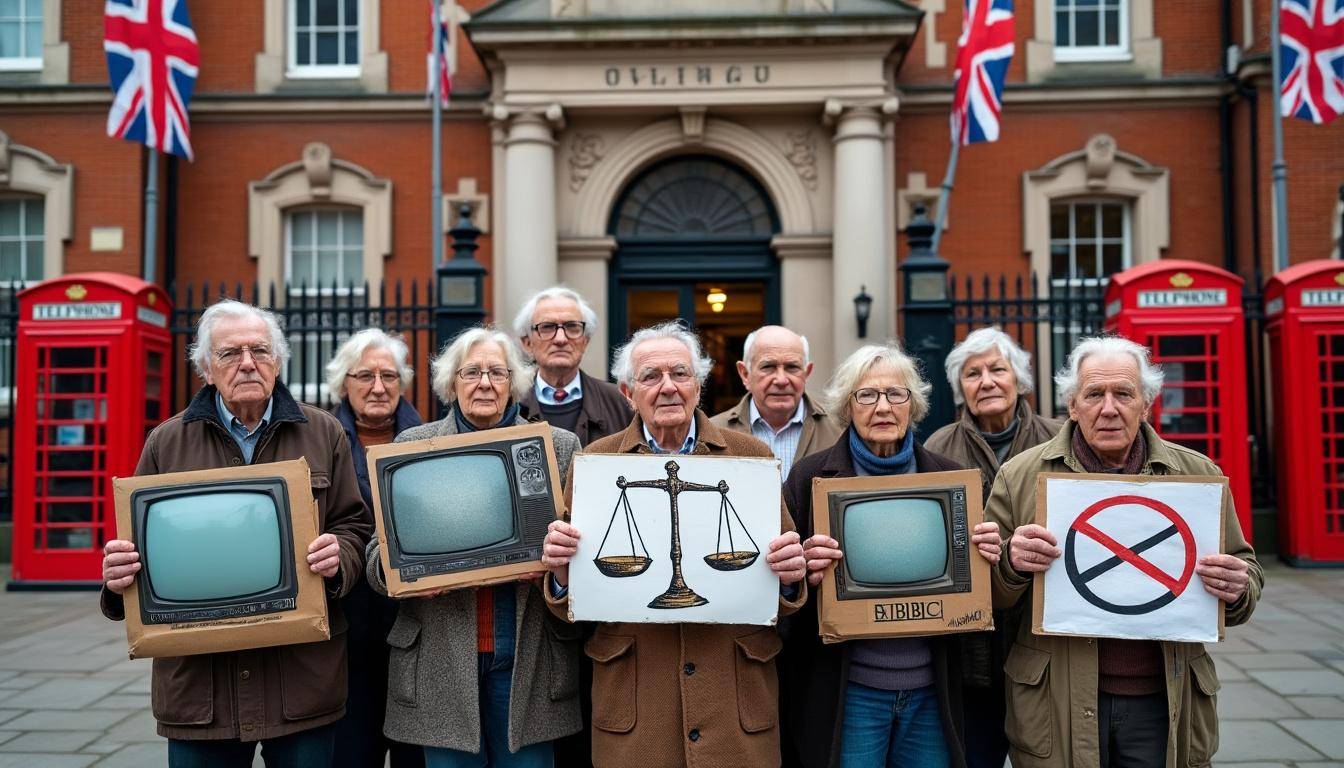
The debate over whether the state should shoulder the cost of television for older citizens has re-emerged with renewed intensity. A recent petition on Parliament.uk, driven by a grassroots campaign, urges the Government to fund the BBC licence for everyone who reaches State Pension age, arguing that the television remains an essential companion for many retirees facing persistent financial strain. Headlines have described the campaign as a call from State Pensioners who see a Double Outrage in paying the yearly TV Licence Fee while high-profile media figures earn vast salaries. With the BBC licence set to rise again this coming April and the corporation conducting a public consultation on future funding models, the issue sits at the crossroads of social policy, public broadcasting sustainability, and pension rights.
This article examines the elements fueling the campaign, outlines the fiscal and political context, and offers practical perspectives for policymakers and affected households. It follows the experience of a fictional retiree, Margaret Ellis, to illustrate real-life impacts, while unpacking the policy choices open to the Government and the BBC. Expect detailed analysis of exemptions and means-testing, alternatives to the status quo, and what reform could mean for both the BBC and the millions of households that still depend on it for news, culture, and companionship.
Why State Pensioners Renew Demand For Free TV Licences: Context And Compassion
The campaign led by Michael Thompson and supported by tens of thousands of signatories frames the request as a matter of dignity and social support. Petitioners argue that many older adults live on constrained incomes and rely on television as a primary source of news and social connection. The petition emphasizes that television is not a luxury for many retirees—it functions as a lifeline in times of isolation, especially for those with limited mobility or few social contacts.
In 2026 the cost-of-living pressures remain prominent. The annual TV Licence Fee stood at £174.50 but is scheduled to rise to £180 in April. This uplift follows a previous increment of £15.50 since 2024, a trajectory that has heightened concerns among pensioner advocacy groups. Petitioners describe the situation as a Double Outrage: older contributors who have paid taxes and raised families now face new charges for access to public broadcasting, while some media figures continue to attract very high earnings.
Margaret Ellis, our illustrative retiree, receives a modest State Pension and supplements it with small private savings. She is not eligible for Pension Credit and therefore does not qualify for the limited free licence concessions. For Margaret, the planned increase to £180 is not just a point of principle but a genuine budgetary squeeze that forces choices between modest pleasures and essentials. Her case exemplifies the human dimension underpinning the policy debate.
The public conversation also references demographic realities. With an aging population and a shift in media consumption patterns, the Government and the BBC face a dual challenge: ensuring fairness to vulnerable households while maintaining a viable funding model for the broadcaster. Campaigners for free licences argue that targeted exemptions and broader government funding could correct an imbalance that disproportionately affects older adults.
In short, the renewed demand combines moral appeal and practical urgency. It underscores the need to reconcile Pension Rights and the affordability of public services with the economic pressures of funding a major national broadcaster. This sets the stage for a deeper exploration of financial impacts and political responses.
Social Isolation And The Role Of Television
For many retirees, television provides structured routines, companionship, and access to civic life. Studies and anecdotal accounts show improved mental engagement when older adults remain connected to current affairs and cultural programming. The petition makes this connection explicit, arguing that cutting off or penalizing access undermines social wellbeing.
Television also acts as a low-cost platform for information about healthcare, benefits, and local services—resources that can be harder to access online for digitally excluded seniors. Recognizing these functions helps explain why the movement for a free licence resonates beyond mere entertainment preferences.
Key insight: The demand to fund licences for pensioners is rooted in tangible social need as much as fiscal fairness.
Financial Analysis: How The TV Licence Fee Impacts Pensioners And Public Broadcasting
Examining the numbers explains why the debate has become so heated. The BBC’s licence revenue stream has been under pressure: reports indicate the corporation saw a decline of roughly 300,000 licences between 2023–24 and 2025, leaving around 23.8 million paying households. That fall corresponds with an estimated revenue shortfall of about £50 million, according to reporting at the time.
From the perspective of a retiree on a fixed income, a fee of £180 annually is not trivial. For someone like Margaret, who budgets tightly, the licence represents a non-discretionary service cost that competes with heating, food, and transport. The exemptions framework—free licences for those aged 75+ who receive Pension Credit, plus reduced provisions for sight impairment and care homes—only partially addresses vulnerability.
There is a fiscal argument for targeted government funding. If the state covered licences for all State Pensioners, the immediate effect would be an increase in public spending but a potential stabilization of BBC revenues and a reduction in avoidance enforcement costs. Conversely, forcing the BBC to commercialize more of its offerings could generate revenue, but at the potential cost of undermining the broadcaster’s remit to provide universal public services.
To clarify trade-offs, consider these dynamics in practical terms. If the state pays for licenses for all pensioners, the Government would need to allocate recurring funds and possibly increase general taxation or reallocate departmental budgets. If the BBC seeks subscription models for entertainment and sports, it risks fragmenting audiences and diminishing universal access to impartial news—a core public broadcasting function.
Policy options must weigh equity against sustainability. The TV Licence Fee is a blunt instrument: it raises revenue but does not discriminate adequately between ability to pay. A more progressive approach could align exemptions with pensioner income thresholds while protecting universal news access.
Key insight: Addressing the licence issue requires balancing short-term relief for pensioners with long-term funding solutions for the BBC.
Revenue Scenarios And Household Impact
Modeling different approaches clarifies consequences. For example, broadening free licences to all State Pensioners would cost the public purse but reduce administrative friction. Means-tested expansion would target limited resources more efficiently but could exclude those like Margaret who fall just above arbitrary thresholds. Each scenario alters BBC income, public spending, and social equity differently.
Key insight: Fiscal modeling is critical to finding a policy that is both fair to pensioners and viable for public broadcasting.
Politics And Policy: Government Response, Party Positions And The Green Paper
The petition prompted an official response from the Department for Culture, Media & Sport (DCMS), which acknowledged household pressures while committing to the licence fee for the current charter period. That stance reflects a preference for stability amid ongoing consultation. Culture Secretary Lisa Nandy has publicly indicated that “no options are off the table” in exploring future funding mechanisms, signaling openness to substantial reform.
Opposition voices have framed the debate differently. Some conservative and reformist commentators argue the licence fee is unsustainable and advocate for a pared-back BBC or subscription competition in certain genres. Nigel Farage and other critics have called for forcing the BBC to compete commercially for entertainment content while preserving news. On the left, calls tend to emphasize protection for vulnerable groups and sustained public investment.
Political pushback also centers on perceptions of fairness: petitioners describe a Double Outrage in which pensioners pay while top-earning media personalities pocket large sums. This moral argument plays well in public discourse and creates political pressure for targeted concessions or broader reform.
Policy tools under discussion include expanding free licences for older cohorts, indexed fee relief, partial government subsidies, or a wholesale replacement of the licence with a general broadcasting charge or subscription model. The BBC’s public consultation and accompanying Green Paper are designed to evaluate these and other options in the context of shifting media consumption patterns and fiscal constraints.
Below is a concise table summarizing recent developments and policy positions to help readers navigate the landscape.
| Issue | Current Position (2026) | Potential Policy Direction |
|---|---|---|
| TV Licence Fee | £180 from April; rising trend since 2024 | Indexation, reduction, or replacement by alternative funding |
| Exemptions | Free at 75+ with Pension Credit; reduced for sight impairment/care homes | Expand age-based or income-based exemptions |
| BBC Revenue | Decline to ~23.8M licences; reported £50M lost revenue | Introduce subscriptions for non-news content; state subsidy |
Key insight: The political debate centers on reconciling fairness to pensioners with durable long-term funding for public broadcasting.
Party Statements And Public Sentiment
Public sentiment is mixed but leans sympathetic toward pensioners—especially those framed as having paid into the system for decades. Parties will likely calibrate proposals to appeal to this sentiment while protecting fiscal credibility.
Key insight: Political appetite for reform exists, but implementation depends on reconciling competing fiscal and social priorities.
Alternatives And Reform Options For Public Broadcasting Funding
To move beyond rhetoric requires pragmatic design. Several alternatives merit serious consideration: a fully state-funded licence for pensioners; a progressive broadcasting charge based on income; subscription models for non-core content; or a hybrid of state subsidy and targeted exemptions. Each has trade-offs regarding universality, administrative complexity, and market impact.
One viable middle ground is a targeted subsidy for older households below a specific income threshold. This preserves the BBC’s universal remit for news and essential programming while protecting taxpayers’ funds by focusing on need. Another option would be transitioning sports and entertainment to subscription tiers, preserving free news and cultural programming.
Technological enforcement measures—such as iPlayer account linking to home addresses—have also been reported as part of the BBC’s toolkit to reduce evasion. Yet enforcement raises privacy and practicality concerns and could be politically unpopular among older voters wary of digital intrusions.
Any reform should consider administrative costs. Means-testing can reduce fiscal outlay but raises bureaucracy and possible stigma. Universal age-based measures are easier administratively but less targeted. The Government’s stated commitment to the licence for the remainder of the current charter period suggests incremental shifts rather than sudden overhaul are politically feasible.
Key insight: A combination of targeted subsidies and selective commercialization could balance equity and sustainability for public broadcasting.
International Comparisons And Lessons
Countries use a variety of funding models: direct state funding, general taxation, or mixed subscription approaches. Each system reflects broader social contracts and media landscapes. Comparative analysis suggests that transparency, targeted protection for vulnerable groups, and preserving impartial news tend to produce more resilient public broadcasting outcomes.
Key insight: International models show that hybrid funding with protections for vulnerable citizens often yields the best balance.
Practical Guidance For Pensioners, Advocates, And Policymakers
For pensioners like Margaret, practical steps can reduce stress while the policy debate continues. First, verify eligibility for existing concessions: those aged 75+ with Pension Credit are entitled to a free licence; reduced fees exist for sight impairment and care homes. Second, engage with local advocacy groups and MPs to make the case for broader relief. Grassroots pressure influenced the Government’s decision to respond; continued civic engagement matters.
Advocates should prepare evidence-based proposals that demonstrate both social impact and fiscal realism. Policymakers benefit from hearing clear cost estimates, distributional effects, and administrative implications of any proposed measure. Civil society can help by collecting anonymized case studies and economic modeling to inform decision-making.
- Check eligibility for existing concessions and apply promptly where applicable.
- Document household impact with simple budgets showing how the fee affects essentials.
- Contact local MPs and sign petitions that propose specific, costed reforms.
- Encourage community centers and libraries to support digital access to news as a complementary measure.
For the BBC and Government, an early priority should be transparent impact assessments. Quantifying how many State Pensioners would benefit from various options and what fiscal trade-offs exist will focus debate on implementable solutions. The experience of Margaret underscores that policy must connect to everyday budgets and dignity, not abstract figures alone.
Key insight: Combining targeted relief, civic advocacy, and transparent policymaking can produce a practical path forward that protects vulnerable pensioners and the future of public broadcasting.