

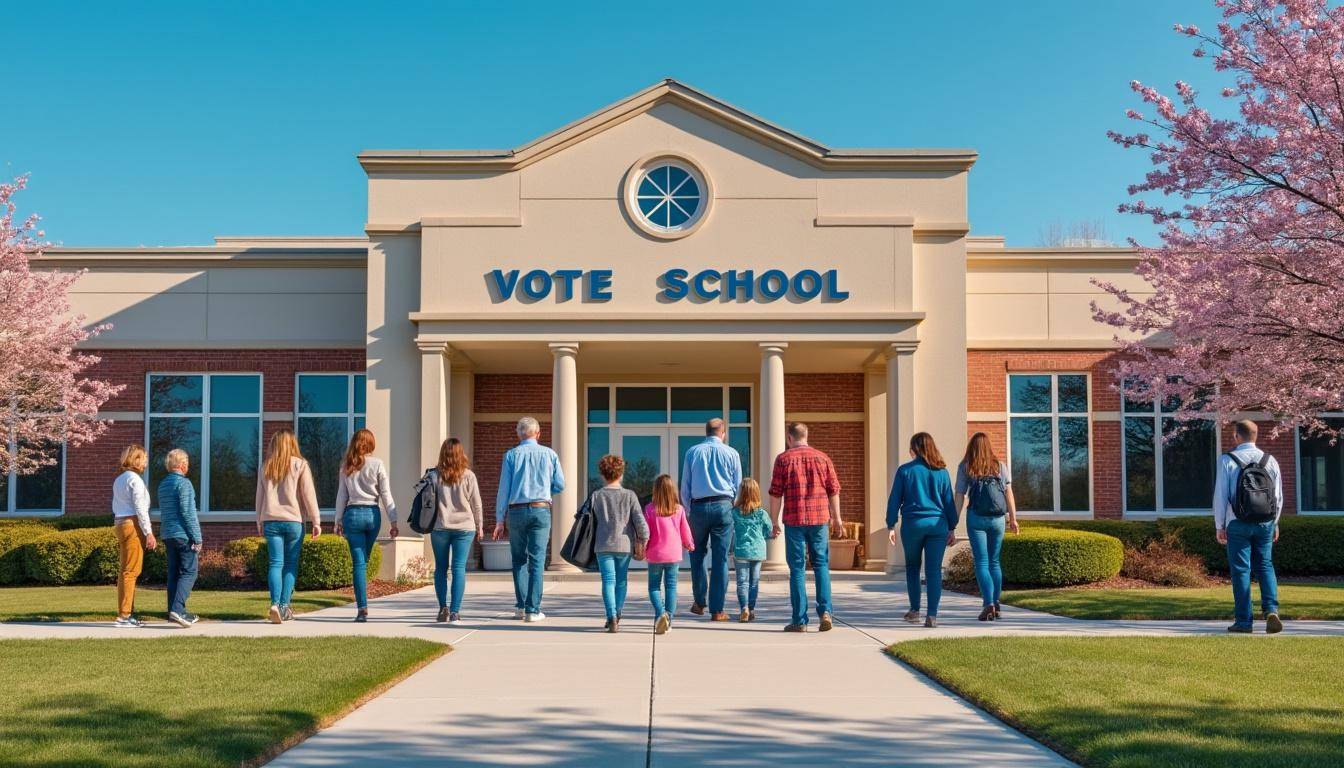
On April 7, voters in Waukesha will decide who fills three seats on the Waukesha School Board. This election occurs amid heated debate about recent school closures, budget pressures linked to declining enrollment, and ethics complaints that have shaped public perception of the board. Community groups and partisan organizations have mobilized, creating two distinct voting blocs that emphasize different priorities: fiscal stewardship and operational continuity on one side, and transparency, program preservation and community engagement on the other. For local families like Sarah Martinez, a small business owner and parent of a second grader, the stakes are practical—how will board decisions affect classroom size, special education services, and property taxes? This article unpacks the candidates, the voting process, the policy stakes, the controversies that have driven turnout, and the measurable outcomes residents should expect to track after the election. It aims to give voters the tools to evaluate the ballot and make informed choices about the future of their School District.
Waukesha School Board Election Overview: Who’s On The Ballot April 7
The April 7 ballot lists multiple candidates vying for three seats on the Waukesha School Board. Incumbents Bette Koenig and Diane Voit are running for reelection. Incumbent David Wadd is not seeking another term, which guarantees at least one new face on the board. Challengers include Chase Allen, Mitch Gallagher, and Melissa Toledo. Another name, Maria Carrillo, remains on the ballot after stepping back from active campaigning due to an ethics complaint. Voters will see all these names on their ballots, and the outcome will shift the board dynamics based on which coalition secures the three seats.
Campaign alignments are clear and inform how endorsements are likely to translate into votes. One bloc is supported by the Waukesha County Republican Party’s WisRed Initiative and the Wisconsin Young Republicans; they back Allen and Koenig. The other bloc coalesces around Gallagher, Toledo, and Voit, earning support from the Waukesha County Democratic Party, the Wisconsin Education Association Council, and the local group Blue Sky Waukesha. Blue Sky frames its recommendations as the result of community input and research rather than formal endorsements, citing candidate transparency, experience and preparedness as evaluation criteria. Voters should consider not only endorsements but also the issues each candidate emphasizes.
Candidate Backgrounds and Contact Summary
Below is a structured summary to help voters compare basic background and contact information quickly. Use this as a starting point for deeper research into platforms and public statements.
| Candidate | Age | Background | Contact |
|---|---|---|---|
| Chase Allen | 35 | Community and church involvement; first-time candidate | ca4schoolboard.squarespace.com; 262-290-5013 |
| Mitch Gallagher | 36 | Data analyst; youth coach; school advocate | [email protected] |
| Bette Koenig | 60 | Retired educator; incumbent board member | bettekoenigforschoolboard.com |
| Melissa Toledo | 35 | PTO member; rec soccer coach; first-time candidate | [email protected] |
| Diane Voit | 72 | Experienced board member; community volunteer | [email protected]; 262-993-0104 |
| Maria Carrillo | — | Director at a local charter organization; stepped back from campaigning | maria4sdw.com (site remains active) |
For pragmatic voters like Sarah Martinez, this table simplifies the initial comparison. It’s a starting point—approve or disapprove of endorsements, but prioritize documented positions on budget, enrollment strategy, and special education. Election day outcomes will hinge on turnout among different community groups, and local organizations’ recommendations could influence undecided voters.
Key insight: Understanding who appears on the ballot and the coalitions backing them helps voters predict governance dynamics after April 7.
Voting Process And Ballot Guidance For Waukesha Voters
Voting in Waukesha follows Wisconsin election rules, and the upcoming April 7 election is a spring election that often sees lower turnout than fall general elections. That means every vote carries extra weight. Voters should confirm registration status via MyVote.WI.Gov well before election day to avoid surprises. For those who prefer alternative methods, absentee voting or early voting options may be available at the county clerk’s office; deadlines and return requirements vary, so confirm timelines now.
Practical Steps To Cast Your Ballot
Follow an organized approach like Sarah Martinez did the last time local issues impacted her family:
- Check registration and polling location at MyVote.WI.Gov at least two weeks before April 7.
- Decide early whether to vote in person or by absentee ballot; request an absentee ballot if needed and track its delivery.
- Bring required ID on Election Day—Wisconsin typically requires acceptable photo ID for in-person voting.
- Allow time at the polling location to ask questions about the ballot format; precinct workers can explain how to mark your choices.
- If uncertain between candidates, use a ranked list of priorities (e.g., fiscal responsibility, special education, transparency) to guide your selection.
Ballot mechanics matter. For the Waukesha School Board, voters will likely be selecting up to three candidates. That means strategic voting—such as choosing only the candidates you most strongly support instead of using all three votes—can be a deliberate tactic if you want to concentrate support. Understand the mechanics before you enter the booth to avoid accidental overvotes.
Community organizations and local media publish voter guides. They often list which candidates each group recommends and explain the reasoning behind endorsements. While recommendations are helpful, blend them with direct candidate statements and answers to policy questions. Candidates have provided short written responses to three district questions; these offer insight into priorities on enrollment, school closures, and measurable success indicators.
Finally, be mindful of timelines. Absentee ballots typically must be requested and returned by specific deadlines. In-person early voting windows, if available locally, provide flexibility and reduce Election Day lines. For families balancing work and school drop-offs, early voting can be a pragmatic choice.
Key insight: Proactive preparation—checking registration, understanding ballot mechanics, and setting a clear voting plan—ensures your voice is counted on April 7.
Education Policy Stakes: Enrollment, Budget And School Closures
The central policy tensions in this election are rooted in enrollment and fiscal management. Over the past two years the district has seen an enrollment decline of approximately 8%, roughly four times the county average. For education finance, this is material: Wisconsin’s funding model follows students. A sustained drop in enrollment means lower state revenue for the district and an increased reliance on local sources or fund reallocation. This is at the heart of the budget debate and was a driving factor behind the controversial school consolidation decision in November.
School closures and redistricting on Nov. 12 affected over 2,000 students and displaced about 200 staff members. Such abrupt operational shifts carry both human and financial costs: rehiring, transportation adjustments, and temporary declines in staff morale can increase short-term expenditures. The district has also invested roughly $91 million in facility improvements, creating pressure to ensure capital spending yields long-term community value. For parents like Sarah Martinez, the practical worries include classroom continuity, special education placement integrity, and whether new school assignments will require longer commutes for children.
Financial Implications And Scenario Analysis
From a financial standpoint, there are several foreseeable scenarios:
- Managed Stabilization: The district implements targeted marketing for dual language and STEM programs to boost enrollment modestly, reducing the need for additional budget cuts.
- Continued Decline: Enrollment continues to fall, pushing the district to further consolidate or cut programs, increasing the probability of referendums or reallocation of the general fund to mandated services.
- Rebound Through Program Differentiation: Aggressive outreach and program expansion position Waukesha as a destination district, reversing outflows and restoring fiscal balance within a multi-year horizon.
Each path has trade-offs. For instance, aggressive marketing requires upfront investment but could pay dividends if it halts or reverses declining enrollment trends. Conversely, further consolidation can save operating costs but risks alienating families and accelerating attrition.
Special education funding is another critical pressure point. The district has cited the need for fair state reimbursement to cover mandated services, noting a target reimbursement rate of 42% that would reduce transfers from the general fund. Absent that reimbursement, the general fund absorbs mandated costs, squeezing discretionary spending for electives and athletics.
Accountability in implementation matters too. Several candidates argue the board must do a better job of sequencing operational tasks—transportation, staffing, and communication—so closures do not produce chaos. For community stakeholders, a clear implementation ledger showing timelines, staffing outcomes, and transportation adjustments can restore confidence.
Key insight: Enrollment trends directly shape fiscal options; voters should prioritize candidates who present a clear, measurable plan to stabilize or grow the student base while protecting essential services.
Campaign Issues, Complaints, And Community Response Ahead Of April 7
The campaign cycle has featured multiple ethics complaints and heated exchanges that have influenced public perception and turnout. In January a complaint questioned whether then-candidate Maria Carrillo had a conflict of interest related to her role with a dual-language charter organization. Though Carrillo stepped back from active campaigning, her name remains on the ballot. The ethics process in Wisconsin keeps complaint records confidential, so third-party observers often lack immediate clarity on outcomes, which can intensify local speculation and polarization.
Another high-profile complaint, filed by a parent in March, alleges campaigning using official board channels and other actions by Diane Voit. Voit has dismissed the complaint as a campaign distraction and has documented it as part of ongoing harassment she reports having endured. Such filings tend to erode trust regardless of final determinations because they draw attention to governance norms and ethical expectations for officeholders.
How The Community Has Organized
Local civic groups have responded in different ways. The Waukesha County Republican Party’s WisRed Initiative issued voter guides backing certain candidates, while Blue Sky Waukesha published recommendations after vetting candidate materials and community feedback. Blue Sky emphasizes their reviews as research-based recommendations rather than endorsements, and their outreach focused on measurable criteria like experience, transparency and responsiveness.
These dynamics have produced palpable tension at public forums. Some parents have staged petitions and filed complaints to slow down decisions about school closures, arguing the board moved too quickly and without adequate community input. Others point to the district’s fiscal pressures and argue difficult, fast decisions were unavoidable. These narrative differences will shape how voters interpret candidates’ positions.
For voters evaluating claims and counterclaims, a practical approach is to ask for documentation: meeting minutes, decision matrices, emails from the administration, and implementation timelines. Candidates who can present factual, traceable records—such as cost-benefit analyses or community feedback summaries—demonstrate readiness to govern in a complex environment.
Key insight: Complaints and endorsements influence perceptions, but voters should weigh documented policy proposals and evidence of candidate transparency when deciding who will steward the district after April 7.
Measuring Success: Metrics, Accountability And What To Look For After April 7
After votes are cast, the real test begins: how will the board track whether its decisions improve outcomes? Candidates have proposed different measurement sets. Mitch Gallagher, a data professional, emphasizes public key performance indicators and program-level subgroup analysis. Chase Allen highlights academic growth and community dialogue. Incumbent Bette Koenig calls for outcome-based metrics tied to college and career readiness. Melissa Toledo focuses on enrollment, retention and extracurricular participation. Diane Voit prioritizes staff retention, IEP outcomes and stewardship of capital investments.
Recommended Dashboard For Voters And Board Oversight
Voters and watchdog groups should look for an accessible dashboard that updates regularly. Key indicators should include:
- Enrollment and retention by grade and program (dual language, STEM, special education).
- Student growth and proficiency metrics (early literacy, math growth, subgroup outcomes).
- Financial health indicators (general fund balance, transfers to mandated services, capital project expenditures).
- Staffing metrics (retention rates, vacancies, time-to-hire for certified positions).
- Family and staff satisfaction from regular surveys.
Holding the board to measurable objectives reduces the risk that good intentions become unmonitored initiatives. For example, if a candidate pledges to “stabilize enrollment,” a clear target—say, a 3% net increase in enrollment within two years—allows the community to evaluate progress objectively.
Practical accountability mechanisms include quarterly public reviews, a transparent implementation ledger for major decisions, and independent audits when significant capital or operating changes are proposed. Community partnerships—schools working with local employers or higher education partners—can be metrics-worthy if they produce measurable pathways to postsecondary success.
Finally, voters should plan post-election monitoring. Subscribe to district reports, attend board meetings, and request accessible summaries of complex items like transportation logistics or special education placements. The more the community engages, the more likely the board will prioritize transparency and measurable progress.
Key insight: Success is measurable; voters should demand clear KPIs, regular reporting and public accountability to ensure the board’s decisions translate into tangible improvements for students and taxpayers.