

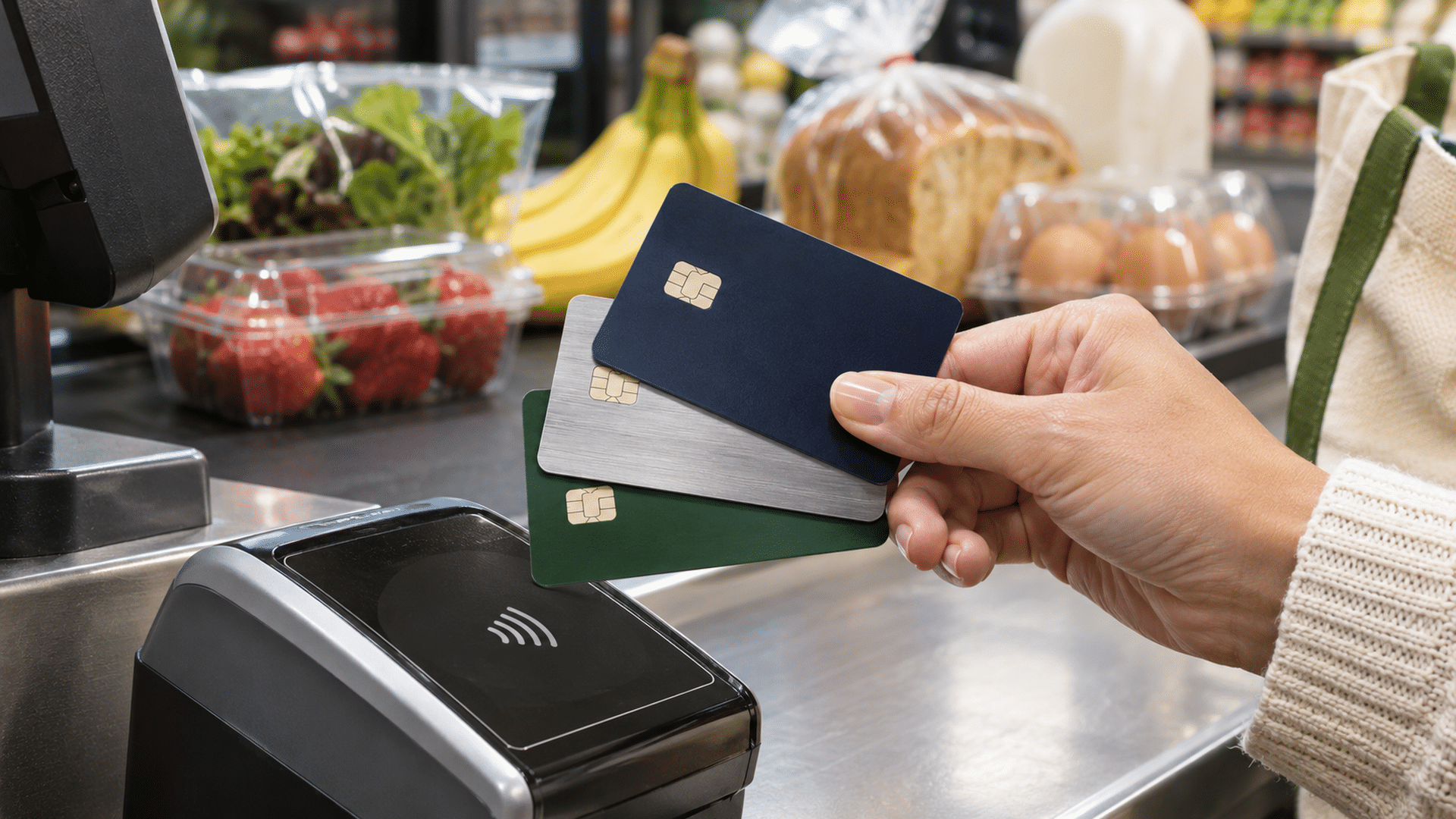
Updated November 11, 2026. The best cash back credit cards in 2026 are not necessarily the ones advertising the biggest percentage. A flat 2% card may beat a 5% card when most of your expenses fall outside bonus categories. Annual fees, spending caps, redemption rules and interest costs also change the result. This comparison covers 10 U.S. consumer cards and explains which spending pattern each one suits.
Start with your spending and borrowing costs, not the welcome bonus.
10 cash back credit cards compared: rewards and annual fees
| Pick | Credit card | Headline ongoing or introductory reward | Annual fee | Best fit |
|---|---|---|---|---|
| 1 | Wells Fargo Active Cash | Unlimited 2% on eligible purchases | $0 | Simple flat-rate rewards |
| 2 | Citi Double Cash | 1% on purchases + 1% as you pay | $0 | Flat-rate rewards with payment condition |
| 3 | Chase Freedom Unlimited | 1.5% base; 3% dining/drugstores; 5% Chase Travel | $0 | Mixed everyday spending |
| 4 | Capital One Savor | 3% dining, groceries, entertainment, select streaming | $0 | Dining and entertainment |
| 5 | Amex Blue Cash Everyday | 3% U.S. supermarkets, gas, online retail; $6,000/year cap per category | $0 | No-fee household categories |
| 6 | Amex Blue Cash Preferred | 6% U.S. supermarkets to $6,000/year; 6% select streaming | $0 first year, then $95 | High supermarket spending |
| 7 | Chase Freedom Flex | 5% rotating categories to $1,500/quarter when activated | $0 | Quarterly-category planners |
| 8 | Discover it Cash Back | 5% rotating categories to $1,500/quarter when activated | $0 | First-year match and rotating categories |
| 9 | BofA Customized Cash Rewards | 6% chosen category in first year; 3% later; combined cap | $0 | Choice-category flexibility |
| 10 | U.S. Bank Cash+ | 5% in two chosen categories to $2,000/quarter combined | $0 | Recurring bills and selected categories |
How to read the table: The highest rate applies only to qualifying transactions and may require activation. A 5% or 6% rate is not a promise that every purchase earns that amount. Offers, APRs and eligibility can change after this review date. These are editorial use-case picks, not a claim that one card is universally best.
The 10 cards: strengths, conditions and drawbacks
1. Wells Fargo Active Cash: best for straightforward 2% rewards
Active Cash earns unlimited 2% cash rewards on eligible purchases with a $0 annual fee. There is no quarterly category calendar to follow. That makes it a strong default for mixed spending, including expenses that rarely qualify for grocery, gas or dining bonuses. Wells Fargo’s reward terms specify two cents per dollar in net purchases, while Visa’s card listing confirms the no-fee structure. Watch for foreign transaction fees and other card charges before using it abroad or carrying debt.
2. Citi Double Cash: best for disciplined flat-rate spenders
Citi Double Cash also offers an effective unlimited 2% cash back on purchases, but the timing matters: 1% is earned when buying and another 1% as purchases are paid. It has no annual fee or reward-category enrollment. The two-stage design is less immediate than a flat 2% earn rate, and the card’s balance-transfer promotion does not mean purchases have a 0% APR. Check the Citi Double Cash issuer disclosures before applying.
3. Chase Freedom Unlimited: best for an everyday mix
Freedom Unlimited pays at least 1.5% cash back on purchases, increasing to 3% for qualifying dining and drugstore transactions and 5% for eligible travel booked through Chase Travel. Its annual fee is $0. This is more versatile than a pure 1.5% card when restaurants and pharmacies make up a substantial share of your budget. But purchases outside those categories earn less than a 2% flat-rate alternative. See Chase’s current reward terms.
4. Capital One Savor: best for dining, groceries and entertainment
Savor earns unlimited 3% cash back on qualifying dining, grocery-store, entertainment and popular streaming purchases, plus 1% on other eligible purchases, with no annual fee. Certain superstores and wholesale purchases may not count as grocery spending. That merchant-category distinction matters more than the advertised 3% rate. The Capital One Savor offer also lists no foreign transaction fee, potentially useful for international purchases. Its 1% base rate remains a drawback compared with 2% cards.
5. Amex Blue Cash Everyday: best for three household categories without a fee
Blue Cash Everyday earns 3% at U.S. supermarkets, U.S. gas stations and U.S. online retailers, each on the first $6,000 of qualifying purchases per year in that category, then 1%. It earns 1% on other eligible purchases and has a $0 annual fee. Because each of the three bonus categories has its own cap, it suits moderate, diversified household spending. The words “U.S.” and “online retail” have specific merchant-eligibility implications. Review American Express’s category rules.
6. Amex Blue Cash Preferred: best for substantial supermarket spending
Blue Cash Preferred earns 6% at U.S. supermarkets on up to $6,000 in purchases per year, then 1%, and 6% on qualifying U.S. streaming subscriptions. It also earns 3% at U.S. gas stations and on transit, with 1% elsewhere. American Express lists a $0 introductory annual fee for year one, followed by $95. This can outperform a no-fee grocery card, but only when incremental rewards justify the ongoing fee and any lost rewards in other categories. See the official Blue Cash Preferred terms.
7. Chase Freedom Flex: best for shoppers who activate quarterly bonuses
Freedom Flex earns 5% in rotating quarterly categories on up to $1,500 in combined purchases after activation, then 1%. It also earns 3% on qualifying dining and drugstore spending and 5% on eligible Chase Travel bookings, with a $0 annual fee. The reward ceiling requires remembering the quarterly calendar and spending in the listed categories. Category overlaps and exclusions can change your actual return. Confirm the latest quarter and current offer on Chase Freedom Flex.
8. Discover it Cash Back: best for rotating categories and a first-year match
Discover it Cash Back pays 5% on up to $1,500 in activated quarterly categories and 1% on other purchases, with no annual fee. Discover also advertises an automatic dollar-for-dollar match of cash back earned during a new cardmember’s first year and a separate conditional opening bonus. Neither should be mistaken for a permanent higher earning rate. The current card page and Discover’s 2026 category calendar explain activation and the $1,500 quarterly limit.
9. Bank of America Customized Cash Rewards: best for choosing a category
This card currently advertises 6% in one selected category during the first year, made up of a 3% ongoing rate and an additional 3% first-year bonus. Thereafter, the chosen category earns 3%; grocery stores and wholesale clubs earn 2%. The enhanced 6%/3% and 2% rates share a $2,500 quarterly purchase cap, after which eligible spending earns 1%. With no annual fee, it can be useful for a predictable expense, but the combined cap is easy to overlook. Read Bank of America’s complete offer.
10. U.S. Bank Cash+: best for selected recurring bills
U.S. Bank Cash+ lets cardholders choose two eligible 5% categories each quarter, earning that rate on the first $2,000 of combined quarterly purchases in those categories. A separate selected everyday category earns 2%, while other eligible purchases earn 1%. The annual fee is $0. Categories can include household utilities, internet service and phone bills, potentially making the card complementary to a 2% flat-rate card. Selection and activation are essential. See the U.S. Bank Cash+ program.
Worked examples: calculate the cash back you actually keep
Example 1: a 2% card versus a 1.5% card
Hypothetical assumptions: $24,000 in annual eligible purchases; no category bonuses, annual fees, interest or welcome offers. The annual rewards formula is eligible spending × cash back rate. At 2% the result is $24,000 × 0.02 = $480. At 1.5% it is $24,000 × 0.015 = $360. The flat-rate 2% card produces $120 more per year under these assumptions. Real spending patterns and other benefits may change the comparison.
Example 2: when a $95 annual fee pays for itself
Hypothetical assumptions: $4,000 a year at qualifying U.S. supermarkets, with no other rewards differences, no interest and a $95 annual fee on Blue Cash Preferred after its introductory year. Preferred yields $4,000 × 6% − $95 = $145 net; Blue Cash Everyday yields $4,000 × 3% = $120. Preferred wins by $25. The grocery-only break-even spend is $95 ÷ (6% − 3%) = $3,166.67 annually, provided that spending remains inside both cards’ $6,000 supermarket caps. This comparison excludes online-shopping rewards, streaming, gas, transit, promotions and other benefits.
Example 3: the rotating-category maximum
At a 5% rate, $1,500 of eligible quarterly category purchases earns $75. The same $1,500 at a 1% base rate earns $15, a difference of $60 for that quarter. This illustrates the extra earning potential of a fully activated quarterly category, not a guaranteed annual return. Your actual bonus depends on the category calendar, merchant coding and how much you spend while eligible.
How to choose without giving the rewards back in interest
- Pay the statement balance in full. A purchase grace period generally helps avoid interest only when you meet the card agreement’s conditions. The CFPB explains how grace periods work.
- Compare your actual categories. Grocery-store exclusions, U.S.-only conditions, quarterly activation and shared caps can lower your effective cash back rate.
- Separate recurring value from temporary offers. Welcome bonuses, first-year matching and introductory annual-fee waivers do not necessarily repeat.
- Check every material fee. Review the purchase APR, foreign transaction fee, balance-transfer fee, late-payment terms and redemption methods. The FDIC’s credit card guide outlines the relevant disclosures.
- Prioritize debt repayment if you carry a balance. The steps in our finance-charge calculation guide show why interest costs can exceed reward value.
If you are comparing borrowing products rather than optimizing paid-in-full purchases, read our explanation of consumer finance accounts. Readers already managing several card balances can use our credit consolidation guide to assess repayment options. The CFPB has also documented consumer complaints about opaque reward-program terms, a reason to review redemption restrictions before opening an account.
Frequently asked questions
Is 2% cash back better than 5%?
For spending outside the 5% categories, often yes. A 5% card can be better on qualifying transactions, but its bonus rate may require activation and stop at a spending cap. Compare the weighted rewards on your actual annual budget.
Should I apply for more than one cash back card?
Only if the added category rewards justify the extra accounts, payment dates and potential credit inquiries. Many users can do well with one no-fee flat-rate card. Additional cards introduce complexity and do not guarantee approval.
Bottom line: For simplicity, start by evaluating the two 2% options. For concentrated spending, compare Savor, the American Express grocery cards, or a properly managed quarterly-category card. The best cash back credit card is the one whose net annual rewards fit your actual spending and whose balance you can manage responsibly. Information only, not individualized financial advice.