


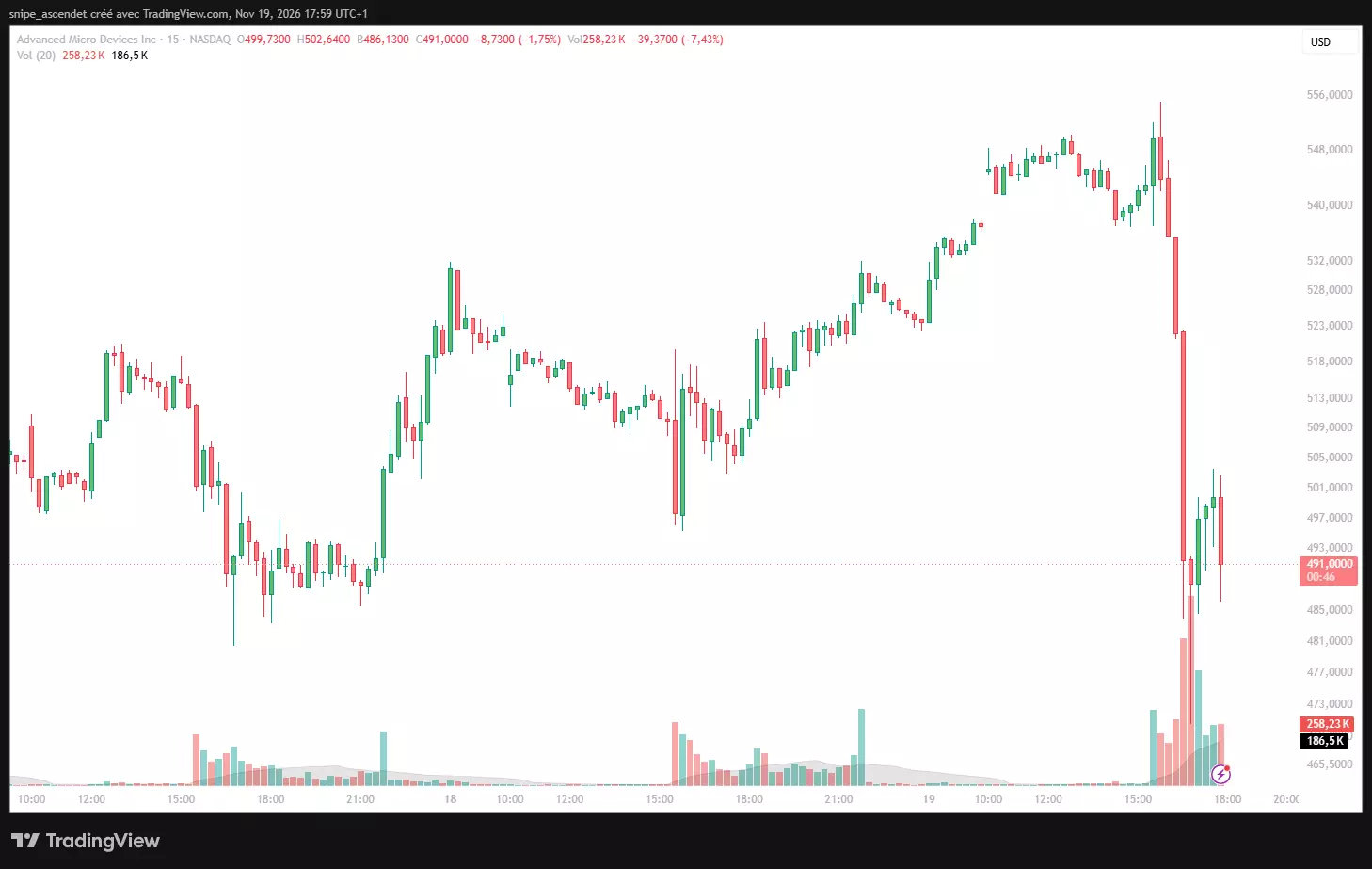
Advanced Micro Devices (NASDAQ: AMD) fell 7.43% to $491.00 at approximately 11:59 a.m. ET on Thursday, November 19, 2026, as investors weighed a Hunterbrook investigation into the company’s connections with Chinese businesses subject to U.S. export restrictions. The selloff puts AMD’s China exposure and export-compliance controls under scrutiny at a time when its data center business is expanding rapidly.
Hunterbrook Capital disclosed a short position in AMD as its affiliated news organization published allegations involving firmware updates, server suppliers and licensing relationships. The findings raise questions about how AMD technology reaches restricted entities, but they do not establish that AMD illegally exported chips. Hunterbrook published its investigation on November 19.
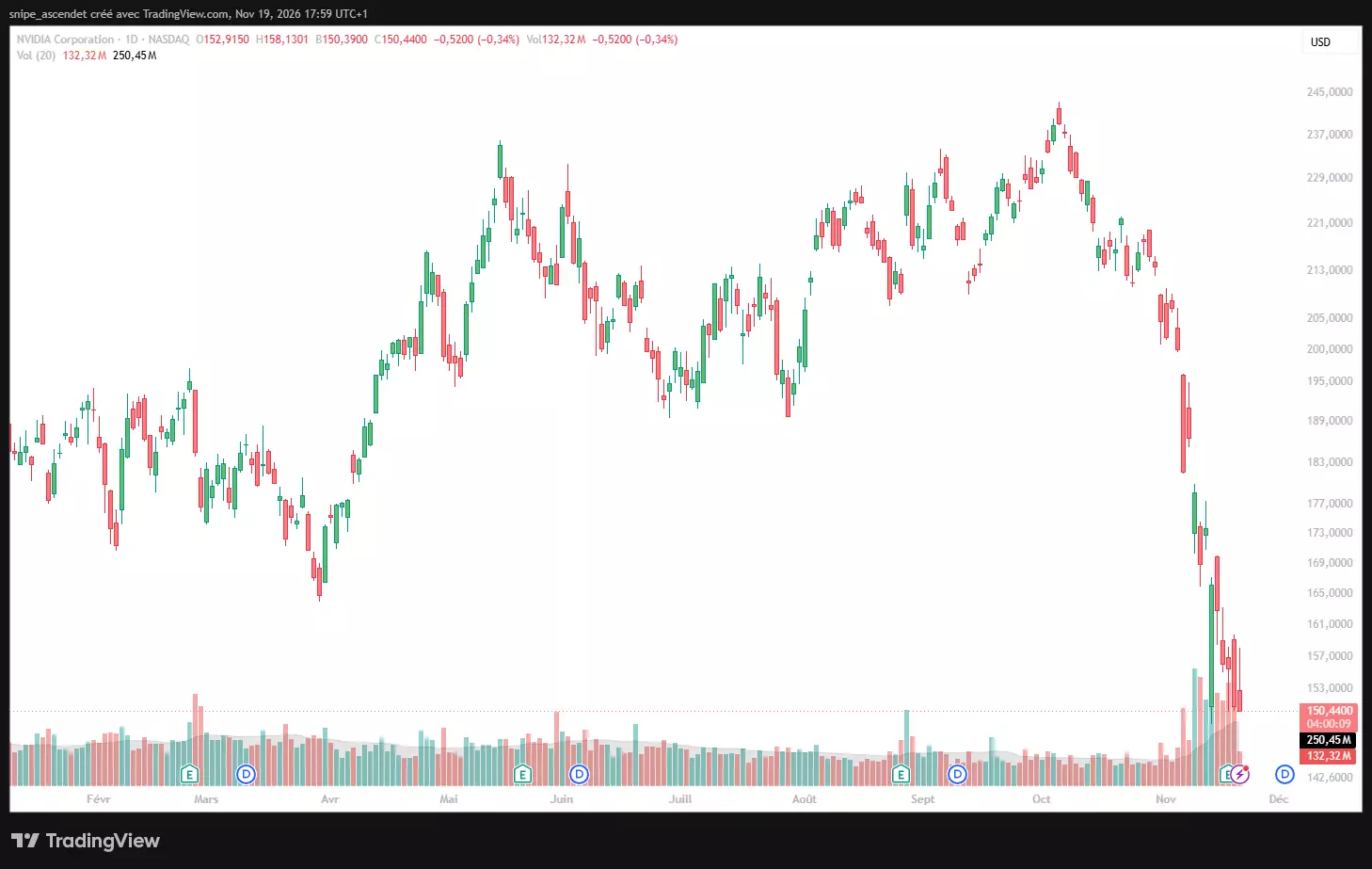
AMD stock falls while Nvidia holds up better
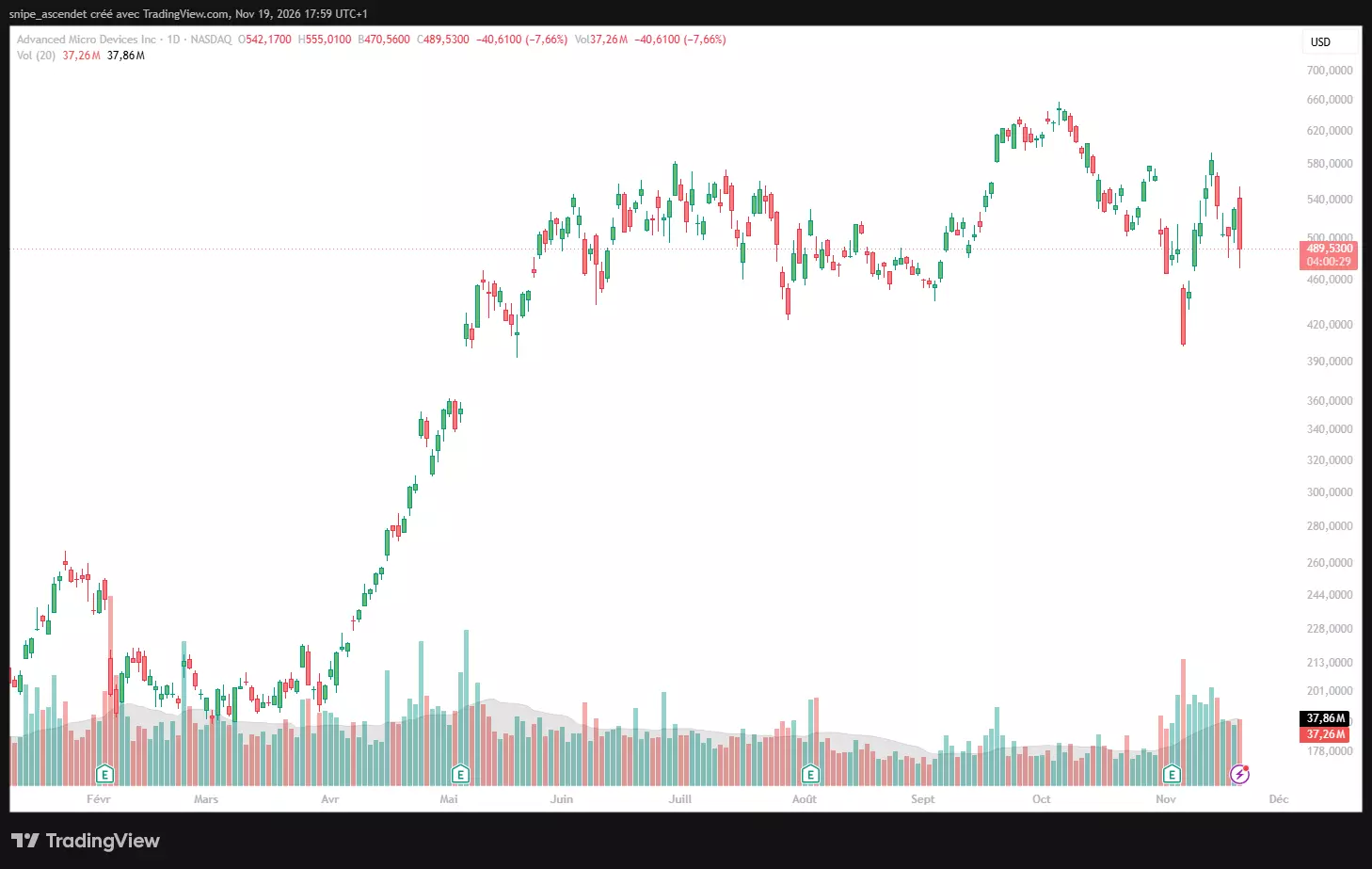
AMD traded at $491.00, down $39.37 or 7.43%, at 11:59 a.m. ET. Its daily chart showed an intraday low of $470.56, as much as 11.2% below the prior daily close of $530.14.
The daily chart recorded AMD at $489.53, down 7.66%, while Nvidia (NASDAQ: NVDA) was at $150.44, down 0.34%, in the respective daily readings. The 7.32-percentage-point gap shows markedly greater pressure on AMD, although refresh times may differ slightly.
What Hunterbrook alleges about AMD and IEIT
Hunterbrook focused on IEIT Systems, a Chinese server maker added to the U.S. Commerce Department’s Entity List in March 2025. The Commerce Department’s Entity List imposes license requirements on covered exports to listed companies.
According to Hunterbrook’s report, IEIT published at least six BIOS updates containing newer AMD firmware after its listing, most recently on October 19, 2026. It also identified matching firmware at IEIT-linked vendors Maginfra, Kaytus and Aivres.
It remains unclear who supplied the firmware and whether a license was required or issued. Hunterbrook said AMD requested more time to respond but had not answered before publication. Hunterbrook Capital stands to benefit from a falling AMD share price.
Why an export violation has not been established
AMD firmware in a server update does not establish an unauthorized shipment. Technology can pass through intermediaries, and export rules depend on the item, recipient and licensing status. Hunterbrook acknowledged that its records do not establish a violation.
A licensing explanation or regulatory finding would materially change the investment case. Relevant context includes recent U.S. AI chip export-control changes and the Nvidia China chip investigation.
China accounted for 22.4% of AMD’s 2025 revenue
AMD’s fiscal 2025 Form 10-K reported $34.639 billion in worldwide sales. Customers billed in China, including Hong Kong, accounted for $7.751 billion, or 22.4%; Singapore represented another $4.284 billion, or 12.4%. These are billing-location figures, not proof of where the chips were ultimately used, and the two regions should not be added together as a measure of prohibited exports.
| Fiscal 2025 revenue measure | Amount | Share of global revenue |
|---|---|---|
| Worldwide revenue | $34.639 billion | 100% |
| China, including Hong Kong | $7.751 billion | 22.4% |
| Singapore | $4.284 billion | 12.4% |
Additional restrictions could delay orders or complicate international server sales even without enforcement action.
AMD’s data center growth makes compliance increasingly important
AMD’s third-quarter 2026 Form 10-Q reported total revenue of $13.377 billion for the quarter ended September 26, up 44.7% from $9.246 billion a year earlier. Data Center revenue rose from $4.341 billion to $8.546 billion, up 96.9%, and represented 63.9% of quarterly sales.
| GAAP revenue metric | Q3 2026 | Q3 2025 | YoY change |
|---|---|---|---|
| Total revenue | $13.377 billion | $9.246 billion | +44.7% |
| Data Center revenue | $8.546 billion | $4.341 billion | +96.9% |
The growth raises the stakes for AMD’s cross-border server business. Compare the sector’s revised AI infrastructure spending forecasts.
Existing Chinese ventures add another layer of exposure
AMD holds interests in THATIC-related Chinese ventures listed by U.S. authorities in 2019 and states it complies with applicable law. Tongfu-affiliated joint ventures perform most AMD chip assembly, testing and packaging, adding supplier concentration risk. See AMD’s Form 10-Q.
What AMD investors should watch next
- AMD’s response: whether the company identifies the origin of the firmware, licensing arrangements and compliance controls.
- Regulatory developments: whether U.S. authorities make inquiries, clarify licenses or alter restrictions affecting related server manufacturers.
- Revenue quality: whether data center growth remains strong without a deterioration in margins, customer access or fulfillment.
- Price behavior: whether AMD stabilizes after the intraday low and narrows the performance gap with other chip stocks.
Bottom line: AMD’s decline reflects uncertainty around China-related export controls, not proven misconduct. Management must explain the firmware trail and clarify any impact on its growth outlook.