

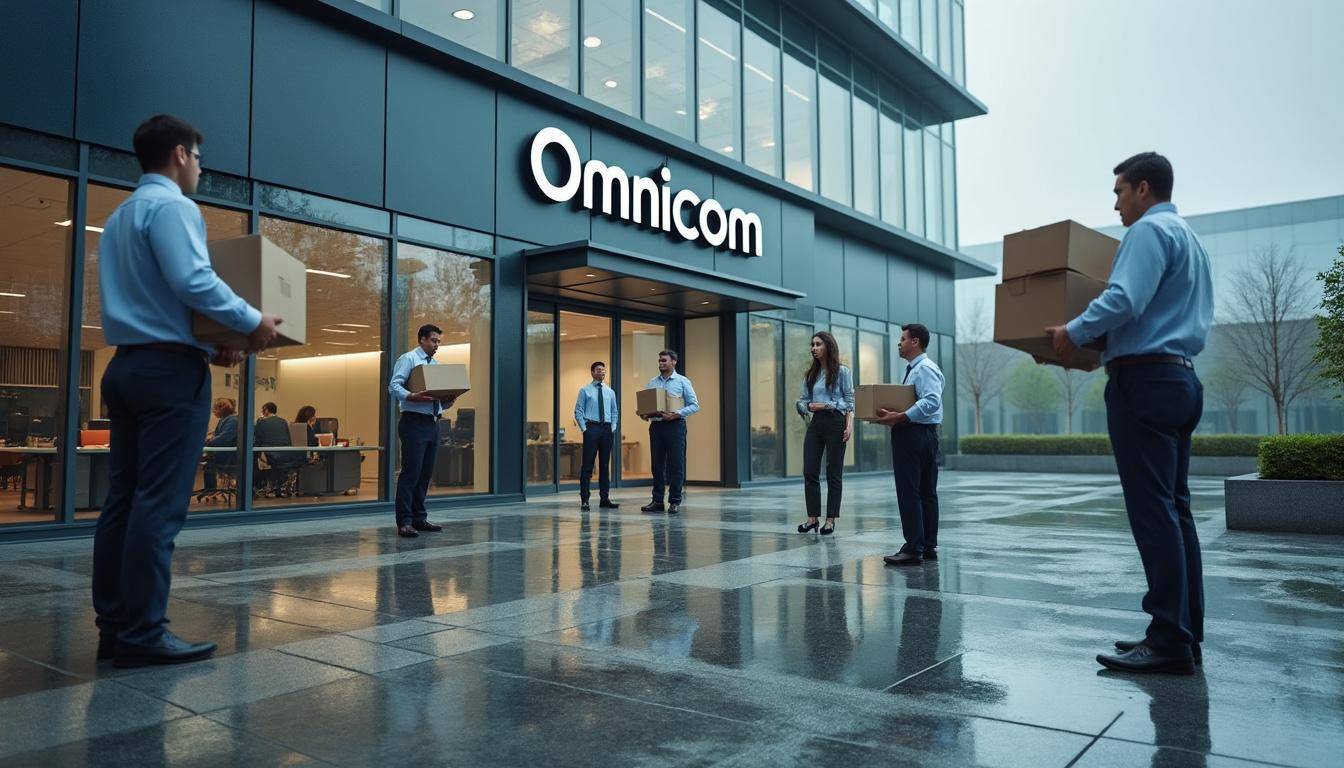
Omnicom’s recent announcement has rippled across the advertising industry, signaling a sweeping Corporate Restructuring after the completion of its acquisition of Interpublic Group. The deal — positioned as the largest holding-company combination in modern marcomms — promises roughly $750 million in annual synergies and has already led to dramatic operational moves: shuttering long-standing brands, reassigning major client rosters, and implementing broad Job Cuts that total more than 4,000 Jobs. For marketers, agency executives, and investors, the immediate questions center on who wins and who loses as legacy names like DDB, FCB, and MullenLowe face retirement or integration into new structures.
This piece follows the unfolding story through five analytical lenses: strategic rationale and financial mechanics, human capital impacts and labor markets, consequences for brand-client relationships, implications for global marketing networks, and regulatory and market reactions. Throughout, I track the experience of a hypothetical midcap consumer brand, Harbor Goods, whose CMO, Evelyn Park, must decide whether to stay with a merged Omnicom team or move to boutique specialists. Each section offers concrete examples, tables of comparative metrics, and operational checklists for executives planning next steps.
Omnicom Overhaul: Strategic Rationale Behind the IPG Merger and Brand Retirements
The decision to combine Omnicom and Interpublic (IPG) and then pursue an aggressive Overhaul of operating brands reflects a calculus common in large-scale consolidations: pursue scale-driven efficiencies while streamlining overlapping client services. Management projects roughly $750 million in annual cost synergies, part of which will be realized through the closure of historic names and the consolidation of central functions such as procurement, media buying, and back-office technology.
From a finance perspective, the deal aimed to strengthen bargaining power with platforms, reduce duplicated account teams, and pool data/tech investments to compete with the likes of holding-company peers. But such gains require painful near-term moves: the retirement of Iconic Agencies like DDB is intended to remove brand-level redundancy, even if it costs institutional goodwill.
Reasons Companies Pursue Such Overhauls
Organizational motives in this case included:
- Scale Economics — combining purchasing volumes to lower media and tech costs.
- Operational Efficiency — merging back-office and finance teams.
- Client Consolidation — reducing agency churn for large global advertisers.
- Investment Reallocation — freeing up cash to invest in data and AI capabilities.
For Harbor Goods, CMO Evelyn Park sees three potential short-term outcomes: (1) renegotiated fee arrangements with larger media discounts, (2) transitional service disruption during integration, or (3) a search for boutique agencies if cultural fit deteriorates. Each option carries trade-offs in cost, control, and innovation.
| Metric | Pre-Merger | Post-Merger Target |
|---|---|---|
| Annual Revenue (Combined) | $25.6B | $25.6B+ |
| Projected Annual Synergies | – | $750M |
| Staff Reductions | ~3,000 already in 2024 | 4,000 Jobs+ |
Examples help illustrate the ambition: within media buying, the merged company can centralize negotiating teams to secure lower CPMs with the largest platforms, while combining analytics stacks to provide richer cross-client insights. Yet such centralization may invite internal friction as former agency leaders vie for influence.
- Case in point: When two global agencies attempted to merge media teams in 2018, it took 18 months to harmonize vendor contracts and transition clients without service lapses.
Key constraint: regulatory scrutiny remains a wildcard; authorities often demand divestitures or behavioral remedies. That said, the company secured clearance from the U.S. Federal Trade Commission earlier in the process, clearing the path for brand rationalization.
Final insight: The Omnicom Overhaul is a deliberately aggressive trade-off: immediate cultural and brand sacrifices for longer-term cost and competitive positioning gains, and executives like Evelyn must weigh short-term disruption against projected efficiency benefits.
The merger’s human-cost dimension is stark: more than 4,000 Jobs have been slated for elimination as part of the integration. For talent markets in New York, London, and key regional hubs, this reduction is seismic. Firms must design severance, outplacement, and retention plans that mitigate reputational harm and preserve critical capabilities in areas such as creative, data science, and media strategy.
From Harbor Goods’ perspective, the risk is losing institutional knowledge. Evelyn Park is assessing whether the creative team she’s worked with for five years will remain available and whether senior leadership changes will affect campaign continuity. The company draws up a contingency plan: a short list of independent boutiques and nearshore production houses ready to step in if incumbent teams dissolve.
Practical Workforce Measures
To manage layoffs and avoid talent flight, best practices include:
- Targeted Retention Bonuses — retain mission-critical staff through the transition.
- Transparent Communication — clear timelines limit rumor and panic.
- Career Transition Services — robust outplacement reduces legal and reputational risk.
- Strategic Hires — recruit for new capabilities rather than replace one-for-one.
| Program | Purpose | Estimated Cost |
|---|---|---|
| Severance Packages | Support displaced staff | $50M–$120M |
| Retention Bonuses | Keep critical talent | $10M–$30M |
| Outplacement & Training | Re-skill workforce | $5M–$15M |
Labor market conditions in 2025 show resilient demand for digital and data skills, meaning displaced creative staff could find roles quickly. Yet the unique institutional knowledge embedded in older agency teams — historical client relationships, brand playbooks, proprietary creative approaches — is harder to replace. This is why some advertisers prefer to sign multi-year transition clauses with combined teams to preserve continuity.
- Example: A major CPG client that lost its lead creative director during a 2019 consolidation negotiated a 12-month warranty period; it reduced campaign slippage and allowed a phased handover.
Corporate leaders must also consider cultural integration: blending compensation structures, performance metrics, and career ladders is often more time-consuming than financial consolidation. Firms that underinvest in people programs risk talent exodus to consultancies and specialist agencies.
Final insight: Navigating the Job Cuts responsibly requires a balance of cost discipline and empathy; properly structured retention and transition programs can preserve client value and limit long-term damage to the employer brand.
What Brands Should Expect: Impact on Marketing, Client Relationships, and Service Models
Brands are at the center of this transformation. Large advertisers who previously relied on named agencies now confront new dynamics in procurement, fees, and creative ownership. The merged entity seeks to streamline pitches and consolidate account teams, which can lower costs but might reduce creative diversity. Harbor Goods’ CMO, Evelyn Park, now evaluates whether the merged team can deliver both scale in media buying and boutique-level creativity for product launches.
Expect four tangible shifts in how marketing gets done:
- Fee Renegotiation — advertisers will likely receive revised fee schedules tied to centralized media buys.
- Service Bundling — formerly separate creative, media, and data units will be offered as integrated packages.
- Vendor Rationalization — some third-party providers may be replaced by in-house platforms.
- Proof-of-Concept Pilots — brands often demand short pilots to validate performance post-integration.
| Area | Pre-Merger Expectation | Post-Merger Expectation |
|---|---|---|
| Media Buying | Agency-specific discounts | Platform-wide negotiated rates |
| Creative Output | Distinct agency voices | Unified creative playbooks |
| Client Service | Dedicated account teams | Shared client service hubs |
Illustrative example: a recent product launch by a national retailer saw its creative concept diluted after account reassignments during an agency merge. The retailer mitigated damage by shifting media strategy to performance-focused channels and contracting a niche creative studio for hero assets.
- Checklist for Brands:
- Review contractual protections
- Set performance benchmarks and SLAs
- Maintain a shortlist of alternative agencies
For companies that care deeply about brand distinctiveness, the merged holding company model can be both an opportunity and a threat. Bulk media discounts improve efficiency, but decreased creative plurality may blunt differentiation.
Final insight: Brands should treat the Omnicom-IPG integration as a negotiation moment — secure commercial advantages while safeguarding creative autonomy through contractual and operational controls.
Global Network Effects: How the Merger Reshapes Regional Marketing and the Advertising Ecosystem
The creation of a larger holding company reshapes global footprints and regional strategies. With combined revenues exceeding the previous top firms, the new entity can field deeper regional teams and invest in data centers, programmatic stacks, and measurement tools. Yet regional markets respond differently: APAC and LATAM teams face different integration frictions than North America and EMEA.
From Harbor Goods’ standpoint, the big question is operational: will regional offices in São Paulo or Shanghai retain autonomy, or will client service be centralized in hubs? The answer impacts agility and local market relevance.
Regional Considerations and Effects
- APAC — high-growth ad markets; local talent retention essential.
- EMEA — complex regulatory environments and language-specific creative needs.
- LATAM — rising digital penetration but constrained media budgets.
- North America — headquarters interplay and major client consolidations.
| Region | Opportunities | Risks |
|---|---|---|
| North America | Consolidation efficiencies | Client concentration risk |
| APAC | Faster digital growth | Talent competition |
| EMEA | Localized creativity | Regulatory fragmentation |
Network effects can be positive: a single creative brief shared across markets speeds time-to-market, while centralized measurement frameworks provide clearer cross-market ROI metrics. However, homogenization risks dulling culturally resonant creative. Evelyn Park anticipates piloting regional briefs first to validate global concepts before full roll-out.
- Example of positive network effect: A single unified data platform enabled a footwear brand to reduce campaign testing cycles from 12 weeks to 6 weeks across five countries.
Another consequence is on specialist agencies and consultancies: as the holding company grows larger, advertisers may increasingly split work — keeping strategic planning or brand-building with independents while using the holding company for media scale. This bifurcation can create a two-tier ecosystem that benefits nimble boutiques and large-scale buyers differently.
Final insight: The merger magnifies global network advantages but increases the premium on local insight; brands should structure governance that preserves market-specific creativity while harnessing centralized tools.
Regulatory, Market Reaction, and Future Outlook for the Advertising Industry
Regulators and market participants have responded in predictable and surprising ways. The U.S. Federal Trade Commission cleared the merger after scrutiny, but global competition authorities and clients remain watchful for anti-competitive outcomes. Stock and bond markets reacted with volatility during the initial announcement, but the longer-term valuation will depend on realization of the projected $750M in synergies and the ability to retain marquee clients.
Analysts forecast several scenarios for the medium term:
- Optimistic — synergy realization and client retention lead to margin expansion and higher free cash flow.
- Neutral — cost savings are offset by client churn and integration expenses.
- Pessimistic — prolonged cultural clashes and regulatory constraints erode expected benefits.
| Scenario | Key Drivers | Potential Outcome |
|---|---|---|
| Optimistic | Seamless integration, client retention | Increased margins, stronger market position |
| Neutral | Partial savings, moderate churn | Flat growth, slower margin gains |
| Pessimistic | Major client losses, regulatory costs | Revenue decline, reputational damage |
Market reaction also depends on execution. The ability to integrate technology stacks and keep key creative leaders will determine whether the newly enlarged company can offer best-in-class integrated services. For advertising industry suppliers — from production houses to measurement vendors — the Big Four becoming a Big Three (effectively) compresses the vendor landscape and can create win-or-lose scenarios for smaller partners.
- Key market actions for stakeholders:
- Advertisers: re-evaluate agency rosters and contracts
- Agencies: prioritize retention and client transition plans
- Investors: monitor synergy deliverables and client churn metrics
Regulatory vigilance will persist: any dominance in media buying or cross-client data practices will invite scrutiny. That means documentation, transparency, and client-level firewalls will be necessary to preserve trust and avoid antitrust complications.
Final insight: The Omnicom-IPG combination represents a turning point for the Advertising Industry; the next 18 months will reveal whether scale-driven efficiencies translate into sustainable competitive advantage or whether fragmentation and client realignments rewrite the marketing landscape.