

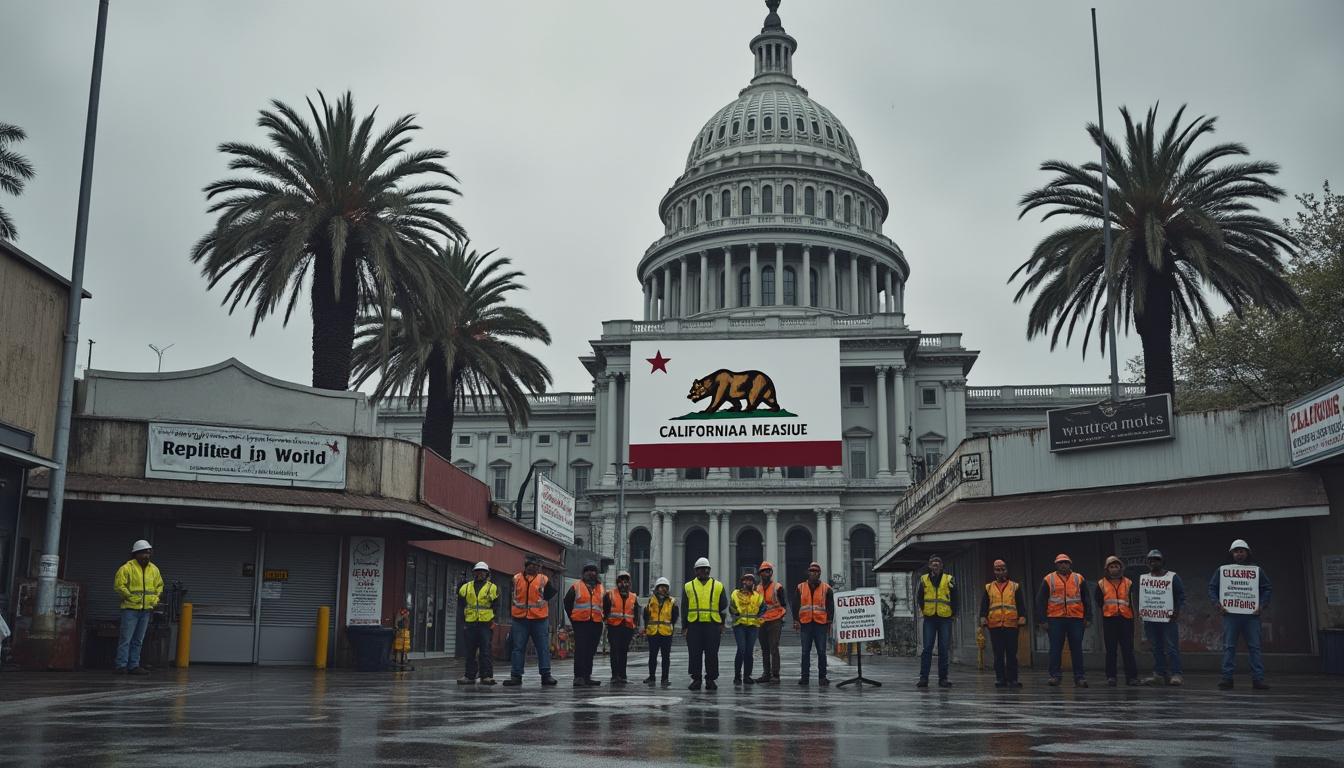
Governor Gavin Newsom’s decisions around delayed payments and paused prefunding have become a focal point for discussions about California’s labor market and the wider state economy. As the state defers obligations—most notably the unresolved federal unemployment insurance loan and paused prefunding for public employee retiree health benefits—businesses and workers across California are already experiencing tangible shifts in hiring practices, payroll costs, and long-term planning. The ripple effects touch small employers in the Central Valley, tech contractors in the Bay Area, and public agencies that face tradeoffs between immediate budget relief and mounting financial issues down the road. Observers tracking the job market notice hiring freezes, revised benefit negotiations, and policy debates that pit short-term savings against intergenerational obligations. For many employers, these choices translate into higher payroll taxes, altered cash flow assumptions, and renewed scrutiny of workforce needs. For workers, the consequences show up as fewer openings, slower raises, and uncertainty around benefits.
This piece examines how Newsom’s handling of unpaid bills is reshaping employment dynamics across California. It blends concrete case studies, policy analysis, sectoral tables, and practical guidance for employers and employees navigating an unsettled job market. Throughout, I highlight the economic impact on the state economy and propose mitigation strategies rooted in fiscal prudence and workforce resilience. Expect detailed examples, data-driven explanations, and references to financial resources that can help firms and households adapt to these evolving conditions.
Newsom’s Unpaid Bills And The Immediate Effect On Employers
The decision to postpone payments associated with long-term liabilities has a direct line to employer costs today. When the state allows a backlog—such as the unpaid federal unemployment insurance loan—to persist, the burden often shifts to private employers through increased payroll taxes or surcharges. For example, California’s unresolved $20 billion unemployment insurance loan has translated into incremental costs per worker that firms must absorb or pass on.
Small business owner Maria Rodriguez, who runs a family-owned logistics firm in Stockton, illustrates how these dynamics play out. Maria had planned to hire three warehouse associates in Q1 to support a new contract. When local payroll taxes rose due to the state’s debt servicing shortfall, she faced a simple arithmetic decision: hire at today’s higher cost or delay expansion. She chose to delay, citing margin compression and inventory uncertainties. Her hiring freeze is emblematic of a broader trend: firms that operate on thin margins change hiring timelines first.
Industries with high labor intensity—hospitality, retail, logistics—are most sensitive to these adjustments. Employers in these sectors often cannot automate functions quickly, so their response tends toward hiring freezes, reduced hours, or increased reliance on part-time staff. That has a direct effect on employment statistics and on household incomes in affected communities.
How Payroll Costs Translate Into Hiring Decisions
Employers assess payroll as a total cost: wages plus benefits and payroll-related taxes. When state-level fiscal issues add a new component to taxes or compel employers to fund trust-like arrangements for benefits, the marginal cost of each hire increases. That marginal change influences whether a vacancy is filled immediately or left vacant.
Another example: a mid-sized manufacturing employer in Fresno reported a projected $30 per employee annual increase in cost tied to state debt servicing. Across a 120-person workforce, that becomes a material line item. Management responded by postponing two planned full-time hires and converting one role into a contract position.
There are also signaling effects. When the public sector pauses prefunding of retiree health benefits, private employers interpret that as fiscal strain that could lead to future tax increases or policy changes. These expectations dampen capital expenditures and hiring plans beyond the immediate fiscal impulse.
For workers, the immediate outcome is fewer openings and slower wage growth. For communities dependent on public-sector investment or large private employers, the effect multiplies through reduced consumer spending and lower local tax revenue. This cycle underscores a crucial point: short-term budget relief achieved by deferring payments creates downstream constraints for the broader private sector.
Key insight: Deferred public liabilities increase the marginal cost of employment for private firms, directly influencing hiring timelines and labor intensity decisions.
How The State Job Market Adjusts To Deferred Liabilities
When a large economy like California adjusts fiscal policy by deferring payments, the job market responds across sectors and skill levels. Labor economists track both the quantity and quality of jobs: numbers of vacancies and the stability of those positions. Deferred payments reduce public spending flexibility, which can translate into fewer government-backed programs and contract opportunities. That in turn affects contractors, nonprofits, and suppliers.
Consider the technology services ecosystem. While tech employers in the Bay Area are less sensitive to incremental payroll tax increases than small retailers, they still react to changes in state procurement and staffing expectations. A state pause on certain benefit contributions may lead to contract delays, altering project timelines and contingent hiring.
Manufacturing and agriculture in the Central Valley face a different set of pressures. These sectors rely heavily on seasonal hiring and are vulnerable to any changes that influence cash flow. When counties foresee tighter budgets due to state fiscal shifts, local incentives or workforce development grants can be scaled back, affecting training pipelines and the readiness of the workforce to fill higher-skilled roles.
Table: Sectoral Sensitivity To Deferred State Payments
| Sector | Sensitivity Level | Primary Mechanism |
|---|---|---|
| Hospitality and Retail | High | Higher payroll taxes -> hiring freezes |
| Manufacturing | Medium-High | Reduced capital spending and training programs |
| Technology Services | Medium | Contract delays and reduced state procurement |
| Public Sector | High | Paused prefunding -> altered benefits and hiring |
Policy choices also influence labor supply. If workers expect unstable benefits or slower wage growth, they may seek opportunities out of state or in more stable sectors. This shift can exacerbate skill shortages in high-demand areas and raise recruitment costs for employers who remain. The ripple effect may be subtle at first—more competitive wages in neighboring states, slower inward migration—and then magnify over several fiscal cycles.
To understand household-level adaptation, many families revisit financial planning and borrowing choices. Resources like Personal finance trends for 2025 become relevant as workers assess emergency savings and career mobility. Employers, too, explore credit and cashflow instruments to bridge cyclical gaps and maintain payroll where possible.
Key insight: The job market recalibrates not only through immediate hiring decisions but also through altered labor supply, migration, and the retraining pipeline.
Public Policy Tradeoffs: Prefunding, Unpaid Bills, And Long-Term Financial Issues
Public policy often involves choosing between present relief and future obligations. Governor Newsom’s negotiated labor deals that pause prefunding for retiree health benefits are a case in point. The administration argues these moves provide short-term budget breathing room and avert immediate layoffs. Unions and public employees emphasize the need for current raises and improved terms. The tension between immediate cash and long-term solvency is central to the debate.
Financial markets watch these signals. Credit rating agencies track the state’s capacity to manage long-term liabilities. When a state delays payments, it may not immediately trigger a downgrade, but sustained deferrals can raise borrowing costs or reduce fiscal flexibility over time. Higher costs of borrowing feed back into the state budget, creating a negative loop that eventually affects program funding and, by extension, employment in public programs.
From a macroeconomic point of view, the economic impact of deferred obligations is heterogeneous. Regions with more diversified private sectors may absorb shocks better, while regions dependent on public employment or state contracts will feel greater stress. A hypothetical county health clinic that delays hiring due to state budget uncertainty affects both the healthcare workforce and adjacent service providers, illustrating how localized fiscal choices cascade through the workforce.
Policy Alternatives And Their Employment Consequences
Policymakers have several levers: phased repayment schedules, targeted stimuli, or progressive revenue adjustments. Each has employment implications. A phased repayment may smooth payroll tax increases, allowing employers to plan hires. Targeted stimulus aimed at workforce development preserves hiring in priority sectors. Progressive revenue measures might ensure long-term solvency but generate political friction and possible short-term disincentives for investment.
Case studies from other states suggest a hybrid approach works best: temporary relief coupled with a binding long-term plan for repayment. When stakeholders—from union leaders to small business coalitions—see a credible pathway to solvency, confidence improves. That translates into more robust hiring and investment decisions across the private and public sectors.
Policy clarity matters. Ambiguity about future obligations prompts employers to adopt conservative hiring postures. Clear, credible commitments to resolve financial issues over a defined timeframe can restore momentum to the job market.
Key insight: Responsible public policy balances immediate relief with credible long-term repayment plans to stabilize employment incentives.
Real-world stories illuminate abstract policy effects. Maria Rodriguez’s Stockton logistics firm is one example. Another is a midsize software consultancy in Oakland, which shifted hiring from full-time to contractor roles to avoid added payroll burdens. A community college in Bakersfield postponed a vocational training partnership because local grant funding shrank, impacting the training pipeline for advanced manufacturing.
These vignettes reveal patterns: substitutions of employment types, delayed training initiatives, and a shift to contingent labor. Workers face precarious transitions; employers face a tradeoff between short-term flexibility and long-term stability. To illustrate, consider a hypothetical employee, James, a machine operator in Modesto. Facing fewer openings, he enrolls in night classes to learn CNC programming, funded partially through personal loans. The training raises his employability but also increases household debt exposure. For families in similar positions, resources such as how to choose credit consolidation can be relevant when managing debt during career transitions.
Employers also innovate. One Bay Area manufacturer created a retention bonus structure tied to productivity gains, offsetting some benefit gaps. Another restaurant group introduced cross-training to keep staff engaged while reducing the need to hire additional employees. These adaptive solutions can soften the blow of a strained state budget, but they cannot fully replace sustained public investment in workforce development.
The geographic dimension matters. Coastal tech hubs often have access to private capital that bridges temporary fiscal shocks. Inland regions with less diversified tax bases struggle. This divergence exacerbates existing regional inequalities and shapes long-term labor mobility.
Key insight: Case studies show adaptation strategies but underscore that ad hoc private responses cannot substitute for credible public fiscal plans.
Practical Strategies For Employers And Workers To Mitigate Risk
Both employers and workers can take proactive steps to reduce exposure to fiscal shocks stemming from Newsom’s unpaid obligations. Employers should run scenario analyses to understand the marginal cost of each hire under different tax and benefit assumptions. That informs whether roles should be hired now, phased, or redesigned.
A useful checklist for employers includes:
- Conduct a payroll sensitivity analysis under varying tax scenarios.
- Evaluate contracting vs. full-time tradeoffs with long-term cost modeling.
- Strengthen cash reserves or lines of credit to smooth payroll cycles.
- Invest in cross-training to increase workforce flexibility.
- Engage with local workforce development programs to access subsidized training.
Workers should parallel these moves with financial planning. Building emergency savings and exploring upskilling opportunities are immediate steps. For those managing debt while retraining, resources on debt consolidation and prudent credit choices can be helpful. See practical guidance on consolidation options at how to pick the right credit consolidation company and broader planning trends at personal finance trends for 2025.
Local chambers of commerce and community colleges can be partners in designing reskilling programs tailored to regional needs. Employers who collaborate with these institutions often benefit from a more stable recruitment pipeline even amid fiscal uncertainty.
Finally, safety and well-being are part of workforce resilience. Job-seekers should consider not only wage prospects but also physical and psychological safety when exploring opportunities. Practical resources on safe job transitions and search environments are increasingly relevant; one such perspective is offered in discussions around safe job hunting practices at job hunting safety and career resilience.
Key insight: Proactive planning—financial, operational, and human capital—reduces vulnerability to fiscal-driven labor market disruptions.