

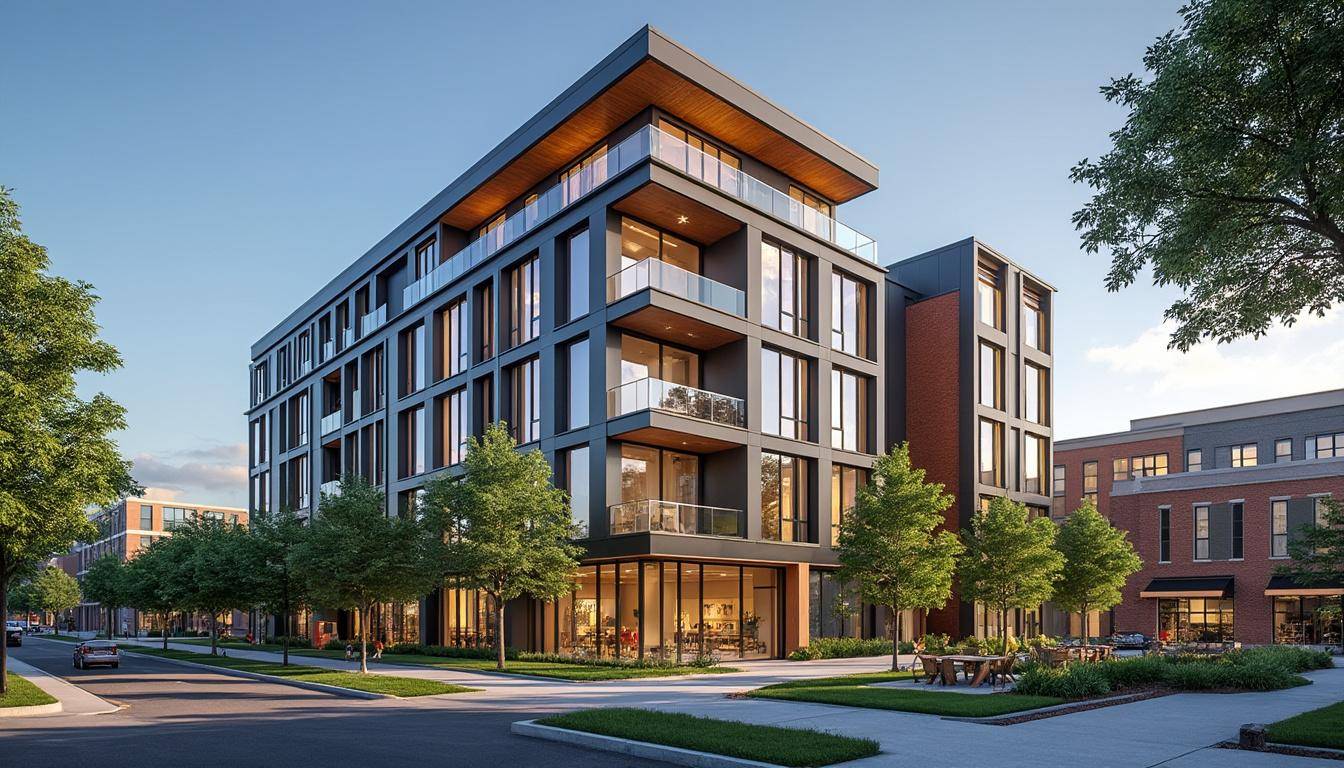
As residents begin to move into The Stella on North Meridian Street, Indianapolis is witnessing a deliberate blend of Affordable Living and Convenient Living at the edge of its downtown core. This new development — a $44 million investment delivering 166 rental units — positions itself squarely in the Near North Side neighborhood, just minutes from Monument Circle and transit connections prioritized by the city’s planning strategy. For renters and observers in 2026, the appeal is both practical and symbolic: modern finishes like stainless steel appliances and granite counters, paired with amenities such as a rooftop deck, pool, and a 24/7 fitness center, signal that Urban Housing can be both accessible and aspirational. Financially, the project’s pricing spectrum and unit sizes aim to attract a diverse renter profile, from solo professionals to small families and pet owners seeking Community Living within an Accessible Location. This piece follows Marcus, a hypothetical financial analyst relocating to Indianapolis, to examine how The Stella Apartments fits into the city’s rental ecosystem, what it means for stakeholders, and how one might evaluate the trade-offs between lifestyle, cost, and long-term neighborhood growth.
The Stella Apartments: Project Overview and Neighborhood Context
The Stella stands at 1827 N. Meridian St, anchoring the Near North Side with a contemporary approach to City Life.
The development comprises 166 units with a mix of studios, one- and two-bedroom layouts. Building features emphasize quality finishes and convenience: in-unit washers and dryers, stainless steel appliances, and granite countertops. Shared amenities include a rooftop deck, pool, pet park, and a fitness center that operates around the clock. Those design choices echo a broader trend in 2026 where developers target younger professionals and small households seeking both functionality and social spaces in Rental Apartments.
From an urban geography standpoint, the building sits approximately one mile from Monument Circle, placing it within easy biking distance or a short transit ride to downtown employment centers. The location aligns with municipal frameworks such as the Indy Moves Transportation Integration Plan and the City of Indianapolis Neighborhood Investment Strategy, linking private investment to public transit goals. For Marcus, whose daily commute to a finance start-up near downtown is a priority, proximity matters: it reduces commute time, lowers transportation costs, and enhances flexibility for evening networking events.
In the broader tapestry of the Near North Side, The Stella Apartments complements mixed-use corridors and supports increased foot traffic to local businesses. Historically, neighborhoods just outside a central business district serve as a buffer zone where affordability meets accessibility; The Stella is intentionally positioned to capture that demographic sweet spot. Its pet-friendly orientation and provision of attached garage parking reflect an attempt to balance urban density with suburban conveniences.
Market signaling is also significant. A $44 million capital stack for a mid-rise rental implies confidence in rental demand and long-term appreciation of the immediate area. Developers and local officials often cite transit-oriented development as a multiplier: when new housing integrates with transit planning, it can catalyze additional retail investment and pedestrian improvements. For residents like Marcus, this interplay translates into everyday benefits — more dining options, safer streets after dark, and increased property maintenance in surrounding blocks.
An important nuance: affordability is relative. The Stella markets as affordable in comparison to premium downtown towers, yet maintains modern finishes and amenities that push it above basic subsidized housing. This middle-market positioning is strategic: it aims to attract renters who value both Convenient Living and lifestyle amenities without the highest downtown rents. The result is a building that can accommodate a cross-section of tenants while remaining integrated into the city’s urban housing goals.
Key takeaway: The Stella’s placement and programming are deliberately tuned to support a balance of Accessible Location and modern living standards, making it an attractive option for those prioritizing both price and proximity to downtown amenities. This balance will guide our financial and lifestyle analysis in the sections that follow.
Financial Perspective: Rent Dynamics, Affordability, and Investment Signals
Understanding Affordable Living at The Stella requires a closer look at rent levels, unit sizes, and comparable markets. Rental pricing for similar properties in the immediate Near North Side cluster was benchmarked across dozens of communities as of early 2026. Reported starting rents for studio through two-bedroom units at nearby properties range, with advertised entry prices near $1,299 for smaller units and higher tiers toward $1,700–$2,000 depending on square footage and amenities.
To make sense of the numbers, I walk with Marcus through a simple comparative table showing representative floorplans, sizes, and pricing found in the local market. This helps clarify where The Stella sits within the urban rental ecosystem.
| Floorplan | Approx. Size (sqft) | Typical Market Rent (2026) | Key Amenities |
|---|---|---|---|
| Studio | 620 | $1,299 – $1,450 | In-unit laundry, shared rooftop |
| One-Bedroom | 750 – 900 | $1,450 – $1,800 | Stainless steel appliances, fitness center |
| Two-Bedroom | 1,100 – 1,428 | $1,800 – $2,200 | Garage parking, pet park |
From a renter’s POV, affordability is measured not only by headline rent but also by total occupancy cost. Utilities, parking fees, pet fees, and transportation expenditures must be aggregated. For Marcus, a practical budget calculation included rent, a reserved $100–$150 monthly for utilities, and $50–$150 for parking depending on whether a garage space was rented. That pushes the effective monthly cost beyond the advertised rent, a common reality across American cities in this market segment.
Investors surveying The Stella look at rental yield potential and local demand. A mid-priced product with contemporary amenities often sustains higher occupancy and lower turnover costs compared with older stock. The $44 million investment indicates developers expect steady demand and a stable yield. For neighborhood-level investors, the presence of well-managed Rental Apartments contributes to property value stabilization and potential rent escalation in the surrounding blocks over the medium term.
Methodologically, rent comparisons in 2026 use a sum/count averaging approach across immediate-area communities to account for variation in unit mix. That produced a reliable signal: The Stella’s pricing sits within the middle of the market band, priced to attract both cost-conscious renters and those seeking modern finishes. Scenario planning for Marcus compared three outcomes: conservative (modest rent growth), baseline (market-average growth), and optimistic (accelerated demand due to further transit investments). Each scenario alters long-run affordability and the opportunity cost of renting versus buying in the area.
Finally, policy context matters. City-level strategies like the Neighborhood Investment Strategy encourage developments that increase housing supply near transit. When private projects align with public objectives, incentives or supportive zoning adjustments can improve feasibility and often translate into more stable long-term occupancy.
Insight: Considering both advertised rent and the suite of occupancy costs reveals the true affordability of The Stella Apartments, and the project’s positioning suggests a strong probability of stable demand in the near to medium term.
Transit, Planning, and How The Stella Supports Urban Development Goals
Linking a rental project to city planning frameworks is essential for understanding its broader socioeconomic role. The Stella aligns with transit-oriented priorities embedded in the Indy Moves Transportation Integration Plan and local corridor land use strategies. Those plans emphasize improved mobility, denser development near transit corridors, and reinvestment in neighborhoods that historically had lower access to downtown resources.
For Marcus, commuting options were a decisive factor. The site’s proximity to downtown minimizes reliance on a personal car, and the building’s location is favorable for bus lines and potential micro-mobility corridors. Reduced travel time translates to lower monthly transportation costs and a smaller carbon footprint—important considerations for renters prioritizing both convenience and sustainability.
City planners view developments like The Stella as catalysts: increased residential density supports higher-frequency transit service and justifies public investments in sidewalks, lighting, and public safety initiatives. In turn, improved infrastructure can attract retail and service operators, which reinforces the neighborhood’s attractiveness for a wider range of households.
Another angle is land use change. North Meridian’s corridor plan contemplates a mix of residential and commercial uses with an emphasis on walkability. The Stella’s ground-floor orientation and amenity mix can anchor street-level activity, creating spillover benefits for nearby businesses. Anecdotally, earlier projects in 2010–2020 that followed similar models often saw a 10–15% increase in foot traffic for adjacent retail within two years of completion.
There are trade-offs: densification can strain local services if not accompanied by parallel investments. However, the presence of modern rental stock typically brings municipal attention and potential private-public partnerships to address infrastructure gaps. For example, coordinated efforts might upgrade bus shelters or add bike lanes, which benefits both residents and the broader neighborhood.
From a policy standpoint, the interplay between private development and public planning in 2026 emphasizes measurable outcomes: increased transit ridership, reduced vehicle miles traveled, and more equitable access to jobs. Developers that make explicit commitments to these outcomes—through mobility plans or funding contributions—create credibility with municipal planners.
Final thought: By situating itself within the city’s transit and neighborhood strategies, The Stella Apartments functions as both housing supply and an instrument of urban policy, supporting a transition toward denser, more connected city living in Indianapolis.
Amenity Design, Community Living, and Daily Life at The Stella
The programmatic choices inside The Stella speak directly to the lived experience of urban renters. Amenities such as a rooftop deck, pool, dog park, and 24/7 fitness center are not mere luxuries; they function as spaces where social capital is built and daily routines are simplified. For Marcus, evenings on the rooftop or a quick workout before work substitute for time-consuming trips to off-site gyms or entertainment venues.
Designing communal spaces intentionally reduces isolation in dense urban settings. Shared lounges and rooftop decks create opportunities for organic interactions, fostering a sense of Community Living. In practice, residents often form informal networks — sharing recommendations for local services, carpooling to events, or organizing small social activities. These micro-communities can enhance retention rates for property managers and strengthen neighborhood ties.
Pet policies, often overlooked, significantly influence tenant selection. By providing a pet park and pet-friendly units, The Stella appeals to a segment of renters who prioritize their animals as part of household decisions. Those policies can increase lease terms, as pet owners frequently seek stability to avoid the disruption of pet relocation.
Security and convenience features—such as controlled access, package lockers, and detached garage options—address practical pain points of city living. They reduce the friction associated with online shopping deliveries, vehicle storage, and after-hours access. Such conveniences can materially affect quality of life and are especially valued by professionals with irregular schedules.
Consider a concrete vignette: Marcus moves in during spring, bringing a small dog and a remote-work setup. The in-unit laundry reduces chore time, the rooftop gives a reliable outdoor workspace, and the fitness center replaces a membership he no longer needs. These daily efficiencies compound to meaningful time savings and lower ancillary expenses.
The Stella’s social fabric also intersects with local retail. If the building’s resident population spends locally on coffee shops, restaurants, and services, small businesses benefit — creating a virtuous cycle of amenity consumption and neighborhood vibrancy. That economic flow is precisely what city strategies hope to encourage through infill residential projects.
A final point: amenity-heavy buildings must be managed well to sustain value. Quality property management ensures amenities are clean, functional, and programmed in ways that encourage use. When management is proactive, community cohesion is stronger, and the property’s market position remains attractive.
Key insight: thoughtfully designed communal amenities at The Stella Apartments have practical implications for time use, social connection, and local economic activity, making them central to the building’s value proposition.
Practical Renting Guide: How to Evaluate, Apply, and Budget for The Stella
For prospective tenants like Marcus, the decision to rent at The Stella involves a series of practical steps. These include comparing floorplans, understanding total monthly costs, negotiating lease terms, and evaluating long-term fit with personal finances and lifestyle goals. Below is a structured checklist to guide decision-making.
- Compare Effective Rent: Add utilities, parking, pet fees, and any amenity surcharges to the advertised rent to calculate the effective monthly cost.
- Assess Commute and Mobility: Map door-to-destination times for work, social activities, and transit stops. Lower commute time translates to higher disposable income over the year.
- Understand Lease Flexibility: Check lease length options, subletting policies, and early termination penalties.
- Inspect Management Practices: Ask about response times for maintenance, package handling, and amenity scheduling rules.
- Budget for Move-In Costs: Factor security deposits, pet deposits, first month’s rent, and any application fees.
Each item merits explanation. For instance, effective rent often reveals hidden costs: a $1,450 advertised one-bedroom could have an effective cost north of $1,650 when parking and utilities are included. That difference changes disposable income calculations, which in turn influence decisions about living further out versus staying near downtown. Marcus ran a twelve-month projection comparing costs of staying at The Stella versus renting a similar unit in an outer neighborhood; the near-downtown option reduced his annual commuting expenses enough to justify a modest premium.
Application strategies matter too. Strong references, a steady employment history, and a credit profile that demonstrates responsible behavior increase the chance of preferred unit selection and potential negotiation leverage on move-in timing or amenity fees. If multiple applicants are vying for limited units, being pre-approved financially can make an application stand out.
Negotiation is possible in tight markets. Asking for a month of free rent, waived amenity fees, or reduced parking fees may succeed, particularly in the first year after opening when management seeks to stabilize occupancy. For Marcus, timing his application during an off-peak leasing season and presenting immediate move-in readiness yielded modest concessions from management.
Finally, consider the long-term perspective. Renting in a neighborhood poised for transit and commercial investment can be strategically advantageous for those who value flexibility. For others intent on homeownership, the rental period can be used to become familiar with the city’s submarkets and accumulate savings for a down payment. Either way, clear budgeting and a checklist-driven approach lead to better outcomes.
List recap and closing insight: use a rigorous budgeting checklist, verify total occupancy costs, and treat lease negotiation as a normal part of the process — these steps will help renters evaluate whether The Stella Apartments fits their financial and lifestyle objectives.