

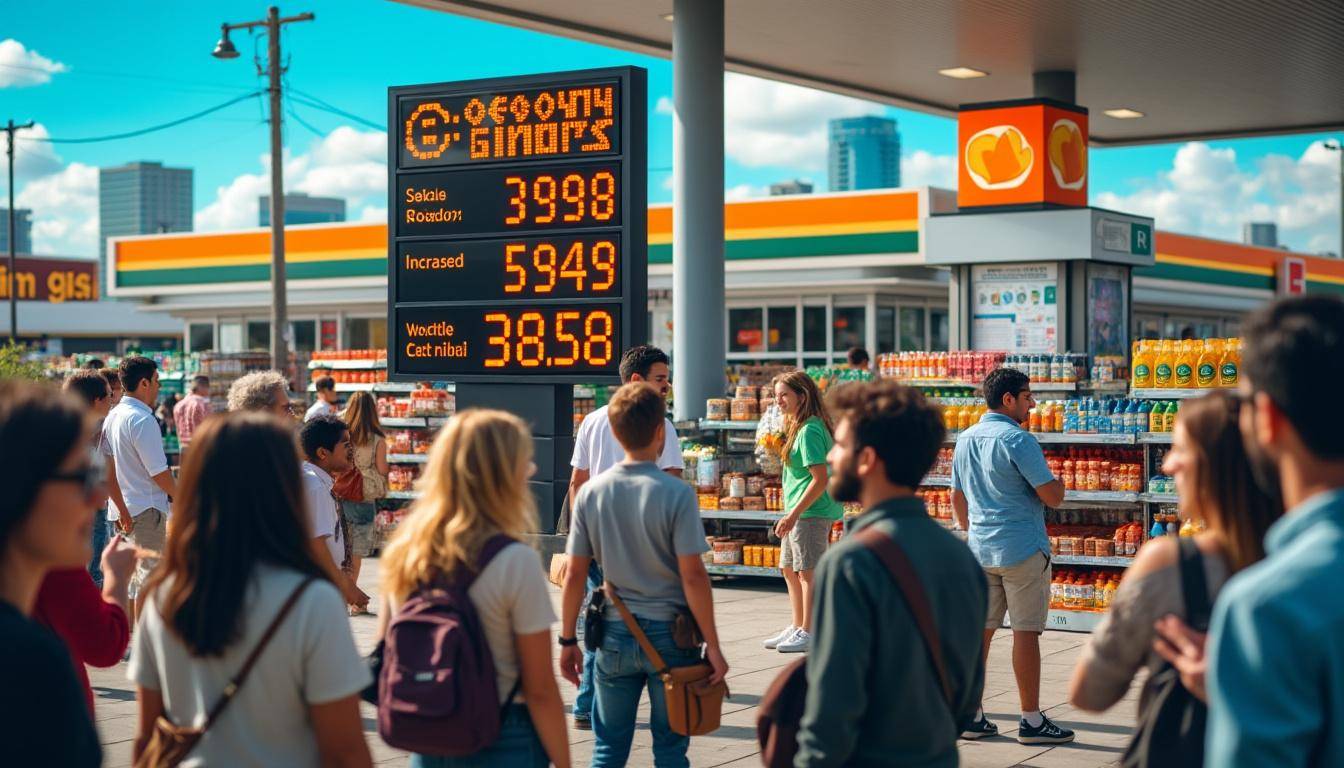
A fresh wave of Tax Refunds is arriving in bank accounts just as households across the United States face another jolt at the pump. When the Internal Revenue Service began processing returns on January 26 this tax season, many filers hoped the average refund—now around $3,676—would provide a buffer against steady increases in the Cost of Living. Instead, geopolitical events that escalated at the end of February have driven Energy Prices higher and left consumers recalibrating budgets. The U.S. and Israeli military strikes against Iran that started on February 28 pushed crude oil up, and that spike translated quickly into visible pain: higher Gas Prices and mounting Fuel Expenses for daily commuters and businesses alike.
As a finance professional based in New York who has worked in banking and followed market behavior closely, I track how policy changes, corporate reactions, and consumer behavior intersect. This tax season is unusual: the One Big Beautiful Bill, enacted on July 4, 2025, reshaped deductions and credits, promising larger refunds for many taxpayers. Policymakers describe the inflows candidly, while economists worry the money will be swallowed by price increases instead of stoking intended economic recovery through increased Consumer Spending. With the calendar pushing toward the April 15 filing deadline, households and markets face a crucial question: will these refunds be a meaningful form of Financial Relief, or will they act merely as a temporary patch against inflationary pressure?
Gas Prices And The Immediate Shock To Household Budgets
The sudden rise in Gas Prices after the late-February military actions created a near-instant ripple effect for U.S. households. For many drivers, the experience was intuitive: every gas station brought a visible reminder that filling the tank was costing more. In cities where commuting is mandatory, rideshare drivers like our fictional protagonist David, a 34-year-old part-time driver in Queens, saw daily operating costs climb by an amount that quickly ate into his net take-home. David’s story mirrors thousands of Americans whose monthly transportation budgets were calibrated to expectation and now must stretch to cover new fuel bills.
How the Price Spike Transmits to Everyday Spending
Energy prices influence more than just the direct act of driving. Higher wholesale fuel costs increase shipping and delivery fees, which suppliers pass on to grocery stores and retailers. For a family doing weekly shopping, this means an invisible tax on everything from canned goods to fresh produce. Economists often describe this as a “cost push” mechanism: producers face higher input costs, and consumers absorb the increase in the form of higher retail prices.
Some households will cut discretionary spending—dining out, entertainment subscriptions, occasional travel—to balance the household ledger. Others, often lower- and middle-income families, may not have that flexibility. That’s why Fuel Expenses rising in unison with grocery prices leads to a deeper squeeze on living standards. A New Jersey teacher named Maria might use her refund for an overdue car repair, while also finding her grocery bill increased by 5 to 8 percent in just a few weeks. In her case, the refund acts like a bandage rather than a sustained improvement in financial stability.
Short-Term Versus Long-Term Responses
Short-term coping strategies include timing trips, combining errands, or switching to cheaper stations. But the long-term response can be structural: households consider fuel-efficient vehicles, public transit routes, or telecommuting if available. Yet those shifts are harder for gig economy workers who depend on mobility to earn.
Macro actors respond too. Retailers may adjust promotional strategies; automakers may accelerate electrification plans; local governments could reassess fuel taxes or transit subsidies. But those policy shifts take time, and immediate impact on monthly budgets is what matters most for taxpayers seeing an unexpected spike in daily expenses.
Key insight: In the short term, higher Gas Prices function as an economic headwind that reduces the purchasing power of any extra cash arriving from tax refunds, especially for households with limited savings.
Tax Refunds Under The One Big Beautiful Bill: Winners, Timing, And Economic Effects
The 2025 policy changes enacted mid-year produced a tax season with notable twists. The One Big Beautiful Bill reworked deductions and credits, and officials have called the resulting round of Tax Refunds significant. The IRS began accepting returns on January 26, and with the April 15 deadline looming, many filers still have time to claim refunds. The latest IRS figures suggest an average federal refund of about $3,676 as of early March, a number that matters for household planning across income brackets.
Who Benefits Most From Larger Refunds?
Refunds are concentrated among certain demographics. Lower- to middle-income households, who generally have less access to liquid savings, rely on refunds to smooth cash flow for housing, transportation, and essentials. High-income filers typically have more framing flexibility and pay less attention to refunds as short-term financial relief. Michael Greiner, an associate professor at Oakland University, highlights that those most dependent on refunds are also those most vulnerable to rising prices, especially in energy and food.
Consider a 45-year-old single parent in Ohio who receives a refund of roughly $3,600. That money might pay overdue bills, cover a month of rent, or finance an annual car insurance premium. If Gas Prices rise unexpectedly, that refund’s effective value falls when measured against the family’s basket of essential goods.
Timing And The Spending Multiplier
Timing matters. Some economists expect refunds to lead to increased Consumer Spending that can stimulate local economies if money hits bank accounts when prices are stable. But with refunds arriving amid soaring Energy Prices, the multiplier effect weakens. Households redirect funds to immediate needs—higher fuel and grocery bills—rather than discretionary purchases that boost services and retail sectors.
Policy design also matters for distribution. Refunds as lump sums produce visibility and urgency; recurring tax credits might smooth consumption over months. The One Big Beautiful Bill increased certain deductions for 2025, raising the average refund this filing season. Yet the broader macro context—geopolitical tensions, inflation pressures, and modest GDP growth—dampens the potential for refunds to meaningfully accelerate growth.
Key insight: While Tax Refunds are meaningful for many households, the timing of receipts relative to spikes in Energy Prices determines whether those payments act as stimulative cash injections or merely offset higher baseline expenses.
Interaction Between Energy Prices, Inflation, And Consumer Behavior
Inflation and energy price shifts are often intimately connected. In February, the Consumer Price Index rose about 2.4% year-over-year before seasonal adjustment, a figure reported prior to the air strikes in Iran that sent oil prices higher. This sequence highlights how geopolitical events can accelerate inflation expectations and alter the real-world buying power of households. For example, when pump prices climb, consumers often revise travel plans, postpone big-ticket purchases like used cars or furniture, and accept smaller luxuries.
Mechanics Of Inflation Transmission
There are several channels through which higher Energy Prices translate to broader inflation. First, direct channel: gasoline and home energy bills rise. Second, pass-through channel: transportation costs increase, and businesses add these costs to consumer prices. Third, expectation channel: households and firms anticipate higher future prices and alter wage demands and pricing strategies accordingly. All three raise the probability of a sustained uptick in inflation.
Take the case of a small bakery in Portland. The owner faces higher delivery costs for flour and dairy products. To preserve margins, the bakery increases prices slightly, which in turn reduces foot traffic from budget-conscious customers. This micro-level dynamic scales to measurable shifts in the CPI when dozens of small businesses make similar decisions.
| Metric | Reported Value | Context |
|---|---|---|
| Average Federal Refund | $3,676 | IRS data as of March 6 |
| Q4 2025 GDP Growth | 0.7% (annual rate) | Second estimate from BEA |
| 2025 Annual GDP | 2.1% | Full-year growth |
| CPI (Feb, y/y) | 2.4% | Pre-air strikes data |
These numbers show the tension: modest GDP growth alongside persistent inflation. Rising Energy Prices can act as a brake on Consumer Spending, especially when refunds are consumed by higher essentials. That dynamic helps explain why some analysts worry the economy could slide toward recession if energy shocks persist while wage growth lags.
Key insight: The interplay between higher Energy Prices and inflation can rapidly reduce the effective value of refunds and other financial relief, reshaping consumption patterns and expectations.
Macro Outlook: GDP, Labor Markets, And The Risk Of Recession
Macroeconomic signals entering 2026 are mixed. The U.S. economy slowed to a 0.7% annualized rate in Q4 of 2025 after a stronger Q3 showing. Full-year growth for 2025 came in around 2.1%. Those figures suggest resilience, but not runaway momentum. Coupled with inflationary pressures from the recent spike in oil prices, policymakers face a complex environment.
Labor Market And Household Balance Sheets
Employment strength can offset inflation pain if wages keep pace. Yet when wages fail to match the rise in prices, real purchasing power falls. Workers in industries with constrained bargaining power—retail, hospitality, gig services—are most exposed. The narrative of job insecurity and rising expenses has been documented in recent analyses that track how costs erode household resilience. For readers interested in the broader consequences on employment and household spending, consider this piece on job security and rising expenses, which explores how labor market stress compounds financial strain.
Additionally, auto financing costs have been shifting, and higher auto loan rates reduce affordability for used and new cars. For consumers balancing a refund against the cost of a vehicle that may be essential for work, that calculus is important. For further reading about auto-financing trends, see this analysis on auto loan rates.
Policy Choices And Economic Impact
Policymakers can respond with targeted measures: temporary fuel subsidies, expanded refundable tax credits, or adjustments to monetary policy. However, each lever comes with trade-offs. Subsidies can relieve households but strain budgets. Monetary tightening can temper inflation but risk slowing growth. The current situation underscores how a policy intended to deliver Financial Relief—larger refunds—can be blunted by exogenous shocks.
Historical context matters. Past energy shocks in the 1970s and 2000s show how persistent energy-driven inflation can erode output. Today’s supply chains and financial markets are different, yet the basic trade-off remains: balancing price stability and growth in a volatile geopolitical climate.
Key insight: With modest GDP growth and rising inflation risk from higher energy costs, the economic impact of increased refunds will depend on labor market elasticity and policy choices that can either stabilize or exacerbate conditions.
Practical Steps For Households And Policy Recommendations
For households navigating this environment, practical adjustments can stretch a refund into meaningful relief. Our recurring protagonist, David the rideshare driver, and Maria the teacher illustrate two archetypes: one whose income depends on mobility, and one whose income is fixed relative to rising prices. Their differing constraints suggest tailored approaches.
Household Strategies To Offset Rising Costs
Practical moves include: consolidating high-interest debt, prioritizing essential maintenance to avoid costly emergencies, and allocating refunds to a short-term buffer for expected fuel increases. A balanced approach blends immediate fixing of urgent needs with setting aside a portion for recurring costs.
- Build a short-term reserve: Aim for one to three months of essential expenses in liquid savings to absorb volatility.
- Prioritize high-cost obligations: Use refunds to pay down credit card balances with high interest to reduce monthly drains.
- Shop strategically: Consolidate trips, use fuel price apps, and consider carpooling to lower Fuel Expenses.
- Explore tax credits: Determine eligibility for refundable credits or adjustments under the One Big Beautiful Bill to optimize refund timing.
These tactics are not one-size-fits-all, but they can improve resilience. For households thinking of major purchases, monitoring auto loan rates and energy futures markets offers context for timing decisions.
Policy Measures That Could Help
On the policy front, targeted measures can mitigate the squeeze. Short-term gas tax holidays or rebates aimed at lower-income households could deliver immediate relief. Expanding refundable credits spreads benefits over months rather than a single refund check, reducing the chance the money is consumed by a single shock. Investing in public transit infrastructure and incentives for electric vehicles reduces long-run exposure to oil price volatility.
Finally, transparent communication from policymakers about inflation expectations and fiscal plans can reduce panic-driven behaviors that worsen market volatility. Coordinated fiscal and monetary responses that prioritize employment and price stability will be the most effective path forward.
Key insight: Households can stretch refunds by combining debt reduction and short-term savings, while policymakers can amplify relief by targeting support to the most vulnerable and promoting longer-term structural resilience.