

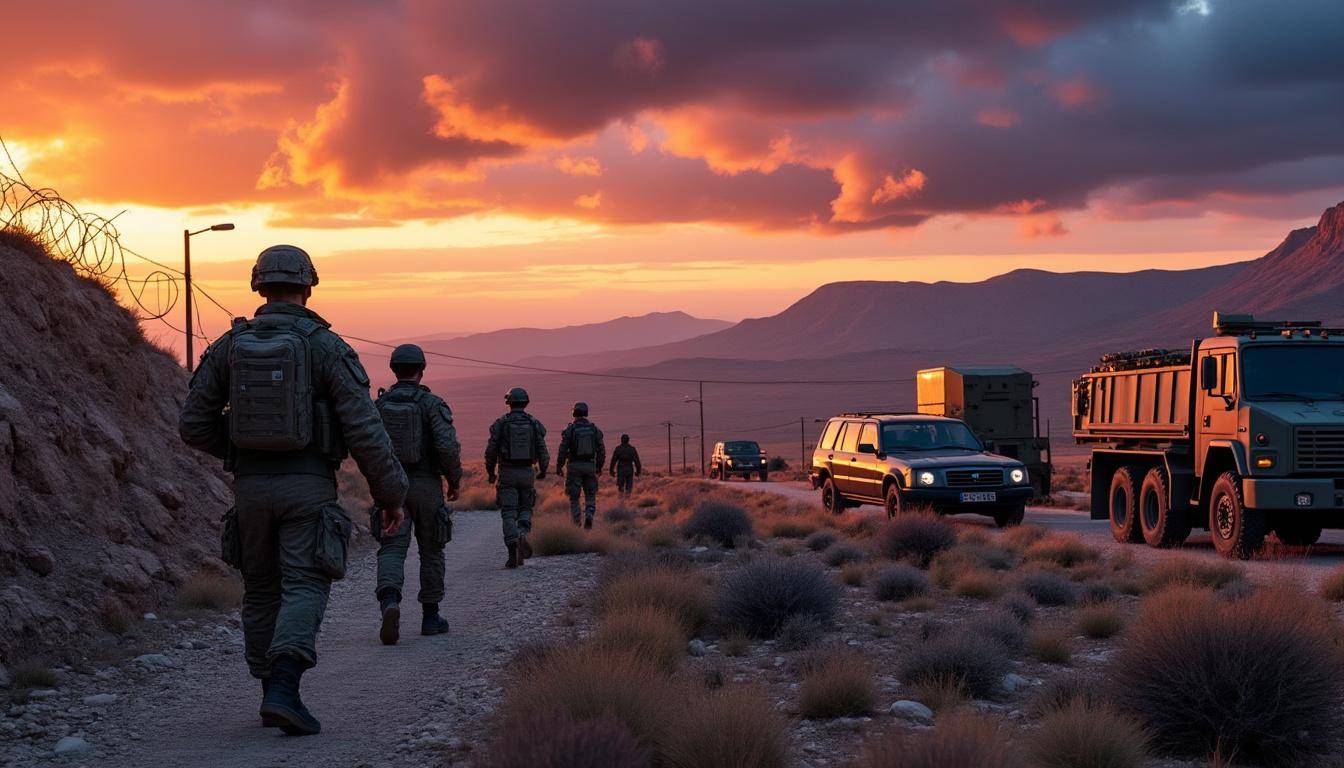
The Israeli government’s recent move to expand its defense allocations has crystallized into a fiscal and strategic turning point. Facing sustained confrontations with Iran and renewed instability along the northern border, the defense establishment has pressed for a package that pushes the nation’s military spending toward NIS 177 Billion. This development reflects both immediate operational needs—rising reservist mobilization, ammunition consumption, and urgent procurement—and longer-term rethinking of how a small open economy sustains prolonged conflict. In this dispatch I examine the numbers behind the headline, the mechanics of wartime budgeting, and the trade-offs that financial and defense planners are weighing in 2026.
Israel Defense Budget Surge: Numbers, Timeline, and Fiscal Context
The spike in Israel’s defense commitments has been dramatic. What began as a government-approved base of NIS 112 Billion in December was quickly rendered insufficient by unfolding events. Within weeks, official allocations were revised upward to roughly NIS 144 Billion, and in private briefings the defense establishment pushed for as much as NIS 177 Billion to cover a campaign that may last far longer than originally anticipated. This escalation is not mere headline inflation; it is rooted in concrete operational math and contingency planning.
A core driver of the upward trajectory is the mismatch between peacetime budget planning and wartime needs. The government now estimates that each day of kinetic operations imposes about NIS 1.5 billion in incremental military expenditure. That figure captures ordnance use, sorties, logistics, fuel, and surge personnel costs. Given that some components of wartime expense can be amortized across fiscal years, not all this spending is booked immediately, but the cumulative fiscal pressure is real and persistent.
To put the numbers in context I prepared a concise budget table that compares authorization points, supplements, and special reserves approved since late 2025. Note the growth in supplemental votes and the appearance of ad hoc “urgent procurement” items—an indication that wartime procurement pipelines are being stretched.
| Budget Item | Amount (NIS) | Rationale |
|---|---|---|
| Approved 2025 Baseline | 112,000,000,000 | Pre-conflict defense envelope set by the cabinet in December |
| Supplemental Revisions | 144,000,000,000 | Rising operational tempo and pre-war readjustments |
| Defense Establishment Demand | 177,000,000,000 | Anticipation of prolonged conflict with Iran and escalations on the Northern Front |
| Recent Special Reserve | 13,000,000,000 | Dedicated war reserve for immediate expenditures |
This table makes clear that the shift to NIS 177 Billion is a cumulative response: baseline, revision, and then an expansive demand. The government has also authorized a short-term NIS 32 Billion supplement pending Knesset approval, and separately approved around NIS 2.3 billion for urgent procurement items. These stopgap measures reveal the tension between legal budget procedures and battlefield realities.
From a fiscal viewpoint, this kind of supplemental spending raises important questions about deficit trajectories, borrowing strategies, and the sequencing of expenditures. The Knesset is being asked to consider additional allocations while the economy operates under a continuation budget—where, until the full 2026 appropriation is passed, monthly spending is limited to one-twelfth of the prior year’s allocation. That mechanism reduces budgetary flexibility at a time when the defense sector requires rapid funding flows.
Finally, one should not understate the political dimension. Closed sessions with Prime Minister Netanyahu and defense chiefs reveal both strategic caution and the acknowledgment that current contingencies could “stretch” into a multi-year dynamic. For markets and bondholders, such uncertainty increases risk premia; for ministries, it increases the complexity of cash management. The key insight: the path from NIS 112 Billion to NIS 177 Billion is a function of both operational consumption and strategic hedging against protracted Iran tensions—an evolution that will shape Israel’s fiscal posture in the near term.
Operational Demands: Reservists, Northern Front Pressures, and Daily Cost Drivers
Operational realities on the ground are the clearest explanation for the budget spike. At the programmatic level, the Defense Ministry’s original plan envisioned drafting up to 40,000 reservists on rotation. That assumption presumed a limited campaign. As contingency planning evolved, commanders raised that operational ceiling first to 60,000 and then to nearly 100,000 reservists in active duty. Each additional increment of personnel increases recurring payroll, per-diem, logistical support, and long-term pensions.
Personnel And Mobilization Costs
Mobilizing reservists is expensive in both direct and indirect ways. Direct costs include pay, allowances, and overtime. Indirect costs manifest as interruptions to private-sector productivity when skilled professionals and business owners are drafted. For example, a finance-sector manager based in Tel Aviv who serves in a reserve intelligence unit may lead to downstream operational delays in corporate decision-making. Those macroeconomic second-order effects matter to policymakers because they translate into GDP drag beyond the immediate military bill.
On the procurement side, the consumption rate of munitions and expendable equipment is a large line item. The government’s daily estimate of NIS 1.5 billion per day covers consumables: artillery rounds, precision-guided munitions, fuel for aircraft, and spare parts. When the tempo of operations is high, supply chains are stressed and prices for scarce items can spike, necessitating expedited procurement at premium rates.
Logistics, Wear-And-Tear, And Fleet Renewal
The operational footprint also accelerates depreciation of high-value platforms—armored vehicles, airframes, and naval assets. Sustained sorties and ground operations require maintenance cycles that are both time-consuming and costly. When a heavy-lift helicopter or armored brigade is operated intensively, its overhaul schedule moves forward and replacement timelines shorten. These are not discretionary costs; they are driven by usage rates and the physics of equipment life.
A practical illustration: during a two-week surge in early 2026, the Defense Forces reported that roughly NIS 20 billion had been spent. That rapid burn rate included munitions, temporary base expansions, and accelerated contracting for spare parts. The expansionary fiscal envelope is therefore not only to pay salaries but to keep equipment and supply lines intact.
- Personnel costs: pay, allowances, and productivity loss in the civilian economy.
- Consumables: munitions, fuel, and expendables consumed at a higher rate.
- Maintenance: accelerated overhaul cycles and replacement of worn equipment.
- Urgent procurement: expedited contracts at premium prices to close immediate gaps.
This breakdown shows how day-to-day operations compound into strategic funding needs. If the Northern Front escalates—particularly along the Lebanon border—the rate of resource consumption will rise further, possibly necessitating expanded drafts and greater use of reserves. The key insight: durable operations convert short-term surges into persistent budgetary pressure that must be financed through a blend of reserves, borrowings, and reallocation.
Macro-Fiscal Implications: Deficits, Continuation Budgets, And Market Responses
From a macro-financial standpoint the budget increase raises questions about fiscal consolidation, debt issuance, and the monetary environment. In 2026, Israel’s policymakers face a trade-off familiar to countries under stress: fund the security effort fully now and accept a higher near-term deficit, or attempt to smooth expenditures over time via borrowing and rolling reserves. Each path has distinct implications for interest rates, inflation expectations, and investor confidence.
The Knesset debate has focused in part on a proposal to expand the deficit ceiling from 3.9% to 5.1% of GDP. This move recognizes wartime exigencies while signaling to markets that the state takes its borrowing needs seriously. In practical terms, a higher deficit means a greater supply of government bonds. If domestic demand for these securities absorbs the paper without a marked rise in yields, the economic impact will be muted. But if external and private investors demand higher returns, the cost of financing escalates.
One operational constraint complicating fiscal response is the continuation budget mechanism, under which the government may spend only a twelfth of the previous year’s budget each month while a full appropriation is pending. This conservativism is meant to avoid fiscal drift, but it can choke liquidity in a time-sensitive environment. Therefore, executive-level supplements, special war reserves, and emergency procurement authorizations become the legal paths to immediate funding. These are temporary fixes but they leave a residual accounting trail that must be reconciled when the full budget is passed.
The finance ministry has indicated that not all war costs will be booked in the 2026 budget; some are expected to be distributed across multiple years. From the debt-management perspective, that phasing can be advantageous: it spreads the financing shock and reduces rollover risk. However, it also delays full transparency and can complicate medium-term fiscal planning.
Market reactions will hinge on three signals: the credible duration of the conflict, the government’s plan to finance the gap, and structural measures to protect growth. If policymakers articulate a clear financing package—mixing foreign credit lines, bond issuance, and re-prioritized spending—markets are likely to accept a temporarily wider deficit. If not, bond yields will reflect risk premia, and the central bank may face pressure to tighten policy to contain inflationary spillovers.
A final piece of this puzzle is the social dimension. Reallocating domestic resources toward the military may require trimming non-defense programs or temporarily raising revenues. That creates political friction and distributional concerns that must be managed carefully to preserve social cohesion during wartime. The key insight: macro-fiscal choices will determine whether higher military spending becomes a manageable cycle or a long-term drag on growth and investor confidence.
Strategic Defense, Regional Conflict, and the Iran Tensions Dynamic
Strategic considerations are at the heart of the defense budget conversation. The decision to seek a higher envelope—ultimately pushing toward NIS 177 Billion—is not only an accounting exercise but a declaration about how Israel intends to position itself in a shifting Middle East. The core drivers include the prospect of a prolonged confrontation with Iran and the potential widening of hostilities along the Northern Front, where Hezbollah and other non-state actors remain active.
To humanize these strategic considerations, imagine “Amir,” a hypothetical defense planner in Jerusalem who must balance immediate tactical demands with future deterrence. Amir sees three strategic imperatives: maintain operational readiness, protect the home front, and preserve the industrial base that supplies advanced systems. Each imperative pushes budget allocations in different directions—immediate munitions versus long-term procurement and R&D.
Iran Tensions And Regional Spillovers
Iran’s posture in 2026 continues to shape threat assessments. The possibility of asymmetric strikes, proxy escalations, and direct confrontation has become a central assumption in defense planning. The Israel defense establishment’s call for a larger budget reflects the need for layered defenses—missile interceptors, early-warning systems, hardened infrastructure, and naval readiness. These capabilities are expensive to maintain and even more costly to surge.
Regional alliances matter as well. Israel’s strategic calculus includes the posture of the United States, partners in the Gulf, and European security commitments. External support can reduce fiscal strain—through grants, military aid, or favorable credit—but it cannot substitute for domestic capacity. The long-term budgeting conversation must therefore integrate both allied contributions and sovereign investments.
Balancing Immediate Defense And Economic Stability
A recurring strategic dilemma is whether to prioritize immediate tactical superiority at the expense of longer-term sustainability. Rapid procurement of munitions secures battlefield needs, but sustained investment in technological edge—drones, cyber, and air defenses—drives future deterrence. The expanded defense envelope aims to do both, but implementation will require strict program management to avoid waste or duplication.
To illustrate, consider a procurement choice between buying additional missile interceptors for immediate deployment and investing in domestic manufacturing upgrades that reduce future unit costs. The former pays off in the near term; the latter strengthens resilience and reduces fiscal churn over time. Strategic planners like our fictional Amir must weigh these trade-offs against uncertain timelines for the Iran confrontation and the Northern Front’s evolution.
The key insight: moving to NIS 177 Billion is a strategic hedge—intended to buy both operational capacity and time for longer-term defense modernization in a volatile region.
Policy Options: Funding Mechanisms, Procurement Efficiencies, and Economic Resilience
Policymakers have several levers to reconcile rising defense spending with the need to sustain the civilian economy. In this section I outline practical policy options, their likely effects, and how finance teams can sequence actions to maintain macroeconomic stability while meeting operational needs.
Financing Mix And Immediate Measures
Short-term financing typically combines three instruments: drawing on fiscal reserves, issuing debt, and securing foreign assistance. Israel has moved on all three fronts. The government has created a NIS 13 Billion special reserve for war expenditures and authorized urgent procurement funds. At the same time, the Treasury will likely increase bond issuance to cover deficits while negotiating bilateral support for defense procurement with allied governments.
A prudent strategy might allocate short-term aid and credit lines to cover urgent procurement while reserving domestic borrowing for multi-year modernization programs. This approach limits the need to crowd out private-sector credit and protects exchange-rate stability.
Procurement Reforms And Efficiency Gains
Procurement systems matter. Rapid contracting during a crisis often leads to premium pricing and contractual inefficiencies. Identifying process reforms that accelerate delivery without sacrificing oversight—pre-negotiated frameworks, joint procurement with allies, and streamlined certification—can reduce costs significantly. Israel’s robust defense industry is an asset here; strategic partnerships with domestic suppliers can shorten lead times while supporting employment.
Another efficiency measure is inventory optimization. By better tracking munitions and parts stockpiles, the Defense Ministry can avoid duplicate purchases and make informed trade-offs between immediate consumption and stock replenishment.
Fiscal Policy Trade-Offs And Social Considerations
Funding a larger defense envelope inevitably raises distributional questions. Options include temporary tax measures, reallocation from non-essential programs, and delayed capital projects. Each carries political cost. A balanced path combines temporary revenue increases with targeted spending cuts that minimize long-term growth damage.
Social cohesion is crucial during wartime. The government should design compensatory measures for sectors and communities most affected by mobilization—support for businesses that lose key employees to reserve duty, targeted transfers to households, and labor-market programs to help displaced workers. These measures protect consumption and economic confidence while allowing the state to redirect resources to the front.
Practical Steps For Investors And Financial Managers
For institutional investors and finance teams monitoring the situation, pragmatic steps include monitoring yield curve movements, assessing sovereign credit spreads, and stress-testing portfolios for fiscal scenarios. Businesses with exposure to Israel should consider continuity plans for staff and supply chains, and examine contract clauses related to mobilization risks.
For readers interested in the political context and the coalition dynamics that shape wartime policy, see this thoughtful discussion of political actors and wartime shifts in the coalition represented by a Haredi politician’s public comments: Haredi politician’s take on Gaza conflict. For a broader view of wartime political realignment and its fiscal implications, review this related analysis: analysis of political shifts during wartime.
In sum, the options available to fund a larger defense budget range from front-loaded borrowing and aid to efficiency gains and social protection measures. Each option has trade-offs, but with disciplined financial management Israel can sustain necessary military operations while preserving macroeconomic stability. The key insight: smart sequencing of funding, procurement reform, and social cushioning will determine whether the expanded defense budget becomes a temporary surge or a long-term structural shift in national priorities.