


Coherent, Lumentum and Applied Optoelectronics lost 19.5%, 41.1% and 39.0%, respectively, between the October 28 and November 6, 2026, U.S. stock-market closes, even as their latest quarterly revenue grew rapidly. Arista Networks declined a smaller 8.5% over the same period, while the iShares Semiconductor ETF (SOXX) dropped 21.5%. Friday’s sharp rebound across the group did not erase those losses.
This is not evidence that hyperscalers have stopped buying optical networking hardware. The more useful question is whether the enormous expectations embedded in AI infrastructure stocks can be supported by margins, manufacturing execution and free cash flow. Lumentum now faces another complication: its proposed $115 billion enterprise-value acquisition by Marvell, whose collapsing stock price directly changes the theoretical value offered to Lumentum shareholders.
The Optical Selloff: A Valuation Reset, Not Proof of Weak Demand
Optical links are central to the construction of large AI clusters. As the number of accelerators rises, networks must move data between chips, racks and data centers with less latency, greater bandwidth and manageable energy consumption. Advanced optical transceivers, lasers, optical circuit switches and high-performance Ethernet systems address different parts of that problem.
Yet increased infrastructure demand does not guarantee attractive shareholder returns at any purchase price. Even a company doubling revenue can see its share price fall if its stock previously reflected faster growth, higher future margins or unusually cheap financing. Competitive pricing, customer concentration and the cash required to expand production can all limit the conversion of orders into lasting earnings.
The broader Wall Street recovery on November 6 showed why a one-day bounce needs context. The following comparison uses identical regular-session closing dates, October 28 and November 6, rather than mixing intraday peaks with closing prices.
| Security | Oct. 28 close | Nov. 6 close | Change | Nov. 6 daily gain |
|---|---|---|---|---|
| Coherent (COHR) | $239.59 | $192.81 | -19.5% | +13.58% |
| Lumentum (LITE) | $913.95 | $538.59 | -41.1% | +5.67% |
| Applied Optoelectronics (AAOI) | $82.22 | $50.13 | -39.0% | +6.91% |
| Arista Networks (ANET) | $186.72 | $170.80 | -8.5% | +7.31% |
| Marvell Technology (MRVL) | $251.65 | $141.20 | -43.9% | +5.73% |
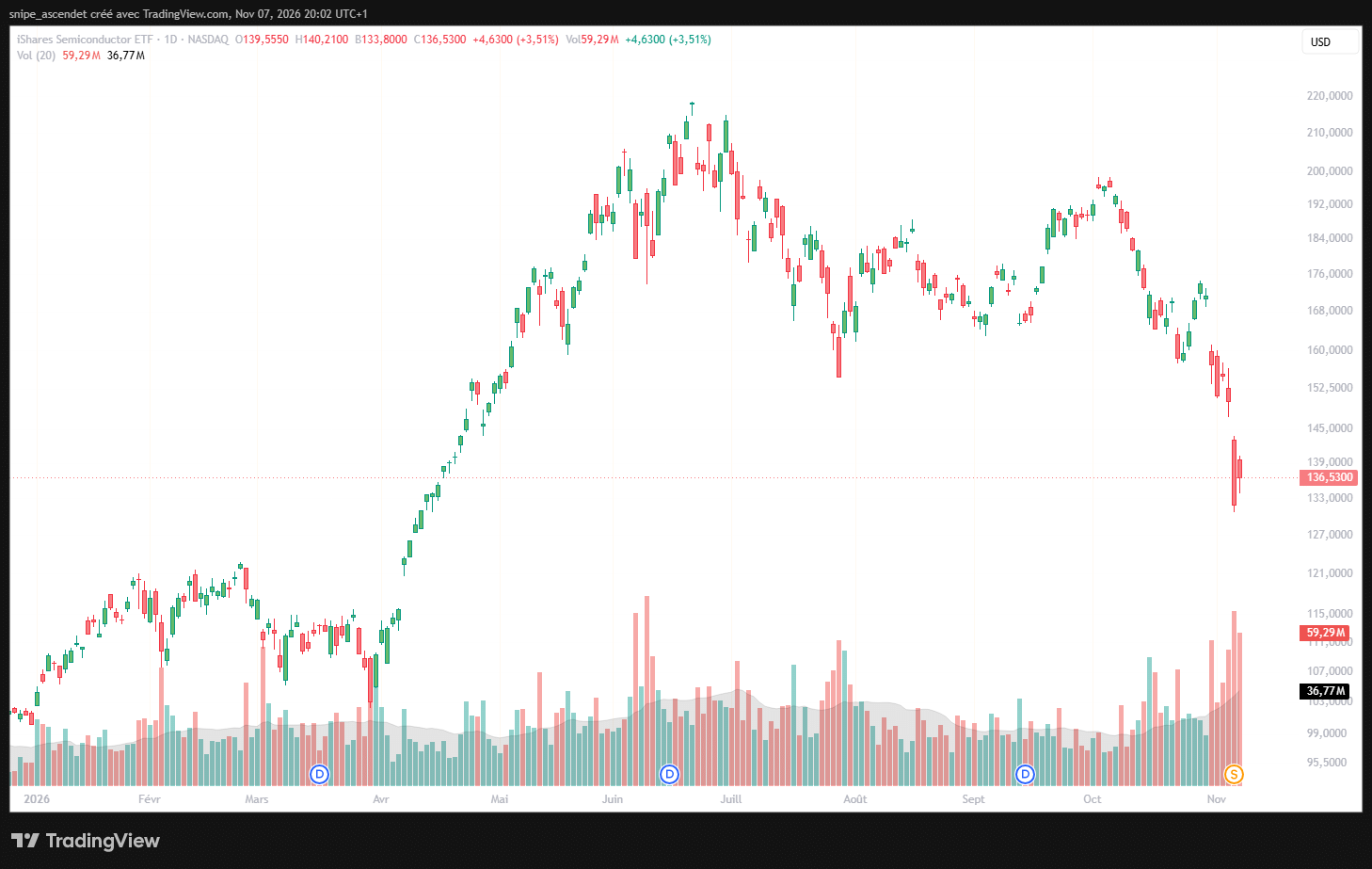
| iShares Semiconductor ETF (SOXX) | $173.98 | $136.53 | -21.5% | +3.51% |
These figures represent price returns, not total returns. SOXX is a broad semiconductor benchmark, not a dedicated optical-networking fund. The drawdowns are consistent with a sector-wide repricing, but prices alone cannot isolate the impact of earnings, deal speculation, fund flows or macroeconomic factors.
Comparing Sales Growth and GAAP Profit Margins
All four companies reported quarterly results for periods ending in September 2026. Coherent and Lumentum call these their first fiscal quarter of 2027; Arista and Applied Optoelectronics report third-quarter calendar 2026 results. The percentages below are comparable as accounting metrics, although product mix differs substantially.
| Company | Latest quarterly revenue | Year-over-year growth | GAAP gross margin | GAAP operating margin |
|---|---|---|---|---|
| Coherent | $2.37 billion | 49.9% | 39.1% | 15.9% |
| Lumentum | $1.263 billion | 136.5% | 51.0% | 28.5% |
| Applied Optoelectronics | $269.9 million | 127.6% | 28.2% | Not used for comparison |
| Arista Networks | $3.658 billion | 58.5% | 63.6% | 44.9% |
The gross margin spread is revealing. Arista generates significantly more gross profit per dollar of sales, in part because its business model includes differentiated network systems and software. AAOI has the lowest reported gross margin of this group. A higher margin does not automatically justify a higher stock multiple, but it provides a larger buffer against component costs, pricing pressure and manufacturing setbacks.
A reported-versus-consensus earnings table is not included because a consistent, independently verified analyst consensus was not established for all four companies on the same basis. The figures above are company-reported GAAP measures, not adjusted estimates.
Coherent: Fast Growth Meets a Demanding Cash-Flow Test
Coherent’s fiscal first-quarter earnings release reported $2.37 billion of revenue, up 49.9% from the prior-year period. Its data center and communications segment generated approximately $1.95 billion of that total. GAAP gross margin improved to 39.1%, and diluted GAAP earnings reached $1.90 a share.
Management expects second-quarter fiscal 2027 revenue of $2.55 billion to $2.75 billion. It has also outlined longer-term ambitions for faster growth and non-GAAP gross margin above 45% before the end of calendar 2028. These are management targets rather than established future results.
But the cash-flow statement is a counterweight to strong earnings. Coherent used $92.7 million in operating cash during the September quarter and spent $775.5 million on additions to property, plant and equipment. Under the standard operating cash flow minus capital expenditures definition, that implies roughly negative $868.2 million of quarterly free cash flow. The figure reflects one quarter, not a forecast for the full year, and should be assessed alongside working-capital movements and the timing of investment.
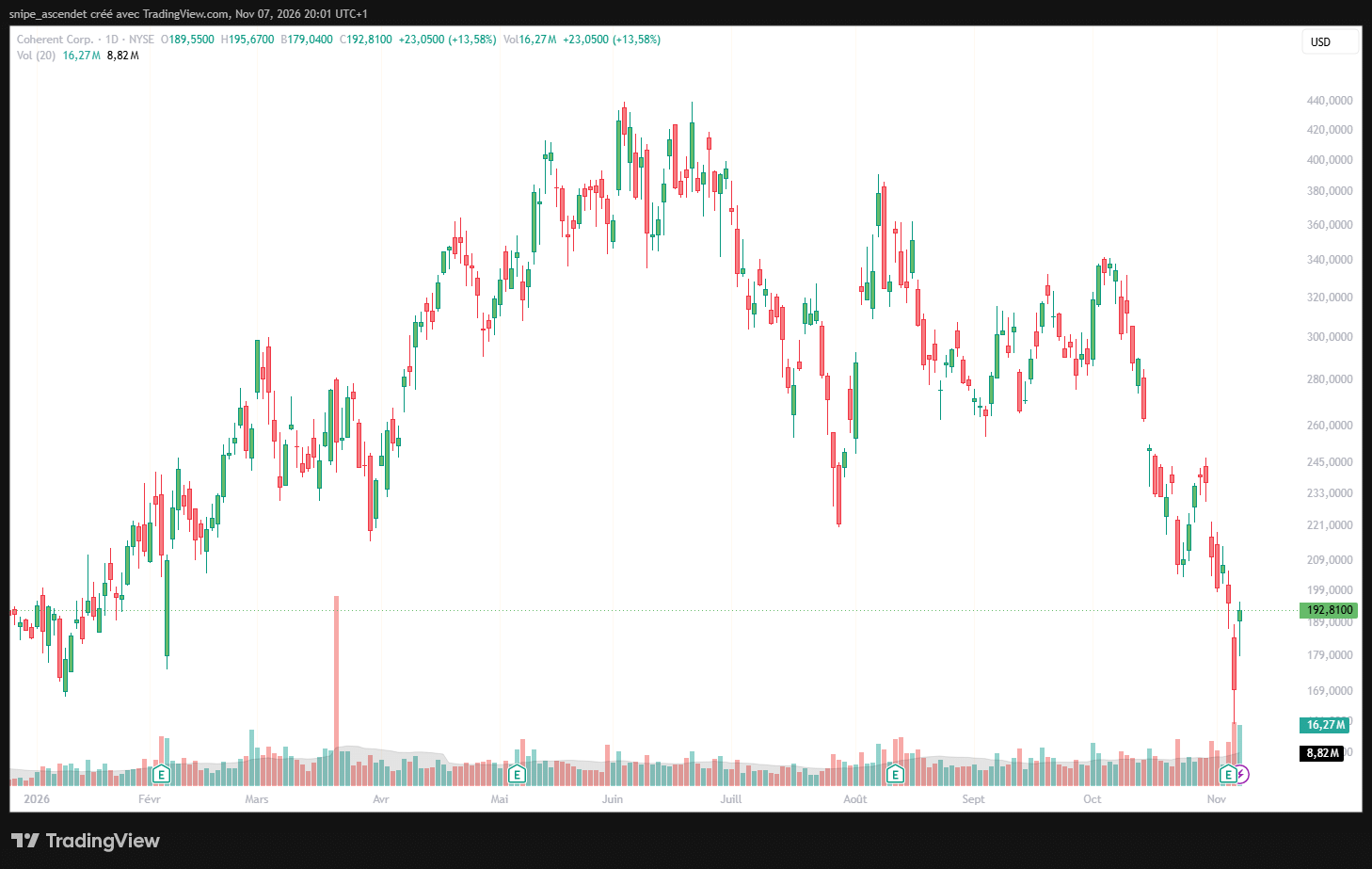
The investment thesis therefore depends on more than accelerating demand for optical links. Coherent needs to translate installed capacity and revenue growth into sustainable cash returns without allowing expansion costs or financing requirements to overwhelm shareholders.
Lumentum: Improving Profitability, but No Longer a Standalone Story
Lumentum’s fiscal first-quarter 2027 results showed revenue of $1.263 billion, 136.5% above the year-earlier quarter. GAAP gross margin rose to 51.0%, up from 34.0% a year earlier, while GAAP operating margin reached 28.5%. The company guided to $1.575 billion to $1.625 billion in revenue for the following quarter.
Management said it had secured a second major near-packaged/co-packaged optics win supported by purchase commitments exceeding $5 billion. These commitments support visibility but should not be confused with revenue already earned or guaranteed cash receipts. Optical circuit switches and pump lasers were among the demand drivers cited by the company.
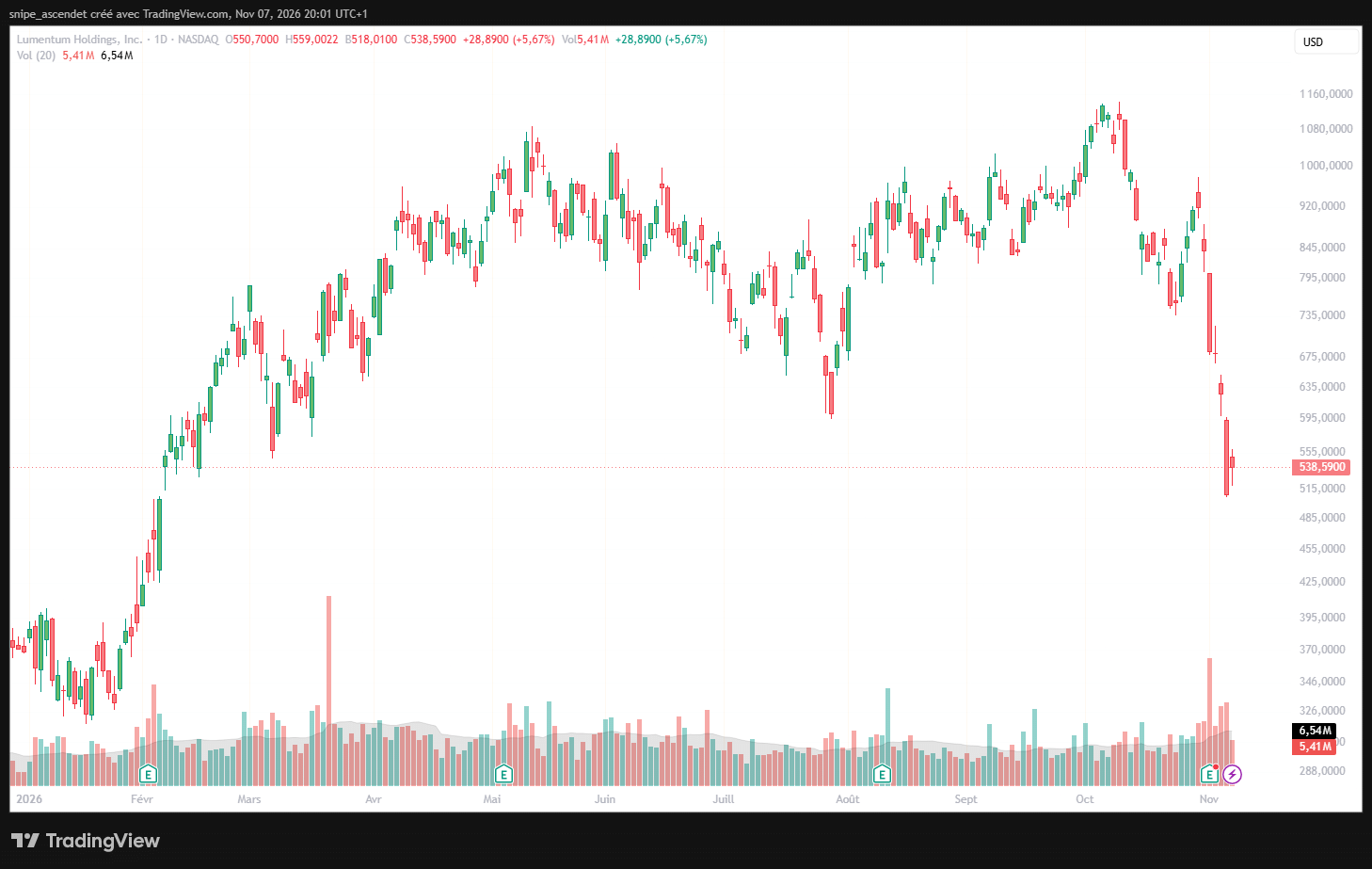
The stock, however, can no longer be analyzed as an ordinary stand-alone compounder. Its future ownership structure and the terms of the proposed Marvell combination now exert a substantial influence on the share price. The company’s operating improvement and its deal-related risk must be evaluated separately.
Applied Optoelectronics: Revenue Is Surging, but Execution Matters
Applied Optoelectronics reported $269.9 million in third-quarter revenue, compared with $118.6 million a year earlier, and returned to GAAP net profitability with net income of $6.3 million. Its GAAP gross margin was 28.2%, only slightly above 28.0% in the prior-year quarter. In other words, sales nearly doubled and then some, but the gross margin expansion remained limited.
AOI expects fourth-quarter revenue of $385 million to $420 million and said it has a multi-year strategic agreement with a Tier 1 hyperscale data-center customer. Still, management disclosed delays in its U.S. 2027 capacity expansion linked partly to obtaining sufficient electrical power and construction issues. The company now targets installed equipment capacity for more than 500,000 800G and 1.6T units a month by the end of 2026 and more than one million by the end of 2027.
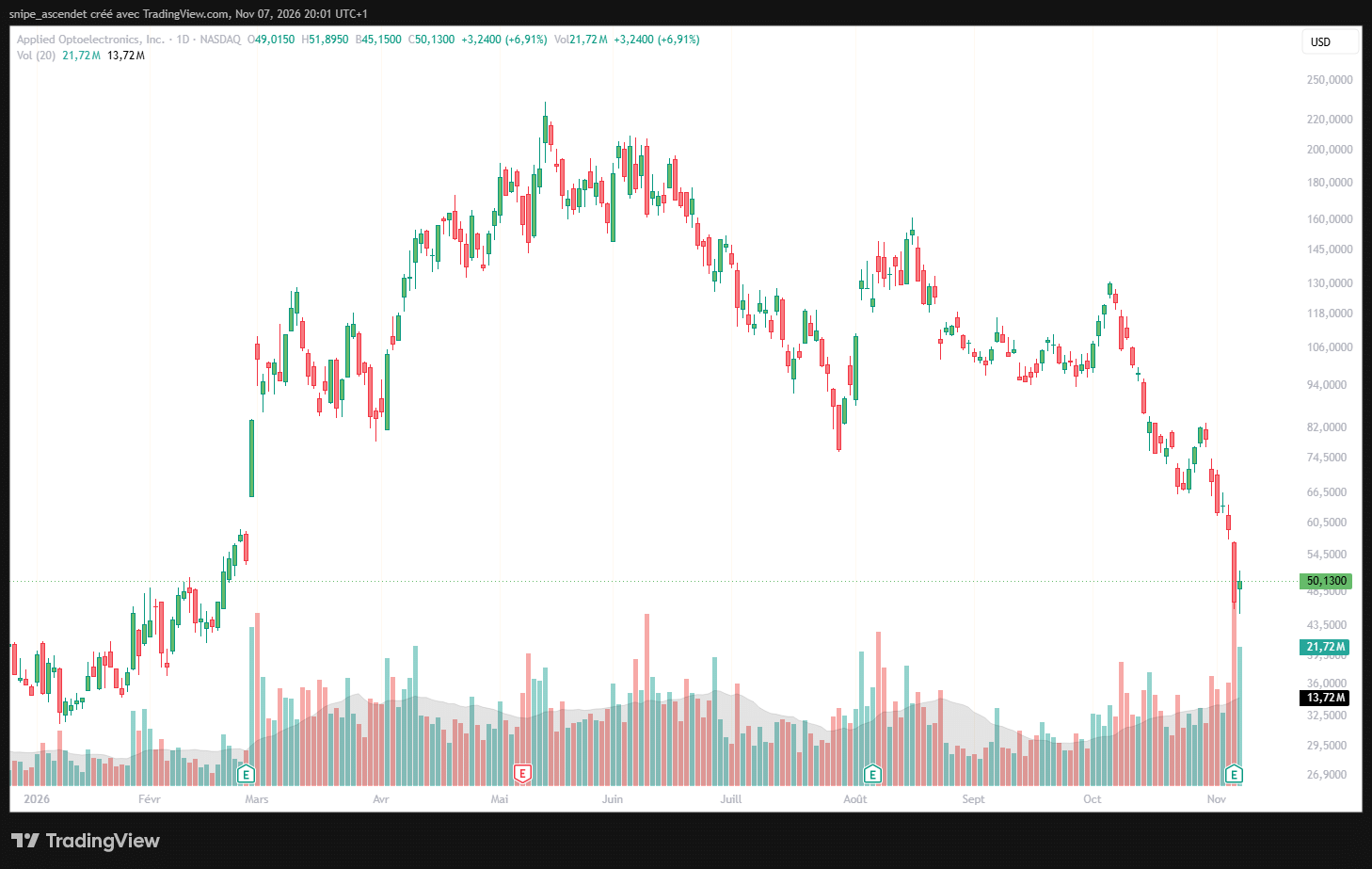
These targets illustrate both the opportunity and the risk. Higher output can support revenue, but power availability, yield improvements, manufacturing costs and customer acceptance determine whether expanded capacity generates sufficient profit. AAOI’s smaller revenue base and thinner gross margin make that operating execution particularly important.
Arista Networks: The Strongest Margin Profile, With Different Exposure
Arista’s third-quarter results were notably strong: $3.658 billion in revenue, 58.5% year-over-year growth, 63.6% GAAP gross margin and 44.9% GAAP operating margin. The company expects fourth-quarter revenue of $3.9 billion to $4.0 billion.
Its role in AI infrastructure is broader than that of a transceiver supplier. Arista sells switching and routing platforms and develops its network operating software, placing it closer to the architecture and operation of high-performance Ethernet fabrics. That differentiation helps explain why comparing its gross margin directly with a component manufacturer’s economics requires care.
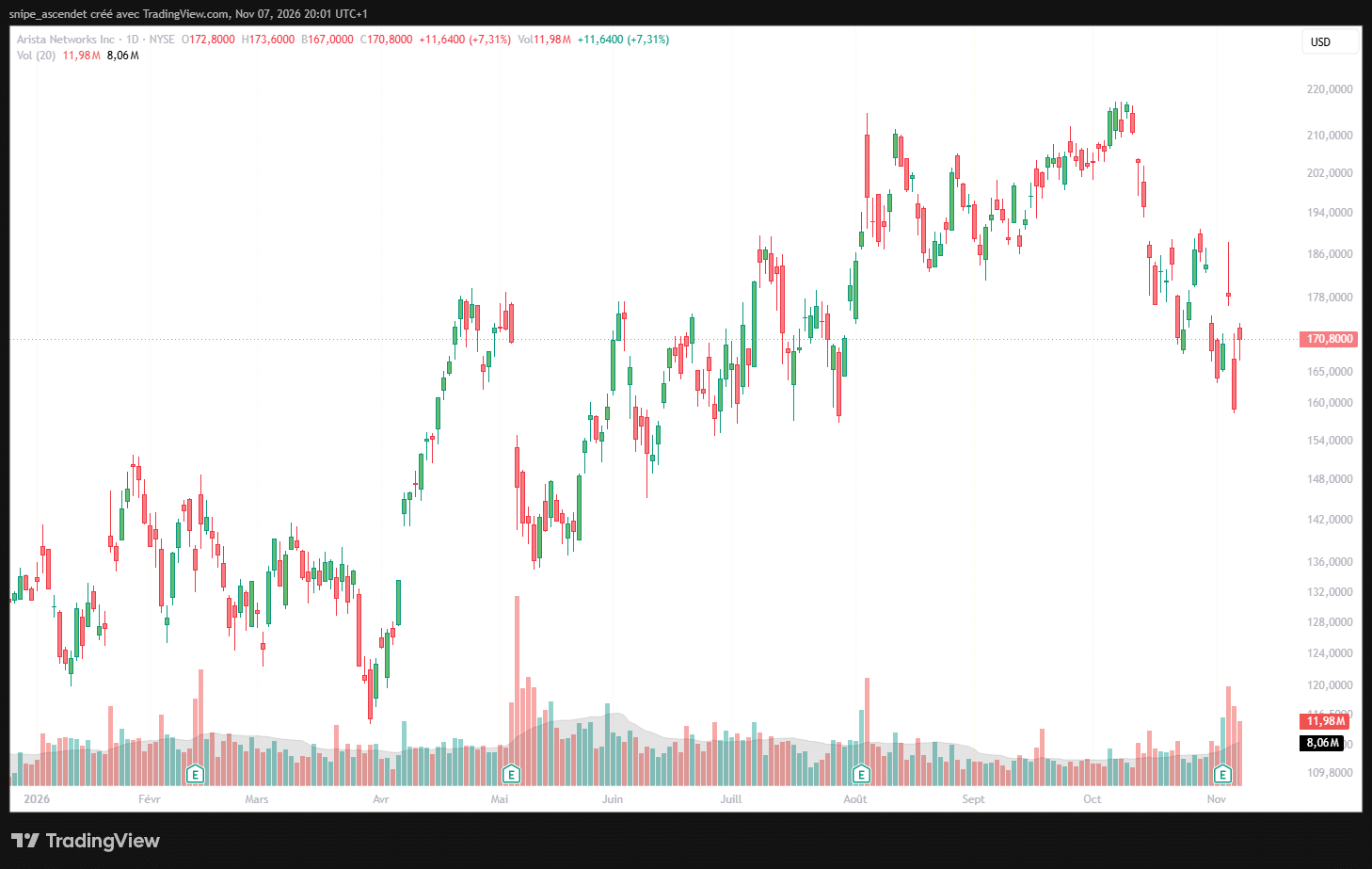
Arista’s smaller 8.5% price decline between October 28 and November 6 is consistent with relative resilience, not immunity from market risk. Its share price remains sensitive to the spending plans of large cloud customers, competition in Ethernet networking, the timing of product transitions and the valuation investors are willing to pay for sustained high margins.
The Marvell-Lumentum Deal: A Moving Target for Valuation
On November 2, Marvell and Lumentum announced a definitive all-stock agreement under which Lumentum shareholders would receive 4.5 Marvell shares for each Lumentum share. The companies described an implied Lumentum enterprise value of approximately $115 billion at the announcement’s reference prices. That historical figure is not a guaranteed future payment or a fixed cash offer.
At Marvell’s November 6 closing price of $141.20, the fixed exchange ratio equated to $635.40 in Marvell shares per Lumentum share. Lumentum itself closed at $538.59, or 15.2% below that theoretical exchange value. The $96.81 per-share difference is a market spread, not risk-free profit: completion is uncertain, the buyer’s share price can change and an investor attempting a hedge faces financing, borrow and timing risks.
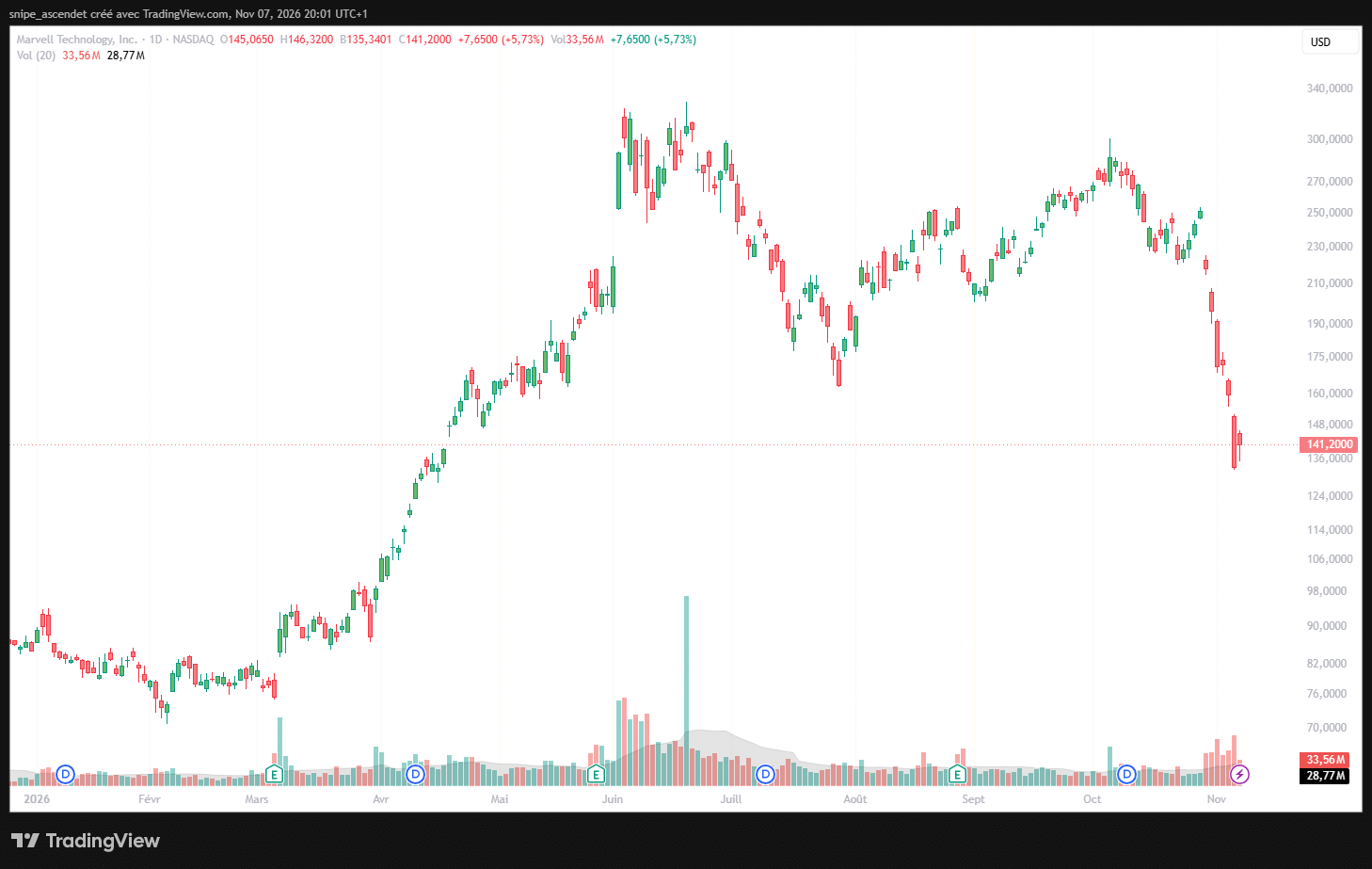
The expected closing is in the first half of calendar 2028, subject to shareholder votes, regulatory clearances and other customary conditions. The proposed combination may create a larger electrical-and-optical connectivity platform, but the estimated synergies and total addressable market are company projections, not proven outcomes. As Marvell’s shares change in value, so does the consideration available to Lumentum shareholders under the exchange formula.
The deal also changes the competitive map. Coherent, AAOI and Arista must evaluate a prospective, more vertically integrated rival. Whether integration ultimately improves product economics remains uncertain until the companies complete the transaction and demonstrate execution.
SOXX Shows This Is Bigger Than Optical Components
The iShares Semiconductor ETF fell 21.5% from October 28 to November 6, despite gaining 3.51% on Friday. That drawdown indicates pressure well beyond the four optical-networking names. Investors were reconsidering valuations across AI-linked hardware and semiconductor exposure, although the relative performance differences among the companies remain material.
Chip-equipment suppliers face a similar requirement to connect rising investment needs with cash returns. DualFinances’ analysis of Lam Research’s $25 billion repurchase authorization offers another perspective on the relationship between capital intensity, shareholder returns and market volatility.
What Could Reverse the Pressure on Optical Stocks?
A bullish outcome would involve continued high-speed transceiver adoption, rising optical switch shipments, stable pricing and expanding gross margins. For Coherent, improving free cash flow after an investment-heavy quarter would be especially meaningful. For AAOI, the key proof would be translating announced capacity plans into commercially shipped units and stronger unit economics. For Arista, maintaining software-and-systems profitability while scaling AI network deployments would be central.
A bearish outcome would involve slower cloud spending, cost overruns, weak factory yields, more aggressive competition or customer concentration translating into order volatility. Lumentum adds a distinct transaction risk: a protracted review, altered market expectations or further weakness in Marvell shares could maintain a wide discount to the theoretical merger value.
Investors should monitor GAAP gross margins, operating cash flow, capital expenditures, next-quarter guidance, the pace of 800G/1.6T adoption and regulatory updates on the Marvell-Lumentum transaction. These measures provide more information about durable shareholder economics than any single session’s share-price rebound.
The lesson of the recent selloff is not that optical networking has ceased to be a growth market. It is that the market distinguishes between selling vital AI infrastructure and earning an attractive return on the capital required to supply it. Arista currently reports the highest margins in this comparison; Coherent faces a particularly visible near-term cash-flow challenge; AAOI faces manufacturing-execution risk; and Lumentum must be judged partly through Marvell’s stock and the merger’s completion probability.