

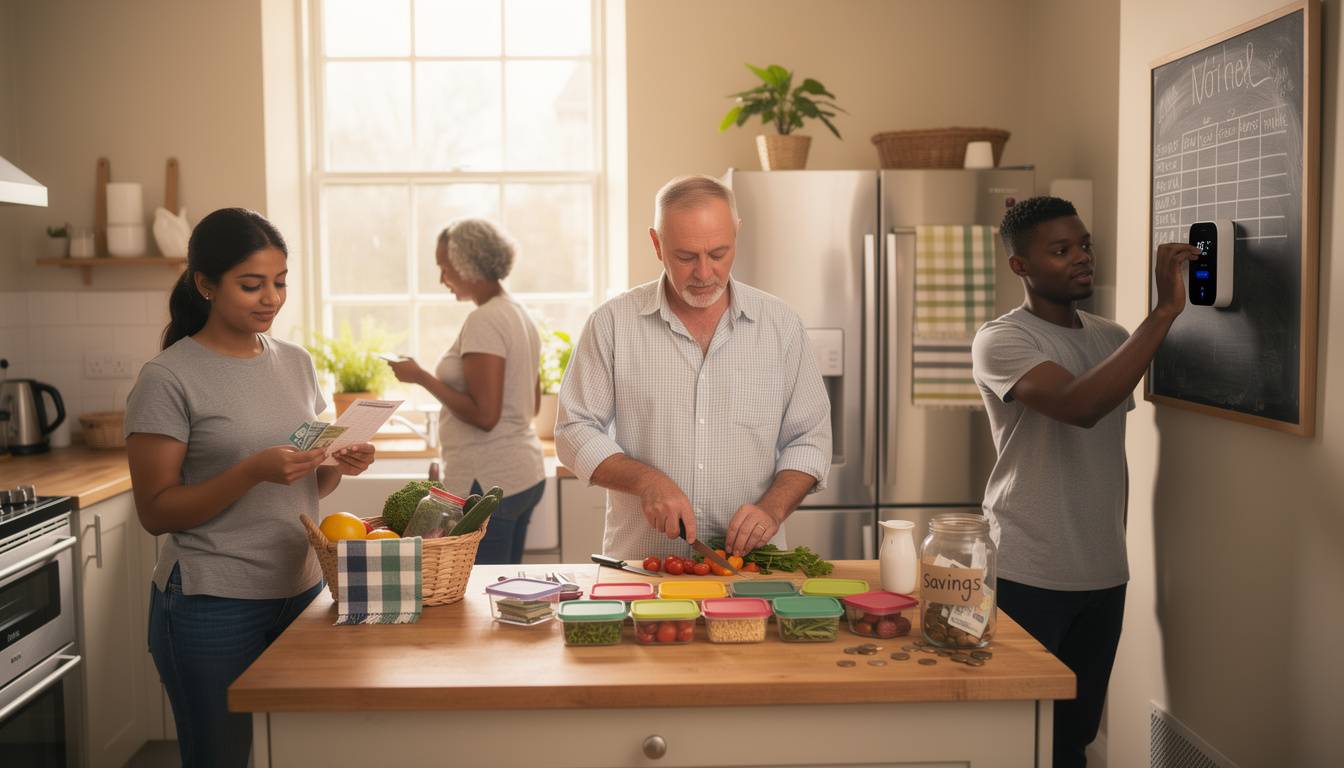
38% of UK adults say they’re always looking for ways to cut costs, even on tiny purchases, and that shift has turned money-saving from a niche habit into a mainstream skill. The strongest pattern isn’t deprivation. It’s precision: better timing, smarter research, sharper budgeting, and a refusal to pay full price when a code, cashback offer, or resale option exists. If you want practical ways to trim everyday spending without living like a monk, these are the habits Brits keep repeating because they work.
Top Money-Saving Tricks Brits Use Every Week
Some habits look small until you repeat them fifty times a year. Making coffee at home, walking short trips, batch cooking, and planning meals around overlapping ingredients don’t sound glamorous, yet they cut the kind of low-grade leakage that wrecks a monthly budget.
Picture Hannah in Leeds: she stops buying a weekday latte at £3.40 and switches to coffee from home four days a week. That single change keeps roughly £54 a month in her account. Add two packed lunches and one fewer app delivery each week, and the saving climbs past £150 without touching rent or insurance.
Brits also keep using old-school frugal tips because they remove temptation rather than relying on willpower. The cash envelope method still works for categories like eating out, toiletries, and weekend extras. When the envelope is empty, spending stops.
15 Everyday Financial Hacks That Keep Bills Lower
- Use discount codes and cashback before checkout, especially on fashion, beauty, and homeware.
- Research big purchases for a few days instead of buying on impulse.
- Check reviews before ordering, which 66% of shoppers now do often or always.
- Make coffee at home instead of buying it on the go.
- Walk or cycle short journeys to cut fuel, parking, and bus fares.
- Cook meals with the same ingredients so less food gets binned.
- Batch cook to avoid convenience spending midweek.
- Heat only the rooms you use rather than warming the whole home.
- Choose low-cost social plans like park meetups, walks, or dinner at home.
- Buy fewer, better items that last longer.
- Abandon online baskets and wait to see if a retailer sends a follow-up offer.
- Give more thoughtfully instead of buying expensive default gifts.
- Buy off-season for coats, garden gear, luggage, and holiday items.
- Use resale apps to buy and sell clothing, tech, and furniture.
- Shop at markdown times for groceries and seasonal stock.
None of that requires extreme cost cutting. It’s steady, repeatable, and dull in the best way. A lot of strong personal finance is boring on purpose, and boring often beats dramatic.
One reason these financial hacks stick is that they fit normal life. You can still meet friends, eat well, and replace worn-out items. You’re just doing it with a plan, a price cap, or a better channel.
How Brits Use Discounts, Coupons, And Sale Hunting Without Buying Rubbish
Hunting for discounts only helps if it lowers spending on things you already planned to buy. Chasing every offer in your inbox does the opposite. The smartest shoppers draw a hard line between a deal and an excuse.
That’s where timing matters. Plenty of people leave items in an online basket overnight to test whether a retailer sends a nudge code. It doesn’t always happen, but when it does, the follow-up offer is often 10% to 15% off or free delivery. A separate email account for first-order promotions can work too, although it’s worth staying organised so you don’t create login chaos.
Comparison tools have become standard practice rather than niche behaviour. Nearly one in five adults now look to finfluencers and online deal communities for cheaper prices on everything from gifts to groceries. Used well, those feeds help. Used badly, they turn shopping into a hobby.
What A Good Deal Actually Looks Like
A solid rule is to compare the final price, not the advertised saving. A £60 kettle marked down from £100 isn’t a win if a similar Russell Hobbs or Philips model sits elsewhere for £49 with stronger reviews. Marketing loves inflated “was” prices; your bank account doesn’t care.
Coupons are strongest when combined with purchase intent, cashback, and retailer timing. For example, a shopper replacing school shoes might stack a welcome code, cashback through TopCashback or Quidco, and a bank card merchant offer. A scattered buyer who opens five tabs and chases every banner ad usually spends more, not less.
| Money-saving move | Best use case | Main risk | Practical fix |
|---|---|---|---|
| Discount codes | Planned online purchases | Buying extra to “justify” the code | Set a firm basket total before checkout |
| Cashback sites | Insurance, travel, electronics, larger orders | Tracking fails or delayed payout | Keep confirmation emails and screenshots |
| Basket abandonment | Fashion, homeware, non-urgent buys | No code arrives and item sells out | Use only for replaceable items |
| Comparison tools | Utilities, phones, appliances | Ignoring delivery or warranty differences | Compare full cost, not headline price |
| Sale hunting | Seasonal goods and planned purchases | Buying because it’s reduced | Keep a written list with target prices |
That same discipline matters on the high street. The yellow sticker isn’t the strategy. The strategy is knowing what you were prepared to spend before you saw it.
Why Quality Over Quantity Saves More On Big Purchases
Cheap gear that fails fast is expensive. That’s why the strongest shift in 2026 is toward buying fewer items and expecting them to last longer. 61% of consumers say they now make fewer big-ticket purchases but want more life out of each one, while 49% research heavily before committing.
That change is sharpest in tech. A striking 96% of shoppers say value matters when choosing gadgets, but value doesn’t mean the lowest sticker price. It means a product performs well, lasts, and avoids replacement within a year or two.
Annika Bizon of Samsung summed up the mood well: people want devices that work harder day to day. Strip out the corporate language and the point still stands. Buyers want a phone, appliance, or laptop that doesn’t become annoying after six months.
Where Value Matters Most For Brits
When people rank major purchases by the balance of quality and price, tech comes first at 56%, followed by home appliances at 50% and holidays at 36%. That order makes sense. A washing machine, a smartphone, or a laptop gets used constantly, so reliability matters more than a one-off bargain thrill.
Smartphone buyers are especially direct about what counts as value. 70% point to long battery life first, then 50% mention smooth performance and 49% durable design. No one wants a cheap handset that lags, dies by 4 p.m., and needs replacing before the contract ends.
| Purchase category | What shoppers value most | What to check before buying |
|---|---|---|
| Smartphones | Battery life, speed, durability | Software support years, battery capacity, repairability |
| Home appliances | Reliability and running cost | Energy rating, warranty length, spare parts availability |
| Holidays | Total trip value, not just fare | Baggage fees, transfers, cancellation terms |
| Laptops and tablets | Performance over hype features | RAM, storage, battery claims, real reviews |
A £120 air fryer that lasts five years beats a £55 one that fails twice and wastes energy. Same logic with coats, shoes, and cookware. Prioritising quality over quantity isn’t luxury spending; it’s delayed replacement spending.
That’s also why reviews matter so much. A quarter of adults now say they feel more in control of their finances than before, and part of that control comes from reading what owners say after six months, not what the listing claims on day one.
Budgeting Habits That Cut Everyday Spending Without Feeling Miserable
The best budgeting system is the one you’ll still use in three months. For many households, that means a light-touch weekly check rather than a perfect spreadsheet full of abandoned categories. You need visibility, not theatre.
Try a weekly review built around four numbers: groceries, transport, eating out, and subscriptions. Those categories catch a huge share of everyday spending, and each one has an obvious pressure point. Groceries get cheaper with meal repetition. Transport falls when short trips are walked. Eating out drops when batch cooking is already done. Subscriptions need blunt cuts, not debates.
Low-cost socialising deserves more credit too. Meeting for a walk, cooking at home, or doing a film night with one shared streaming account is not a consolation prize. It’s often better value than crowded bars and expensive chain restaurants, and it removes the “I’ve had a hard week” spending spiral.
Small Shifts That Add Up Fast
Take a couple in Bristol trying to trim £250 a month. They switch two restaurant nights to home dinners, heat only the living room in the evening, sell unused clothes on Vinted, and buy birthday gifts during off-season promotions. None of those changes is dramatic alone. Together, they can hit the target inside one billing cycle.
Gifting is another overlooked leak. Thoughtful doesn’t have to mean pricey, and people usually remember relevance more than receipt totals. Buying ahead during quiet retail periods works far better than grabbing whatever is left in the week before Christmas.
There’s a broader cultural change underneath all this. Brits aren’t just trying to spend less. They expect more value from every pound than they did two or three years ago, and 40% now say that expectation has risen.
If you want one clean starting point, track every non-essential purchase for the next 14 days and mark each one as planned, impulsive, or replaceable with a cheaper option. That short audit usually shows where the easiest savings sit before the next card statement lands.
This is general information, not personalized financial advice. Consider talking to a qualified financial professional before making decisions about your own situation.