

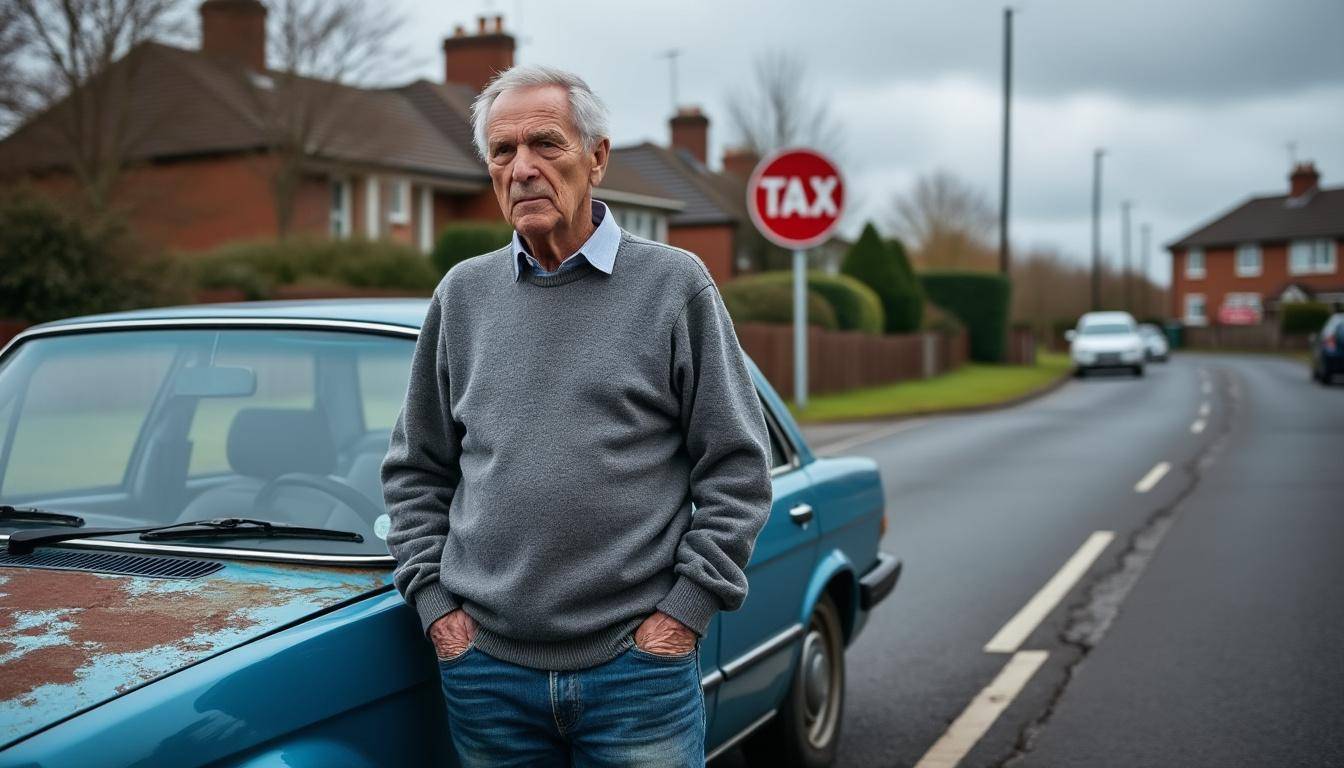
Starting April, drivers across the UK will encounter a noticeable shift in automobile taxation that disproportionately affects older motorists. The government confirmed an inflation-linked revision to Vehicle Excise Duty (VED) as part of the fiscal measures announced in the Autumn Budget and implemented through Finance Bill 2025-26. For many motorists, the new car tax structure means slightly higher annual charges for standard cars, steeper first-year taxes for purchasers of new petrol and diesel vehicles, and adjusted brackets for older models. While electric vehicle owners and vehicles qualifying as vintage remain relatively insulated, the removal of any age‑based concessions for routine vehicle tax has raised questions about fairness and affordability for retirees on fixed incomes. In this analysis I unpack the mechanics behind the April implementation, translate the headline figures into real-world car ownership costs, and offer practical approaches older drivers can use to limit the financial shock. Drawing on experiences from banking and capital markets as well as consumer finance patterns observed in New York and the UK, I provide examples, case studies, and a policy lens to help readers assess their options and understand the long-term trajectory of road tax and related charges.
How April Implementation Changes New Car Tax And Road Tax Calculations
The government has linked the April update to the Retail Price Index (RPI), creating an automatic inflation adjustment to Vehicle Excise Duty that takes effect from April 1, 2026. Practically, this means the standard VED rate for cars registered after 2017 will rise modestly from £195 to £200 annually. That increase appears small in isolation, but the policy also raises first-year VED for new petrol and diesel cars—an element that can affect buyers at the point of purchase.
For brand-new petrol and diesel vehicles, the initial-year tax liability is rising from £5,490 to £5,690. While those figures may look high compared with typical annual VED, they reflect the government’s structured schedule for high-emission vehicles and first-year bandings tied to CO2 outputs. Buyers evaluating a new car now need to factor the extra £200 into the total cost of acquisition and financing decisions.
Mechanics Behind The RPI Uplift
Linking VED to RPI is administratively simple: the Treasury applies the index movement to the existing bands and uprates the nominal charges. The rationale is fiscal: indexed rates preserve the real value of taxation over time without repeated legislation. For motorists, however, rates effectively rise with inflation, meaning Vehicle Tax becomes a recurring line in households’ inflation exposure. This policy mechanism is an explicit example of a Tax Policy Change designed to maintain revenue, but it has distributional consequences that policymakers must weigh.
To illustrate, imagine a household planning the purchase of a new family car financed over five years. That household will see a one-off increase in first-year tax and modestly higher annual costs for subsequent years. When aggregated across a fleet of vehicles or at a national level, the uplift contributes meaningful additional revenue to public accounts in 2026 and beyond.
Importantly, certain categories remain exempt or minimally affected. Vehicles used by disabled drivers continue to be excluded from vehicle tax obligations, and historic vehicles registered over 40 years ago retain their exemption. Zero-emission cars also benefit from modest charges: established EVs registered prior to 2017 will pay £20 annually, while the first-year VED for new zero-emission cars stays at £10. These carve-outs are part of a broader policy signal encouraging electrification while preserving targeted exemptions for vulnerable groups.
Understanding the administrative pathway for these changes helps drivers and advisors model future costs and decide whether to accelerate purchases, delay replacements, or consider alternative powertrains. The essential takeaway: the April implementation changes the arithmetic for car buyers and owners and frames Vehicle Tax as a predictable, inflation-linked cost rather than a static fee. This insight should guide budgeting and financing decisions in the months following the policy change.
Why Older Drivers Face Greater Impact From Tax Charges
The headline that “older people are more likely to be impacted” reflects a mix of demographic and economic realities. Older drivers often own cars outright, keep them longer, and have different usage patterns than younger drivers. They are also more likely to drive higher‑displacement engines in older models, which places them in higher VED brackets once the inflation uplift is applied. For example, models registered prior to March 1, 2001 with engines above 1549cc will see their annual VED rise from £360 to £375. Smaller engines under that threshold will move from £220 to £230. These increments are particularly salient for pensioners on fixed incomes.
Consider Ellen, a retired schoolteacher who lives outside Manchester and drives a well-maintained 2000 model with a 1600cc petrol engine. Ellen previously budgeted £360 annually for vehicle tax; after the April update she must allocate £375. That £15 change seems trivial in isolation, but for households managing tight cash flows, small recurring increases compound. Multiply Ellen’s situation across tens of thousands of similar households and the aggregate burden on older drivers becomes apparent.
Behavioral And Market Effects
Older drivers may react differently to the changes than younger counterparts. Some will retain existing cars longer to avoid paying first-year taxes on new purchases, while others might trade down to lower-displacement vehicles or switch to certified low-emission models. Dealers and secondhand markets will therefore see shifts: demand for well‑maintained, lower‑VED models could increase, putting upward pressure on prices in specific segments.
Additionally, the removal of any age-based concession on general VED means entitlement-based protections are limited. Vehicles used by disabled motorists remain exempt, but fit and healthy pensioners do not receive special relief. That policy choice reduces targeting by age and relies instead on other social support mechanisms to shield vulnerable households. For financial planners advising older clients, this reality requires recalibrating cash flow forecasts and considering alternatives such as shared mobility options or car downsizing.
From a public-policy perspective, the government balances equity concerns against a desire for a simple, administrable tax system. The result is a uniform application of the RPI-linked uprate, with few age-specific concessions beyond existing disability exemptions and historic vehicle rules. The immediate effect is higher outlays for a substantial cohort of older drivers; the medium‑term effect will be changes in vehicle selection and buy/sell timing across the used-car market. That pattern is an important driver of broader automobile tax dynamics in 2026.
Key insight: while the per-car increases are modest, older drivers’ ownership profiles make them more sensitive to recurring VED hikes, so planning and informed decision-making are essential.
Practical Effects On Car Ownership Costs And Vehicle Tax Bills
Translating headline numbers into household budgets requires mapping VED to total ownership costs. Beyond Road Tax, owners should account for fuel, insurance, maintenance, and financing. The April adjustments increase the recurring tax line, nudging total cost of ownership higher. For many households, especially those with older cars, the marginal tax rise changes replacement calculus: do you keep an older car and absorb the year-on-year uptick, or replace it and face potential high first-year taxes on certain new petrol or diesel models?
Below is a compact table showing typical VED rates after the April changes to help visualize the impact across vehicle types.
| Vehicle Category | Previous VED (£) | Updated VED from April (£) |
|---|---|---|
| Post-2017 standard cars | 195 | 200 |
| New petrol/diesel (first year) | 5,490 | 5,690 |
| Pre-2001 cars >1549cc | 360 | 375 |
| Pre-2001 cars | 220 | 230 |
| Electric vehicles (established) | 20 | 20 |
| Zero-emission (first year) | 10 | 10 |
The table clarifies where the burden rises most. Owners buying brand-new conventional cars will absorb the largest acquisition shock, while EV drivers and vintage car owners remain largely insulated. For most consumers, the decision drivers are:
- Keep an existing vehicle longer and accept annual VED increases;
- Trade to a lower-emission, lower-VED model; or
- Shift to electric or hybrid models to reduce future tax exposure.
Each option has trade-offs. Retaining a car avoids first-year spikes but may increase maintenance and running costs. Trading can lower ongoing VED but may create a near-term financing need. Switching to EVs reduces Road Tax and often reduces fuel costs, but buyers must consider purchase premiums, charging access, and resale values.
For readers evaluating alternatives, practical planning steps include: obtain a full five-year cost projection for each scenario, compare total cost of ownership rather than sticker price, and use targeted savings or refinancing to smooth acquisition costs. For example, a retiree analyzing whether to replace a 2003 petrol model with a modern EV should model both VED and energy costs, and consider local charging availability and potential resale outcomes. These analyses often change decisions more than headline VED numbers do. The core insight: treat the April VED changes as an input to smarter ownership planning rather than an isolated burden.
Mitigation Strategies For Drivers: Financial Planning, Switching To EVs, Or Trading In
Faced with rising automobile tax, drivers have several mitigation pathways. Financially minded households can smooth the shock through budgeting, leveraging savings vehicles, or modestly adjusting replacement timelines. From a mobility perspective, options include downsizing, choosing low-emission models, or considering mobility-as-a-service alternatives for occasional trips. Each strategy comes with trade-offs in convenience, cost, and long-term value.
Practical Steps And Case Examples
One effective tactic is to include projected VED increases when renewing insurance or negotiating finance. For instance, Tom and Maria, a married couple in their early 60s, used a five-year total-cost projection to decide between keeping Maria’s 2015 petrol hatchback or trading for a used low-emission hybrid. The analysis included updated Road Tax, lower expected fuel spend, and modest trade‑in value recovery. They chose the hybrid because it reduced total five-year cost even after factoring in the vehicle tax uplift.
Another route is to consider electric vehicles where feasible. Established EVs registered before 2017 and new zero-emission cars enjoy substantially lower annual VED in the current framework, with the established pre-2017 EV band at £20 annually and first-year zero-emission VED at £10. For many urban drivers, that difference offsets higher purchase prices over time, especially when combined with lower running costs and possible incentives.
Financial mechanisms can also assist. Using tax-advantaged savings or reallocating part of a cash ISA or investment portfolio can cover transitional costs. Readers can explore resources on financing careers and opportunities in the sector or related tax policy content to understand broader financial planning options. For example, professionals interested in finance roles in urban markets may find insights on high-growth finance in NYC, where similar cost pressures influence mobility choices among professionals.
Finally, community-level options—car-sharing co-ops, voluntary driver pools, and local council concessions—can reduce individual risk. A small village scheme that shares vehicles among residents can limit the need for personal car ownership and thus exposure to annual tax hikes. These socially focused solutions complement personal finance strategies and align with broader transport and climate goals.
Insight: mitigation is not binary; an optimized response blends financial planning, vehicle choice, and community or market solutions to reduce the net burden of the new tax regime.
Policy Context: Tax Policy Change, RPI Uplift, And What To Expect Going Forward
The April changes are rooted in broader fiscal logic. Linking VED to RPI stabilizes real revenues without frequent parliamentary interventions, which appeals to policymakers prioritizing predictability. The Finance Bill 2025-26 implemented that mechanism following the Autumn Budget, and HMRC’s announcement clarifies the operational path for 2026–27. However, the policy raises distributional questions: when inflation is elevated, indexed tax increases can hit fixed-income households harder, an outcome requiring complementary social policy responses.
Looking ahead, expect further iteration in how automobile tax aligns with environmental goals. The relatively light first-year VED for zero-emission cars signals continued promotion of EV adoption, while higher first-year charges for some petrol and diesel vehicles disincentivize high-emission purchases. Over time, policymakers may refine bands, introduce mileage-based components, or expand exemptions targeted at low-income or vulnerable groups.
There are broader macro links to monitor. For instance, changes in fuel prices, compensation patterns, and public transport availability shape whether VED increases lead to significant behavior changes. Readers tracking the interaction between fuel dynamics and tax policy should consult analytical pieces covering gas markets and potential consumer refunds, which help contextualize ownership costs across fuel cycles—see reporting on gas prices and tax refunds for related coverage and implications.
Culturally, the tax change arrives amid accelerating electrification in many cities and increased scrutiny on vehicle externalities. In urban areas, higher VED bands may combine with congestion pricing or low-emission zones, amplifying incentives to switch away from older, higher‑emission cars. For rural drivers, where alternatives are less available, policymakers face a challenge in balancing revenue needs against mobility realities.
In sum, the April VED uplift is a deliberate fiscal move with clear distributional effects and environmental signaling. Stakeholders—drivers, planners, and local authorities—should watch subsequent budgets and consult reliable cost projections when advising clients or planning household finances. The final insight: understanding the policy trajectory enables proactive financial decisions rather than reactive adjustments.