


SpaceX has reportedly reduced Blackwell GPU rental prices from roughly $15-$15.50 to $10-$12 per GPU-hour, according to a November 25, 2026 Wccftech report citing SemiAnalysis research. Using the midpoint of the quoted ranges, the reduction amounts to 27.9%, or about 28%.
The report also raises uncertainty over Anthropic’s use of approximately 50,000 H200 accelerators. Neither the reported pricing nor the possible nonrenewal has been confirmed by the companies. If the quotations become representative of a wider market, they could affect the return on capital earned by AI infrastructure providers.
What the Reported Blackwell GPU Rental Price Cut Means
GPU cloud providers rent access to accelerators rather than selling the hardware itself. Spot rates can change with supply, availability, contract length, networking configuration and customer demand. A lower rental rate is not necessarily a lower selling price for Nvidia’s physical chips.
| Reported pricing | Per GPU-hour |
|---|---|
| Previous small-cluster range | $15-$15.50 |
| New small-cluster range | $10-$12 |
| Previous midpoint | $15.25 |
| New midpoint | $11.00 |
A smaller premium for immediate access can indicate increasing competition, improved supply or a change in the mix of customers. A single provider’s reported quote does not establish an industrywide decline. The same report indicates that large customers already had access to comparable prices.
How a 28% Rental Price Cut Changes Data Center Economics
Consider a hypothetical cluster of 10,000 GPUs, available 8,760 hours per year and generating billable revenue at 80% utilization. Gross rental revenue varies directly with the hourly price if all other assumptions remain constant.
| Hourly rental rate | Annual gross rental revenue |
|---|---|
| $15.25 | $1.069 billion |
| $12 | $840.96 million |
| $11 | $770.88 million |
| $10 | $700.80 million |
The midpoint reduction would lower annual revenue by $297.84 million before operating costs, depreciation, electricity and financing expenses. This scenario is not a SpaceX forecast and does not estimate its actual margins.
A provider initially running at 60% utilization would need approximately 83.2% utilization at $11 per hour to maintain the revenue earned at $15.25. One already at 80% utilization would need more than 100%, making utilization alone insufficient to compensate for the cut.
The key variables are therefore purchase cost, financing, power efficiency, software revenue and actual billable usage. A well-contracted project can remain attractive even as spot-market premiums decline.
Could Anthropic Release 50,000 H200 GPUs?
The same report suggests that Anthropic may not renew a cluster of approximately 50,000 H200 GPUs, which SpaceX could offer to other clients for early 2027 at around $5 per GPU-hour. Elon Musk has previously indicated that Anthropic could instead require more computing capacity, so the possible nonrenewal remains uncertain.
At 80% utilization and $5 per GPU-hour, a fleet of 50,000 GPUs would produce hypothetical annual gross rental revenue of $1.752 billion. The scale illustrates why renewal terms and replacement customers matter for providers, not what SpaceX is expected to earn.
Vera Rubin Adds a New Competitive Variable
Nvidia’s fiscal Q3 2027 report confirmed the initial volume ramp of Vera Rubin, with deployments across several major cloud partners. More efficient accelerators can improve the economics of new AI workloads while reducing the premium on older generations.
H200 and Blackwell hardware can remain useful for inference, fine-tuning and other workloads. However, faster hardware transitions can reduce expected residual values or accelerate the need for replacement capital. Investors need to distinguish the rate at which existing hardware generates cash from the pace at which newer equipment is deployed.
What Lower GPU Rental Prices Could Mean for AI Stocks
| Company | Potential exposure |
|---|---|
| Nvidia (NASDAQ: NVDA) | Customer returns, equipment orders, product mix |
| AMD (NASDAQ: AMD) | Accelerator adoption and pricing competition |
| CoreWeave (NASDAQ: CRWV) | Rental margins, utilization and refinancing |
| Nebius (NASDAQ: NBIS) | Contract pricing and returns on new capacity |
| Oracle (NYSE: ORCL) | Cloud infrastructure margins and capital recovery |
AMD closed at $405.21 on November 25, 2026, down 1.95%. The iShares Semiconductor ETF (SOXX) closed at $127.95 on the same date, down 0.52%.
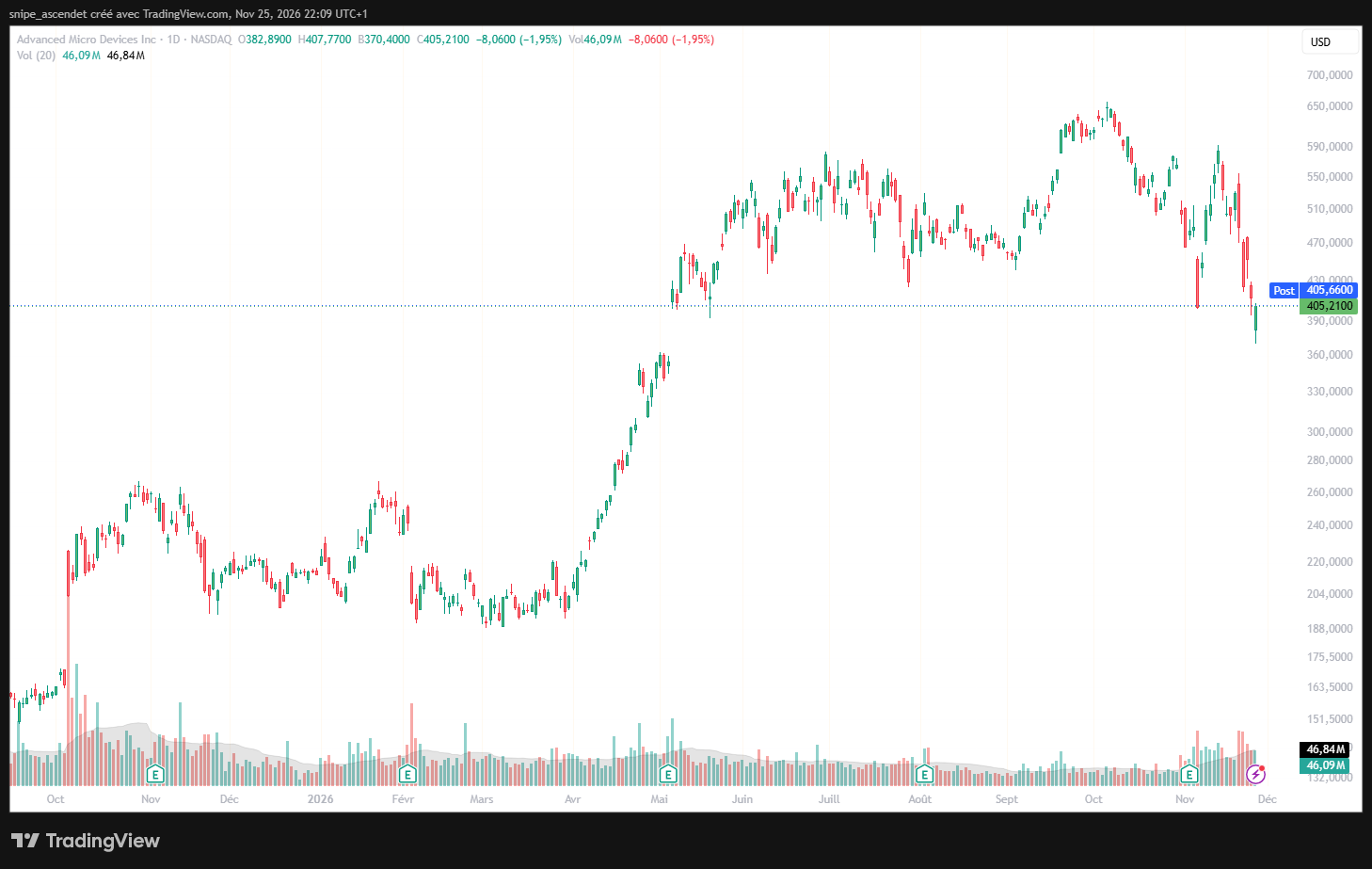
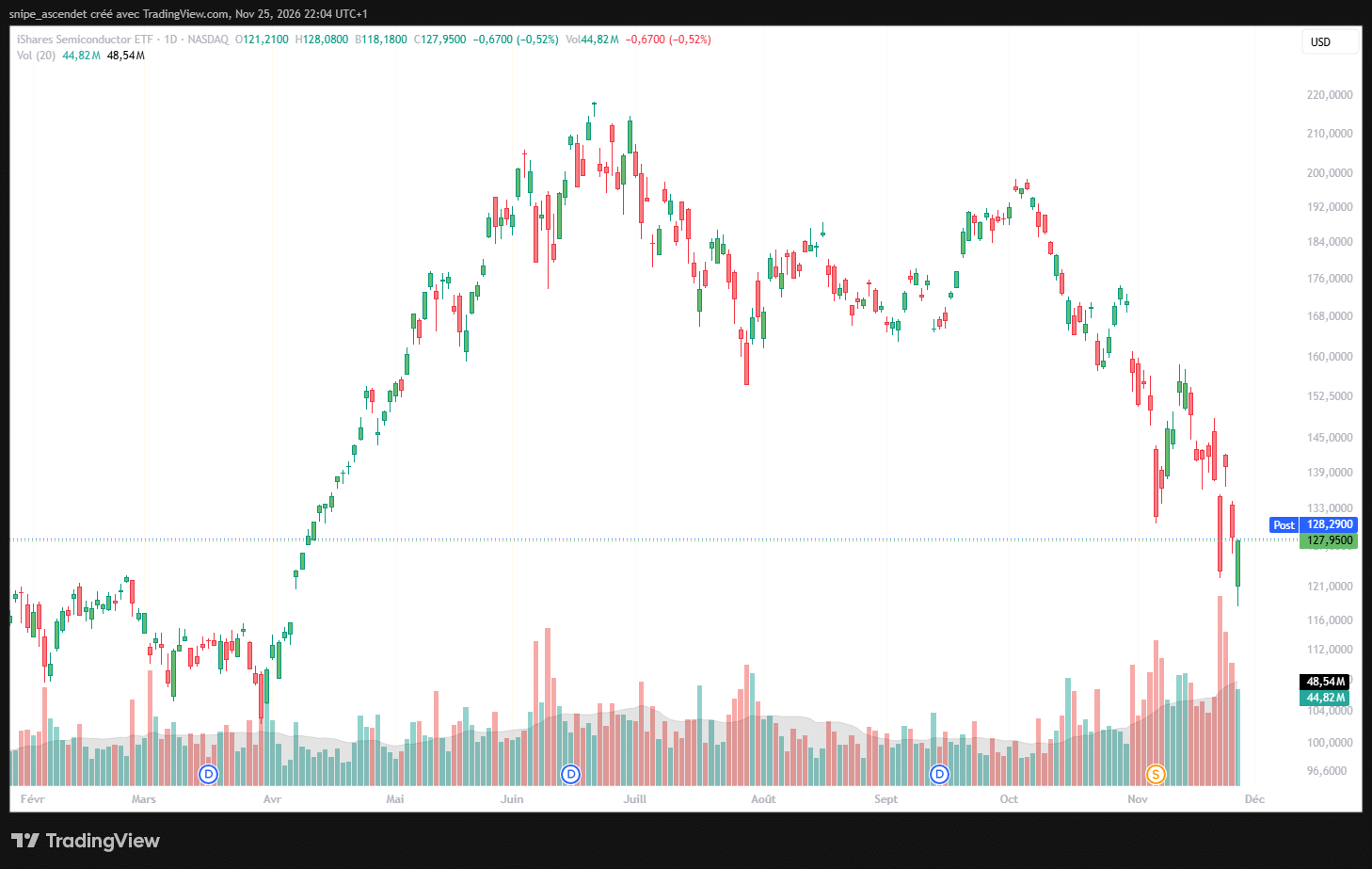
Falling rental prices can also benefit AI developers by lowering inference costs and allowing more experimentation. Higher usage might stimulate demand for accelerators, particularly if cheaper AI services create new applications. For chip suppliers, volume and product mix matter more than the price of any individual rental contract.
This distinction is important after the reported Google TPU order reduction affecting Broadcom and the November 24 semiconductor selloff. Investors should avoid treating all customer demand changes as equivalent to a structural slowdown in AI spending.
What Investors Should Watch in Early 2027
Confirmation of Anthropic’s capacity commitments, actual Blackwell and Rubin contract pricing, utilization rates and the cost of new financing will determine whether the reported discounts are temporary or represent a durable change in supply and demand.
Bottom line: The reported Blackwell rental price reduction would be significant if confirmed, but it is not evidence of an industrywide collapse in AI demand. The most exposed businesses are those relying on expensive capital and sustained rental premiums to recover their infrastructure investments.
For informational purposes only; not investment advice.