


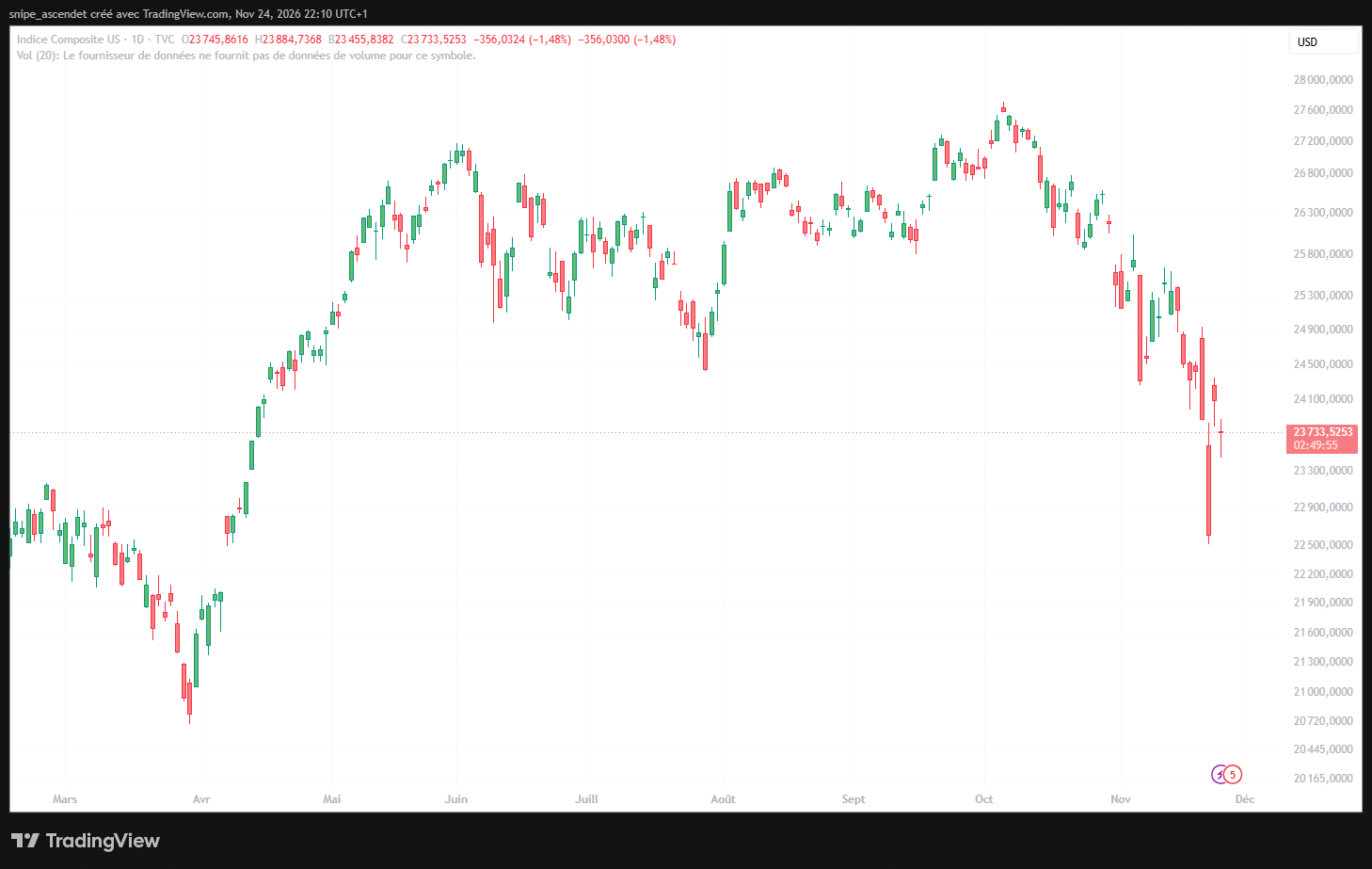
US stocks resumed their decline on Tuesday, November 24, 2026, as the historic rally following Jensen Huang’s return to Nvidia (NASDAQ: NVDA) lost momentum. The iShares Semiconductor ETF (NASDAQ: SOXX) fell 8.25%, Advanced Micro Devices (NASDAQ: AMD) dropped 8.86%, and the Nasdaq Composite declined 1.48%.
Selling pressure extended beyond semiconductor stocks. Anthropic fell below its $83 initial public offering price, silver reached a fresh low for the period since February, and gold returned close to its recent trough.
The reversal suggests that Nvidia’s leadership change has not resolved Wall Street’s broader concerns about AI valuations, capital spending, corporate governance and the outlook for interest rates.
US Stock Market: November 24 Trading Recap
| Asset | November 24 price | Daily change |
|---|---|---|
| Nasdaq Composite | 23,733.53 | −1.48% |
| Semiconductor ETF (SOXX) | $128.65 | −8.25% |
| Nvidia (NVDA) | $155.51 | −5.78% |
| AMD (AMD) | $413.27 | −8.86% |
| Anthropic (ANT) | $81.905 | −6.54% |
| Gold | $3,550.72 | −2.31% |
| Silver | $40.587 | −5.61% |
Equity prices reflect the regular-session close or late-session index readings. Precious metal prices reflect TradingView quotations at 4:10 p.m. ET on November 24, with trading still underway.
The semiconductor ETF underperformed the Nasdaq Composite by 6.77 percentage points. Meanwhile, preliminary closing figures reported by Reuters showed the S&P 500 declining approximately 0.48% and the Dow Jones Industrial Average gaining 0.87%.
The divergence indicates that selling pressure remained particularly concentrated in technology rather than spreading uniformly across US equities.
Nvidia Falls 5.78% as the Jensen Huang Rally Loses Momentum
Nvidia’s recovery on November 23 was one of the most remarkable market reversals of 2026. The company gained nearly a trillion dollars in market capitalization as investors welcomed the return of its co-founder. Nvidia’s official announcement confirmed Huang’s reinstatement as president, CEO and board member, following his resignation earlier in November.
As detailed in the November 23 Wall Street rebound, Nvidia gained 31.48% to close at $165.05 on November 23, while the Nasdaq Composite advanced 6.51%. The recovery proved fragile. On November 24, Nvidia opened at $159.10, reached an intraday low of $150.50 and closed at $155.51. At 4:09 p.m. ET, its after-hours price stood at $154.44.
| Nvidia price movement | Share price |
|---|---|
| November 20 close | $125.53 |
| November 23 close | $165.05 |
| November 24 open | $159.10 |
| November 24 intraday low | $150.50 |
| November 24 close | $155.51 |
| November 24, 4:09 p.m. ET | $154.44 |
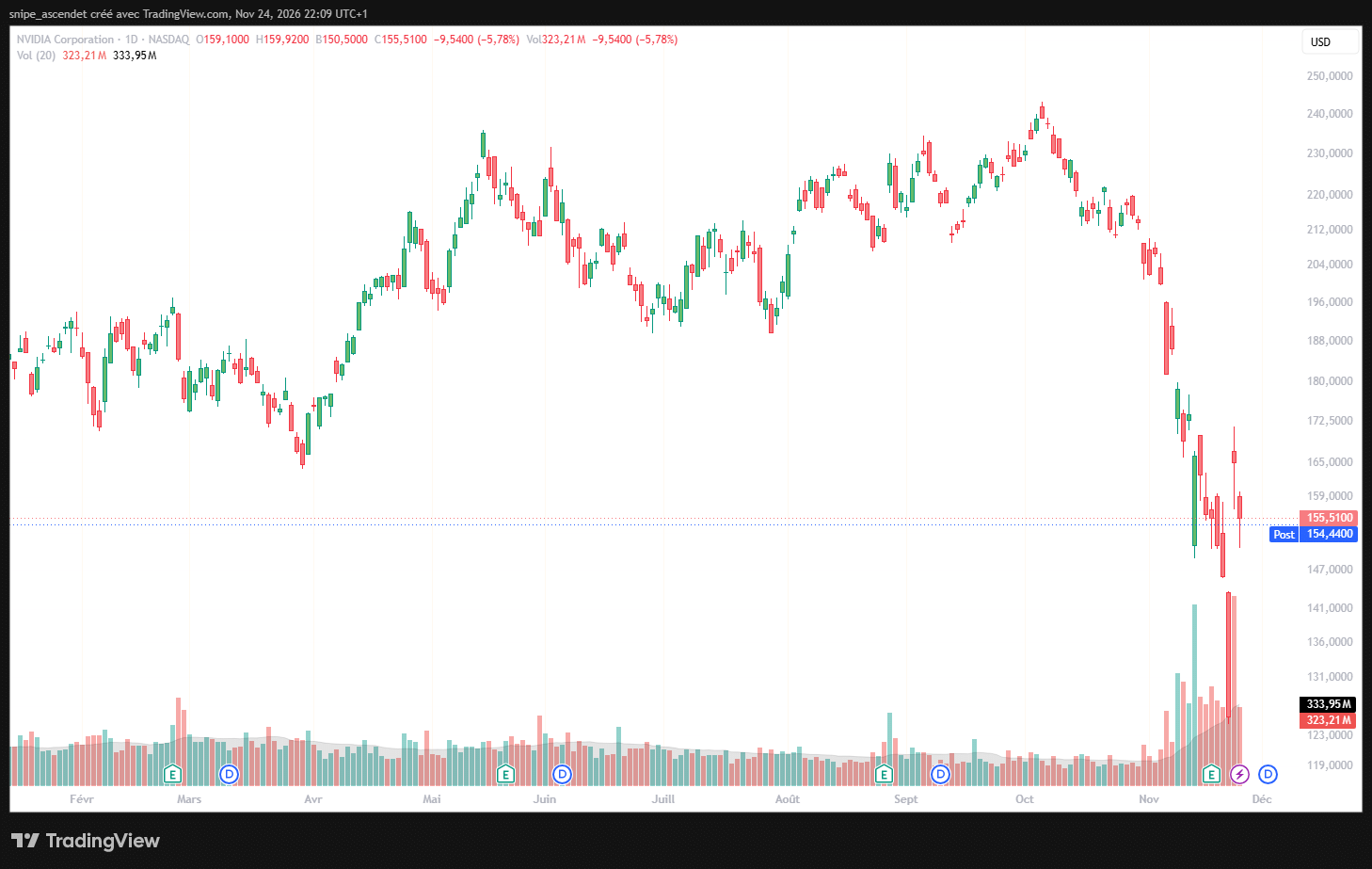
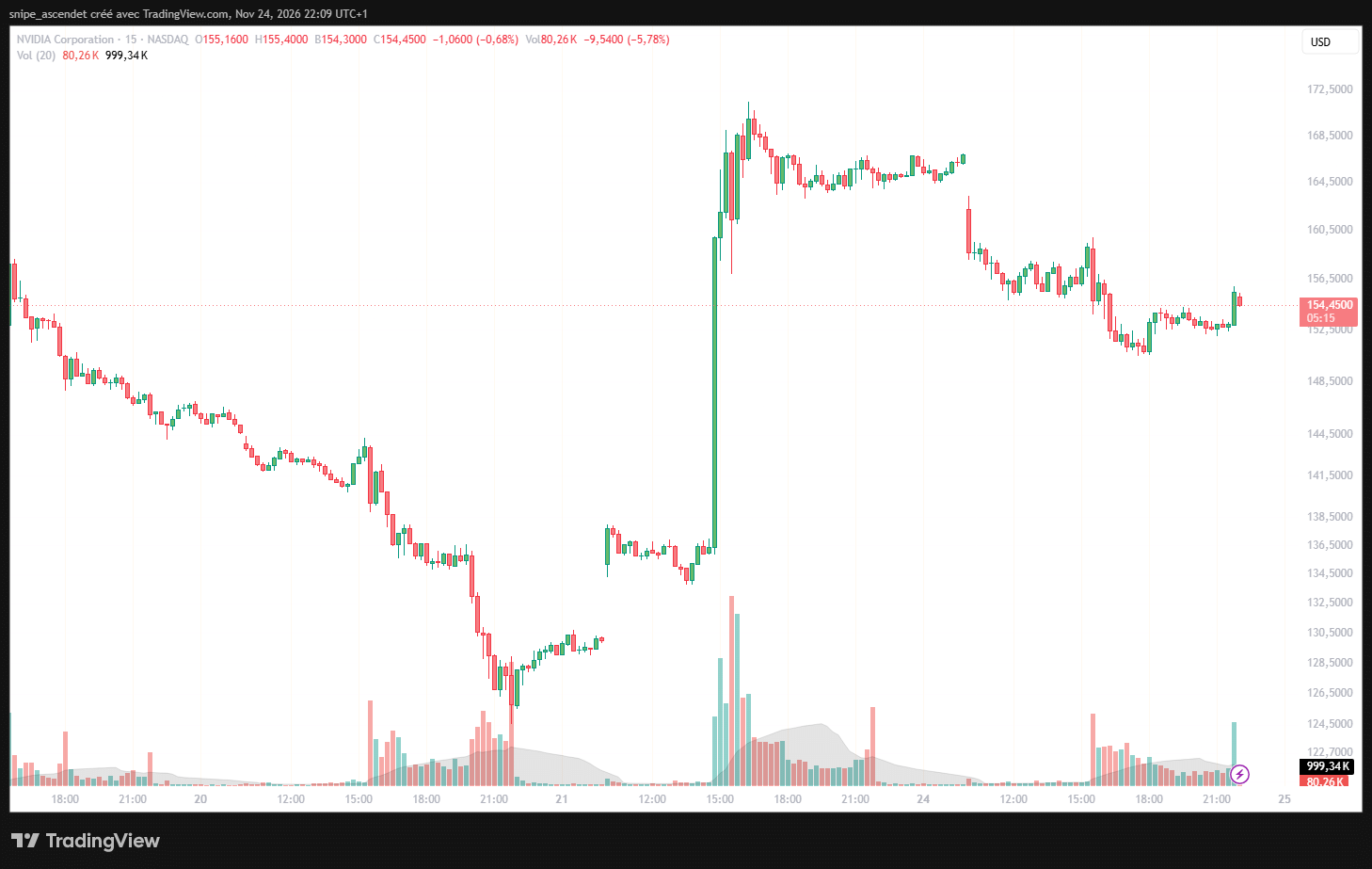
Despite the November 24 decline, Nvidia remained 23.88% above its November 20 closing price. However, it surrendered approximately 24.14% of the dollar-per-share gain recorded during the previous session.
Huang’s return reduces immediate leadership uncertainty. It does not automatically eliminate questions regarding Nvidia’s financial reporting, regulatory exposure or customers’ ability to generate attractive returns from AI infrastructure. Investors also continue to monitor the reported SEC accounting investigation involving Nvidia, which represents a separate source of uncertainty.
Semiconductor Stocks Give Back Most of Their Rebound
The broader semiconductor industry suffered substantially greater losses than Nvidia on November 24. The iShares Semiconductor ETF closed at $128.65, down 8.25%, after reaching an intraday low of $126. Trading volume reached 50.36 million shares, approximately 6.67% above its 20-session average.
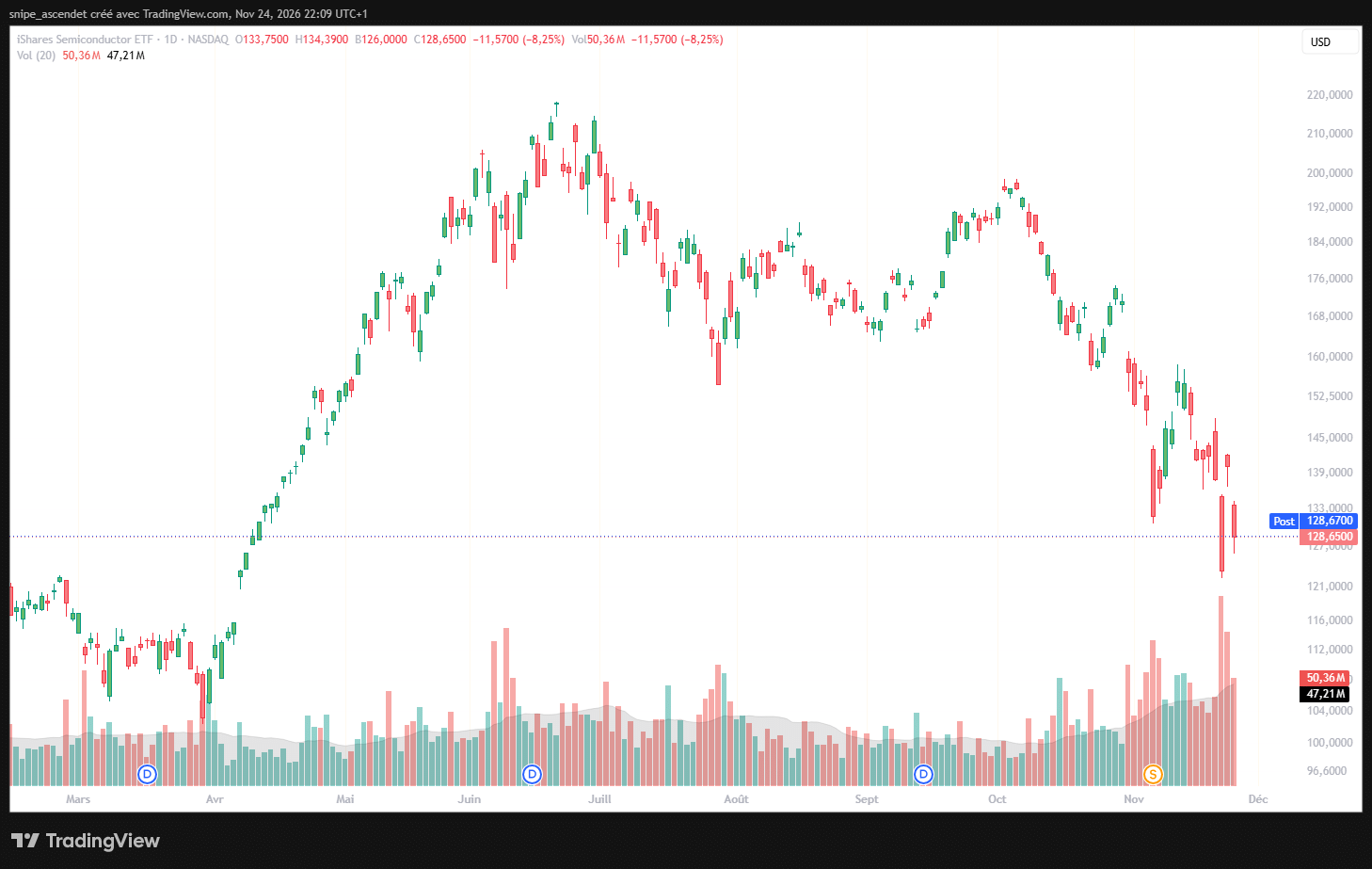
SOXX closed at $123.40 on November 20 and $140.22 on November 23, a 13.63% gain. The ETF erased 68.79% of its November 23 dollar gain in a single session, remaining only 4.25% above its November 20 closing price.
This reversal is important because semiconductor manufacturers depend on sustained infrastructure spending. If hyperscalers reduce capital expenditures or shift investment toward lower-cost alternatives, revenue expectations and valuation multiples could come under further pressure.
AMD Falls Below $400 Intraday as AI Valuations Remain Under Pressure
Advanced Micro Devices declined 8.86% to $413.27 on November 24, after briefly trading at $396.01. Its valuation depends partly on its ability to compete successfully with Nvidia while expanding its AI-related revenue and profitability.
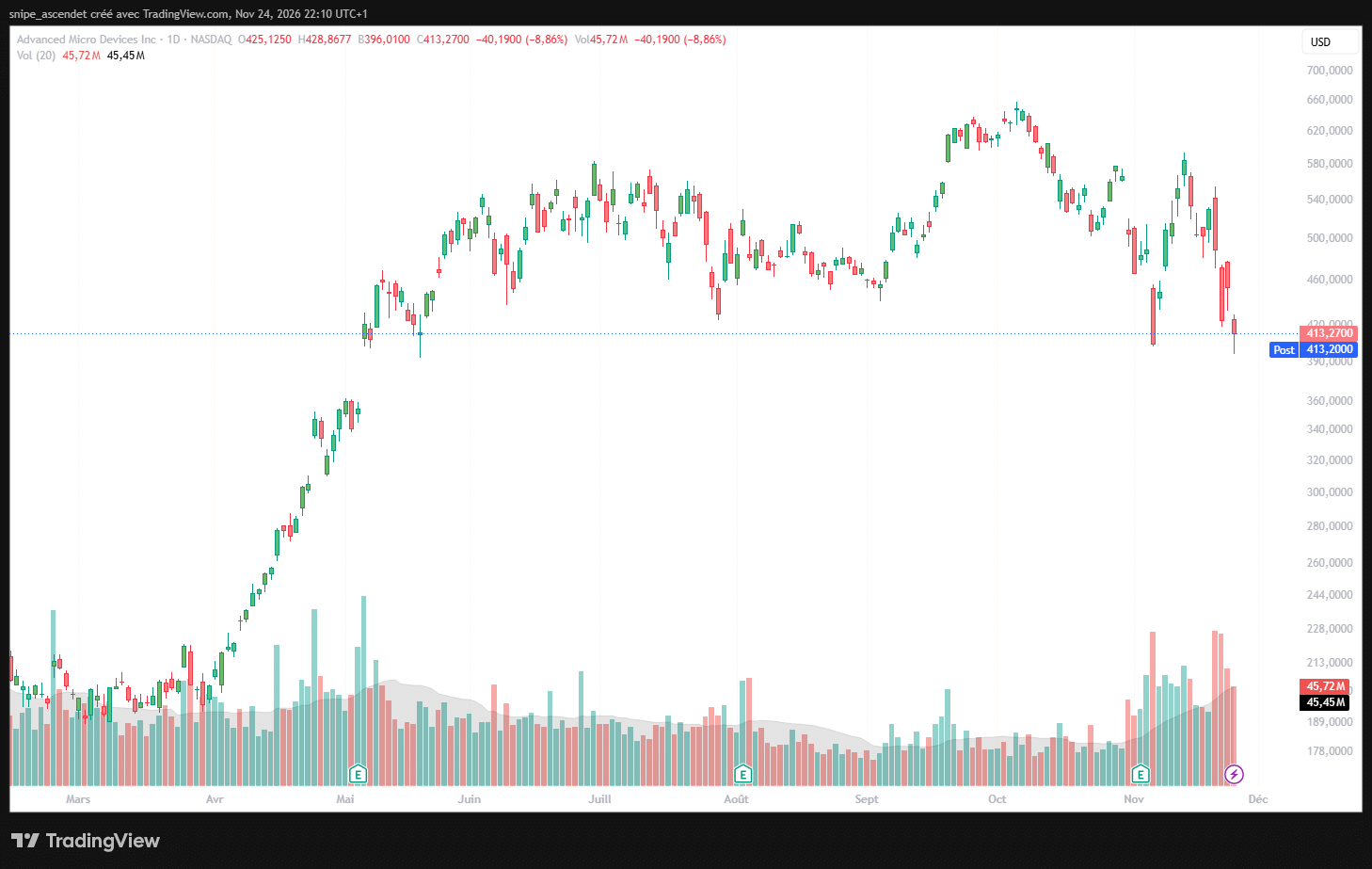
AMD’s November 24 closing price remained roughly 37% below the October highs near $660. Even if semiconductor demand continues to expand, shareholders could experience substantial losses when elevated valuations contract.
Anthropic Falls Below Its $83 IPO Price
The weakness in Anthropic (NASDAQ: ANT) represents another warning sign for the AI investment cycle. According to its SEC-filed offering documents, Anthropic priced its IPO at $83 per share on November 18. The company subsequently opened at $111.50 on November 19, reflecting considerable initial demand for exposure to generative AI.
By the November 24 close, Anthropic had fallen to $81.905, down 6.54% for the session.
| Anthropic milestone | Share price |
|---|---|
| November 18 IPO pricing | $83.00 |
| November 19 opening trade | $111.50 |
| November 24 intraday low | $75.61 |
| November 24 close | $81.905 |
| November 24, 4:10 p.m. ET | $81.30 |
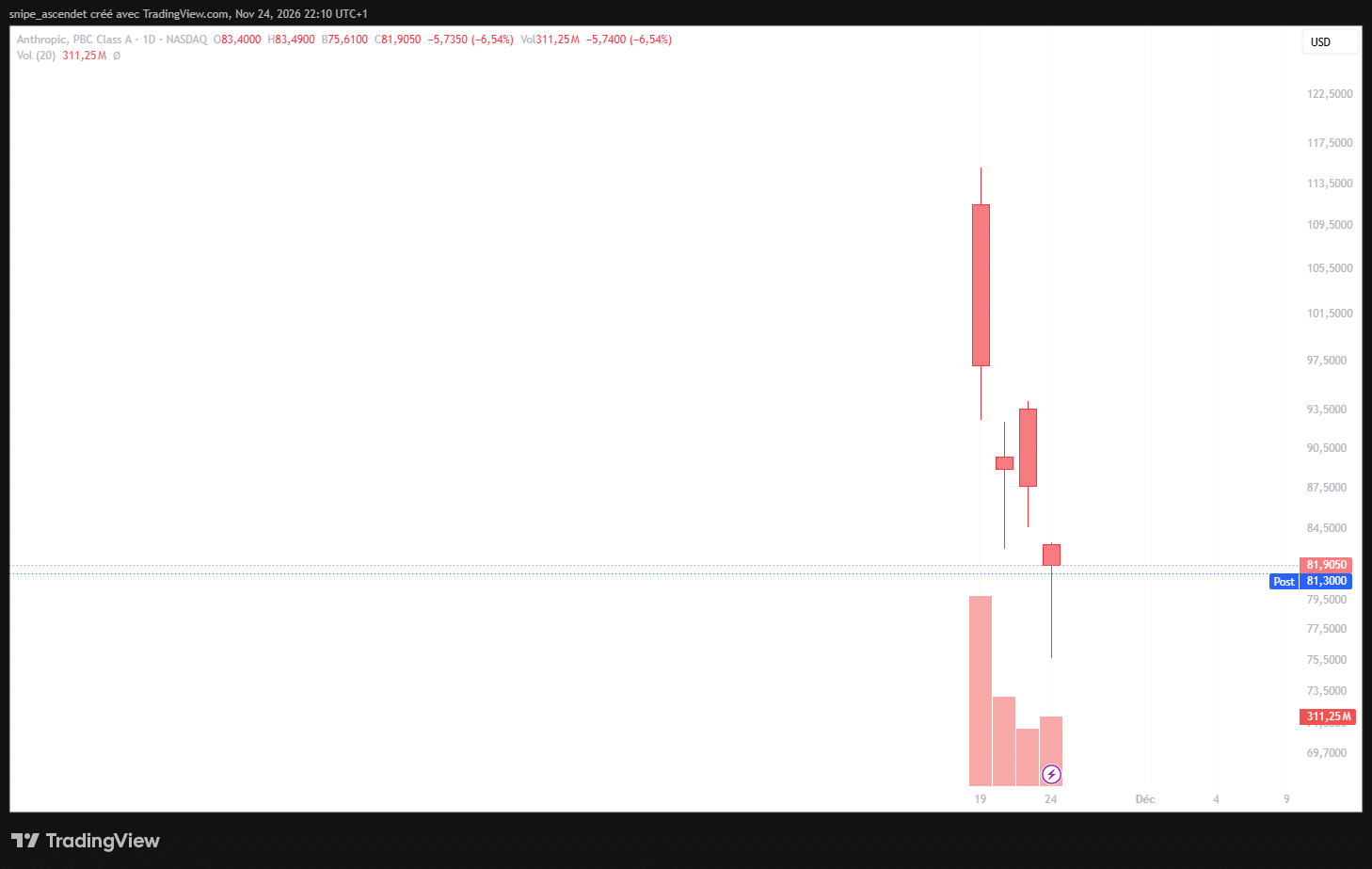
Anthropic ended November 24 approximately 1.32% below its IPO price and 26.54% below its first public trade. The company’s stock performance matters beyond its own shareholders. AI developers are major consumers of computing capacity, and their financial sustainability influences demand for GPUs, networking equipment, memory chips and data center infrastructure.
A sustained decline in AI company valuations could increase scrutiny of financing requirements, operating costs and the eventual profitability of these investments.
Gold and Silver Resume Their Decline
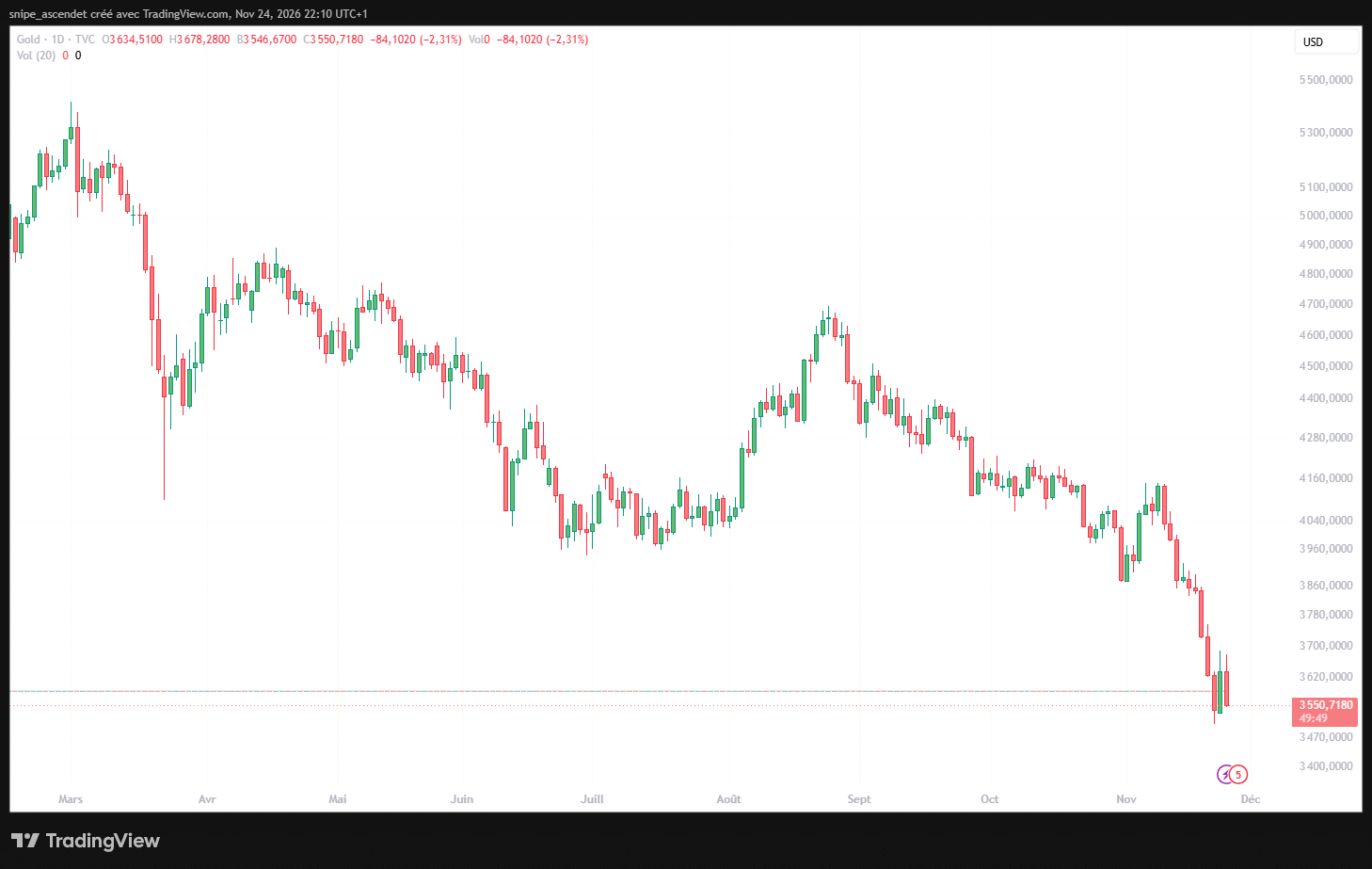
Precious metals offered little protection against the November 24 technology selloff. Gold traded at $3,550.72 per ounce at 4:10 p.m. ET, down 2.31%. It reached an intraday low of $3,546.67, approaching its recent November trough.
Silver experienced considerably heavier selling pressure. The metal traded at $40.587 per ounce at 4:10 p.m. ET on November 24, down 5.61%, after reaching $40.53, its lowest level across the period since February 2026.
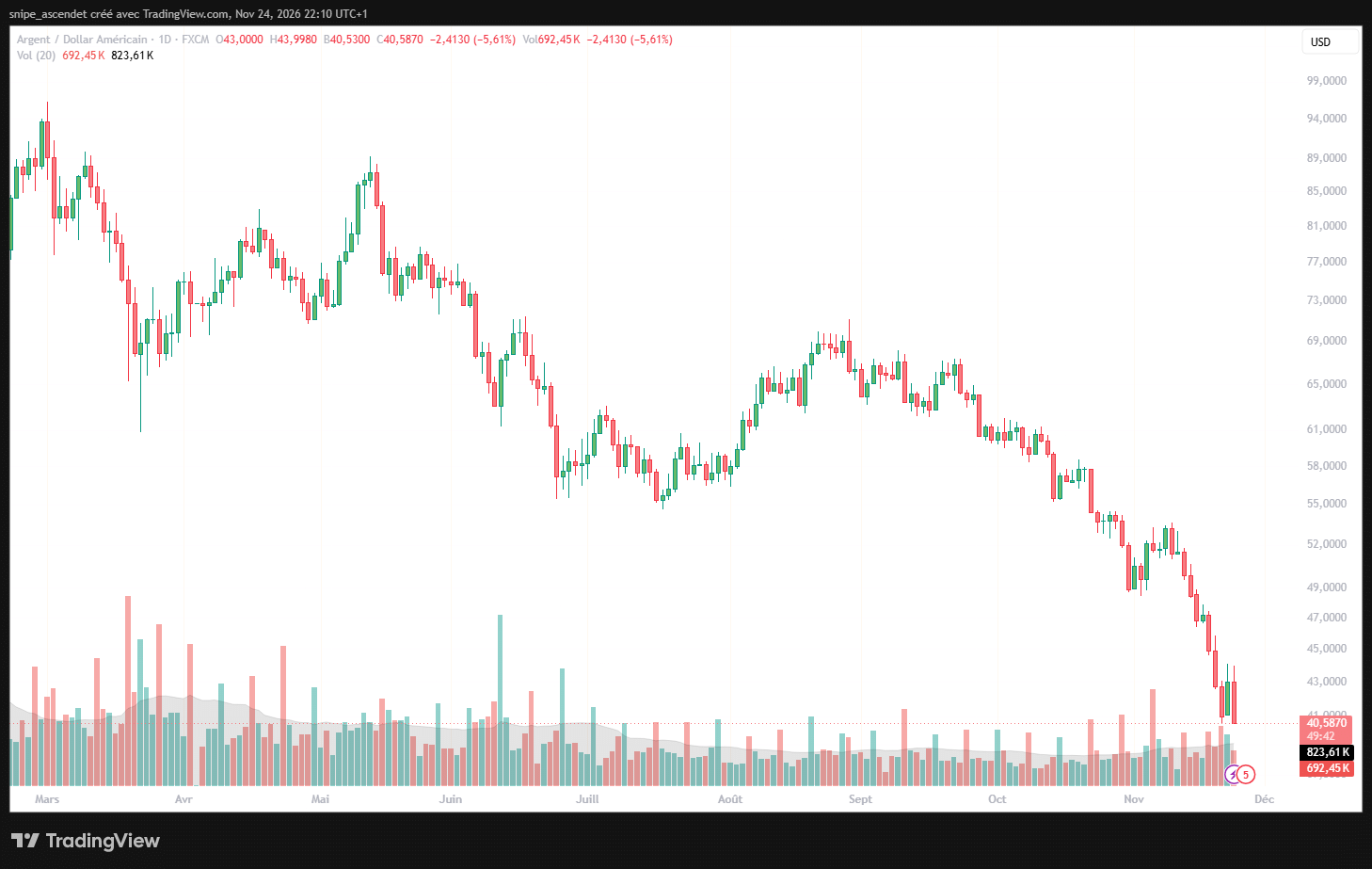
Several factors could explain the continued weakness in precious metals, including restrictive monetary policy expectations, portfolio deleveraging and concerns about industrial demand. Silver faces an additional challenge because its demand comes from both investors and industrial applications, including electronics, solar panels and electrical infrastructure.
The gold-to-silver ratio reached approximately 87.48 at 4:10 p.m. ET on November 24, reflecting silver’s significant underperformance. Gold and silver falling alongside technology shares also illustrates that traditional diversification relationships can weaken during volatile market conditions.
Inflation, Interest Rates and Tariffs Remain Major Risks
Nvidia’s leadership announcement temporarily improved market sentiment, but investors still face substantial macroeconomic uncertainty. According to Reuters, financial markets were largely anticipating a potential 25-basis-point Federal Reserve rate increase in December. Higher interest rates could place additional pressure on expensive growth stocks by reducing the present value of future earnings.
Potential new import duties also complicate the outlook for corporate margins and inflation. The US tariff plan targeting China, the European Union and other trading partners could expose manufacturers and retailers to higher input costs.
The next inflation catalyst arrives on Wednesday, November 25, when the Bureau of Economic Analysis is scheduled to publish October personal income and outlays data at 8:30 a.m. ET.
Has the Nasdaq Entered a Lasting Correction?
Despite its historic November 23 rebound, the Nasdaq Composite remained significantly below its October highs. Using its November 20 reading of 22,617.73 and November 24 reading of 23,733.53, the index retained a gain of 4.93% over the two sessions.
However, the broader technical picture remains weak. The market has experienced successive lower highs and periods of intense selling, including the November 20 selloff that pushed the VIX above 40.
| Relative performance (Nov. 20 = 100) | Nov. 20 | Nov. 23 | Nov. 24 |
|---|---|---|---|
| Nvidia | 100 | 131.48 | 123.88 |
| Nasdaq | 100 | 106.51 | 104.93 |
| SOXX | 100 | 113.63 | 104.25 |
The semiconductor industry’s inability to sustain Monday’s gains is particularly concerning because chipmakers have been central to the market’s AI-driven expansion. A durable recovery would benefit from stronger market breadth, improving earnings expectations and evidence that AI infrastructure spending can translate into sustainable cash flow.
What Investors Should Watch Next
| Date | Catalyst |
|---|---|
| November 25 | October PCE inflation report, 8:30 a.m. ET |
| November 26 | Thanksgiving, US equity markets closed |
| November 27 | Shortened US equity session, closing at 1 p.m. ET |
| December 9 | Federal Reserve monetary policy decision, 2 p.m. ET |
The shortened Thanksgiving trading schedule, confirmed by the NYSE, could contribute to additional volatility if liquidity declines. The Federal Reserve calendar confirms the December 8–9 meeting.
For semiconductor shareholders, the primary indicators remain order growth, customer capital expenditure plans, gross margins, inventory levels and free cash flow. For precious metal investors, real interest rates and stabilization around recent price lows remain important.
Bottom line: Jensen Huang’s return produced an extraordinary relief rally, but the November 24 reversal demonstrates that the underlying risks facing AI investments remain unresolved. The simultaneous weakness in semiconductor stocks, Anthropic and precious metals reinforces the need to distinguish a temporary rebound from a sustainable market recovery.
For informational purposes only; not investment advice.