


CoreWeave (NASDAQ: CRWV) is facing renewed pressure in the corporate bond market after yields on its 2031 debt approached 18% on November 25, 2026. Reuters reported that the company’s 2030 debt reached a record low as investors reassessed the financing behind the AI infrastructure expansion.
For shareholders, the bond market matters because CoreWeave must fund expensive computing assets before collecting revenue from customers. Its September 30 quarterly filing shows $47.505 billion in scheduled future debt principal payments, including almost $11 billion in 2027.
Why Are CoreWeave Bonds Trading at Record Lows?
Reported TRACE transactions on November 24 showed substantial discounts across several of CoreWeave’s unsecured bond issues. The following prices represent intraday lows, not closing quotes, according to reported bond-market data.
| Bond coupon and maturity | November 24 price per $100 face value |
|---|---|
| 9.25%, 2030 | $80.90 |
| 9%, 2031 | $76.40 |
| 9.625%, 2032 | $74.90 |
On November 25, Tradeweb data cited by Reuters put the October 2031 bond at 74.23 cents per dollar, with a yield of 17.91%. The June 2030 bond traded at 76.55 cents, a record low for that security.
Bond yields rise when prices fall, assuming unchanged contractual payments. The yield is not a guaranteed return: investors must receive promised coupons and principal to realize it. Nor is a secondary-market yield the rate CoreWeave currently pays on every outstanding loan. It is an indication of what investors demand to hold comparable risk.
CoreWeave Has $10.97 Billion of Principal Payments Due in 2027
The September 30, 2026 Form 10-Q details the scale and timing of the company’s obligations.
| Payment period | Future principal payments |
|---|---|
| Remaining 2026 | $2.433 billion |
| 2027 | $10.974 billion |
| 2028 | $5.479 billion |
| 2029 | $4.727 billion |
| 2030 | $4.247 billion |
| Thereafter | $19.645 billion |
| Total | $47.505 billion |
Approximately 23.1% of scheduled principal payments fall in 2027. These amounts include amortizing debt as well as maturities and do not represent a single refinancing event. CoreWeave reported compliance with its loan covenants at September 30 and stated that it expected existing liquidity and borrowing availability to cover obligations over the following year.
The question is how much additional financing future expansion will require and whether the cost of capital leaves an adequate return for shareholders.
Revenue Growth Is Not Yet Translating Into Net Profit
CoreWeave’s November 10 earnings release showed Q3 2026 revenue rising 168% year over year, but interest expense exceeded GAAP operating income by a wide margin.
| Metric | Q3 2026 | Q3 2025 |
|---|---|---|
| Revenue | $3.661B | $1.365B |
| GAAP operating income | $207M | $52M |
| Net interest expense | $846M | $310M |
| GAAP net loss | $709M | $110M |
| Adjusted EBITDA | $2.256B | $838M |
Net interest expense represented 23.1% of revenue. GAAP operating income covered just 0.24 times net interest expense. Adjusted EBITDA was substantially higher, but excludes depreciation and other expenses that matter when assessing the economic cost of GPU ownership.
Management expects 2026 revenue of $13.0-$13.3 billion and capital expenditures of $37-$39 billion. The midpoint of planned capital spending is 2.89 times midpoint revenue guidance. The company also expects about $9 billion of customer deposits and prepayments over the three months following its earnings report. Those payments can reduce reliance on external funding, but they accompany obligations to deliver computing capacity.
How CoreWeave Compares With Nebius and Oracle
The November 25 selloff also affected Nebius (NASDAQ: NBIS) and Oracle (NYSE: ORCL), although their funding structures and business mixes differ.
| Company | November 25 close | Daily change |
|---|---|---|
| Nebius | $85.03 | -2.61% |
| Oracle | $103.89 | -5.12% |
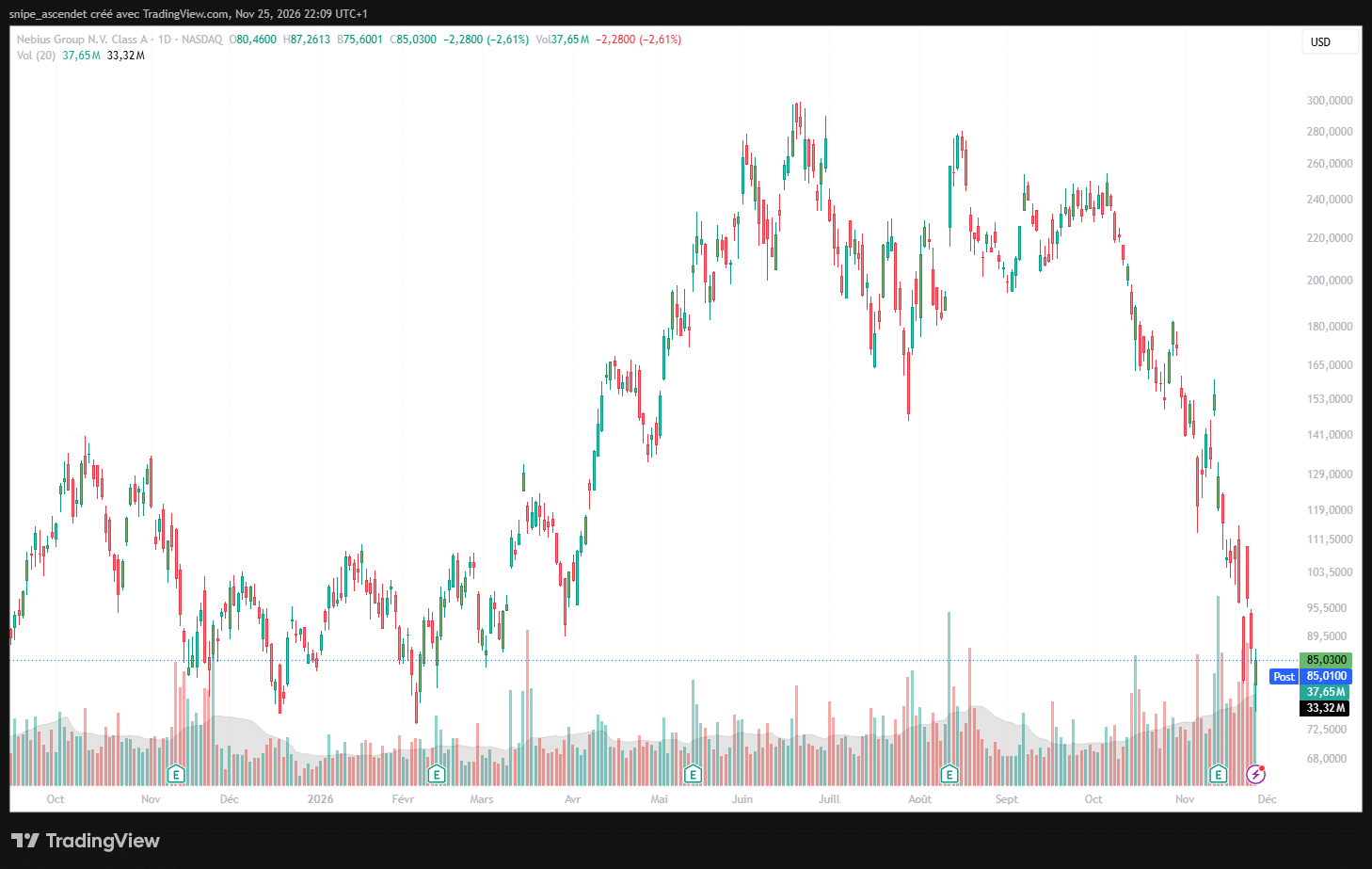
Nebius reported Q3 revenue of $980.8 million, up 571% year over year, in its quarterly earnings filing. Rapid growth does not eliminate funding, power availability or customer concentration risks. Its long-term contracts and ability to raise capital remain important to its equity valuation.
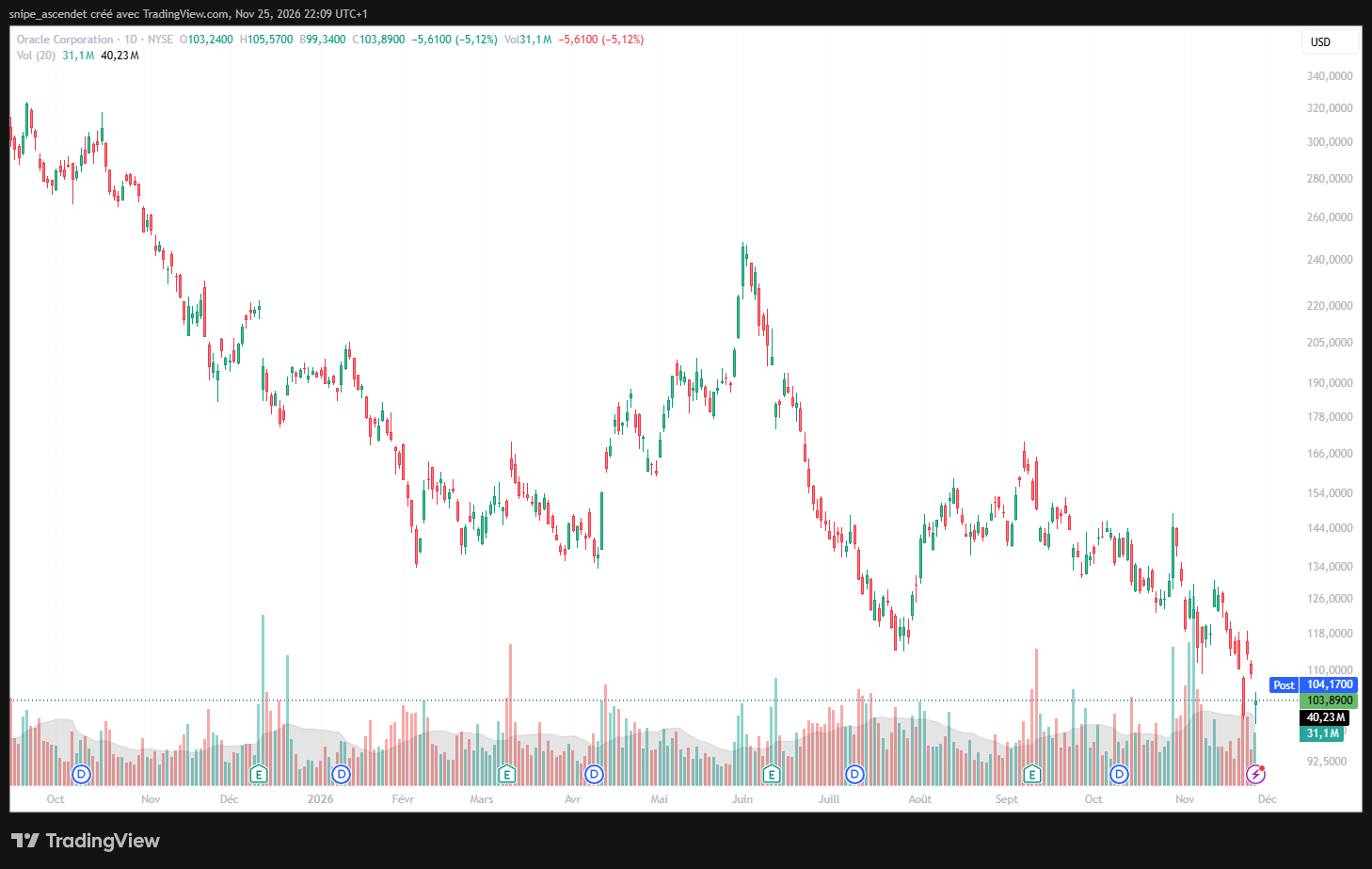
Oracle has a more diversified revenue base. It reported $23 billion in operating cash flow for fiscal Q1 2027 and completed a $20 billion common stock offering, according to its September 10 earnings announcement. Its existing software business offers a different financial buffer, but cloud expansion still requires significant investment. Equity issuance can also dilute existing shareholders.
How Higher Financing Costs Could Affect the AI Ecosystem
Consider a hypothetical $1 billion borrowing at 18% instead of 9%. Annual interest expense would increase by $90 million. Actual financing terms differ by security, collateral and contract duration, but the example illustrates why borrowing costs matter when project margins are limited.
A sustained increase in the cost of capital could push infrastructure providers to prioritize contracted capacity, seek customer prepayments or defer speculative projects. That could eventually change the pace of purchases from Nvidia and other equipment suppliers. The November AI-driven market correction and subsequent November 23 technology rebound illustrate the volatility surrounding expectations for the sector.
Bottom line: CoreWeave’s bonds highlight the difference between rapid AI revenue growth and the financial returns available after capital spending and interest. Investors should watch refinancing terms, utilization, contracted cash receipts and progress toward sustainable free cash flow.
For informational purposes only; not investment advice.