


U.S. inflation surprised to the upside in October 2026, sending the two-year Treasury yield sharply higher on Tuesday, November 10, and raising the stakes for the Federal Reserve’s December meeting. The Bureau of Labor Statistics reported a 0.4% monthly increase in headline consumer prices, above the 0.3% consensus, while core inflation rose 0.3% instead of the expected 0.2%. In a November 10 intraday TradingView snapshot, the two-year yield stood at 4.746%, up 18 basis points on the day.
This is a consequential change in the market’s interest-rate outlook, not merely a headline inflation miss. Short-dated Treasury yields respond strongly to expectations for the path of the Fed’s policy rate. The same yield shock pushed the 10-year benchmark back above 5% and weighed on technology shares. The price snapshot and market moves in this article were captured around 1:19 p.m. Eastern on November 10; they are not official closing prices.
October CPI: Both Headline and Core Inflation Beat Estimates
| Indicator | October reported | Consensus | September |
|---|---|---|---|
| Headline CPI, month over month | +0.4% | +0.3% | +0.6% |
| Core CPI, month over month | +0.3% | +0.2% | +0.3% |
| Shelter, month over month | +0.3% | Not stated | +0.4% |
| Food, month over month | +0.5% | Not stated | 0.0% |
| Energy, month over month | +0.7% | Not stated | +5.2% |
The headline figure slowed from September’s 0.6% surge, but that does not make it a benign result. Core CPI, which strips out food and energy, increased 0.3% for a third consecutive month. Shelter rose 0.3% and accounted for more than 30% of the monthly increase in the all-items index. Food prices advanced 0.5%, while energy gained 0.7%, a much smaller move than September’s 5.2%. Used cars and trucks provided some relief, falling 1.2%.
There is an unusual data limitation: the BLS did not publish most October 2026 annual inflation rates because the October 2025 government shutdown prevented the collection of comparison data. Investors should not substitute a year-over-year estimate for a BLS reading that does not exist. The 0.4% and 0.3% figures here are seasonally adjusted monthly changes. The Conference Board’s October inflation analysis likewise identified the upside surprises against consensus.
Why the US02Y Yield Jumped Nearly 20 Basis Points
The clearest reaction was in the front end of the Treasury curve. Reuters reported the two-year yield up 19.28 basis points to around 4.74% during the session, its largest daily increase since April 2025 at that reporting point. The user-supplied TVC:US02Y one-hour chart independently shows a steep rally in yields from roughly the mid-4.5% range to the mid-4.7% range. Its later visible quote is 4.746%. These readings are time-specific rather than final settlements.
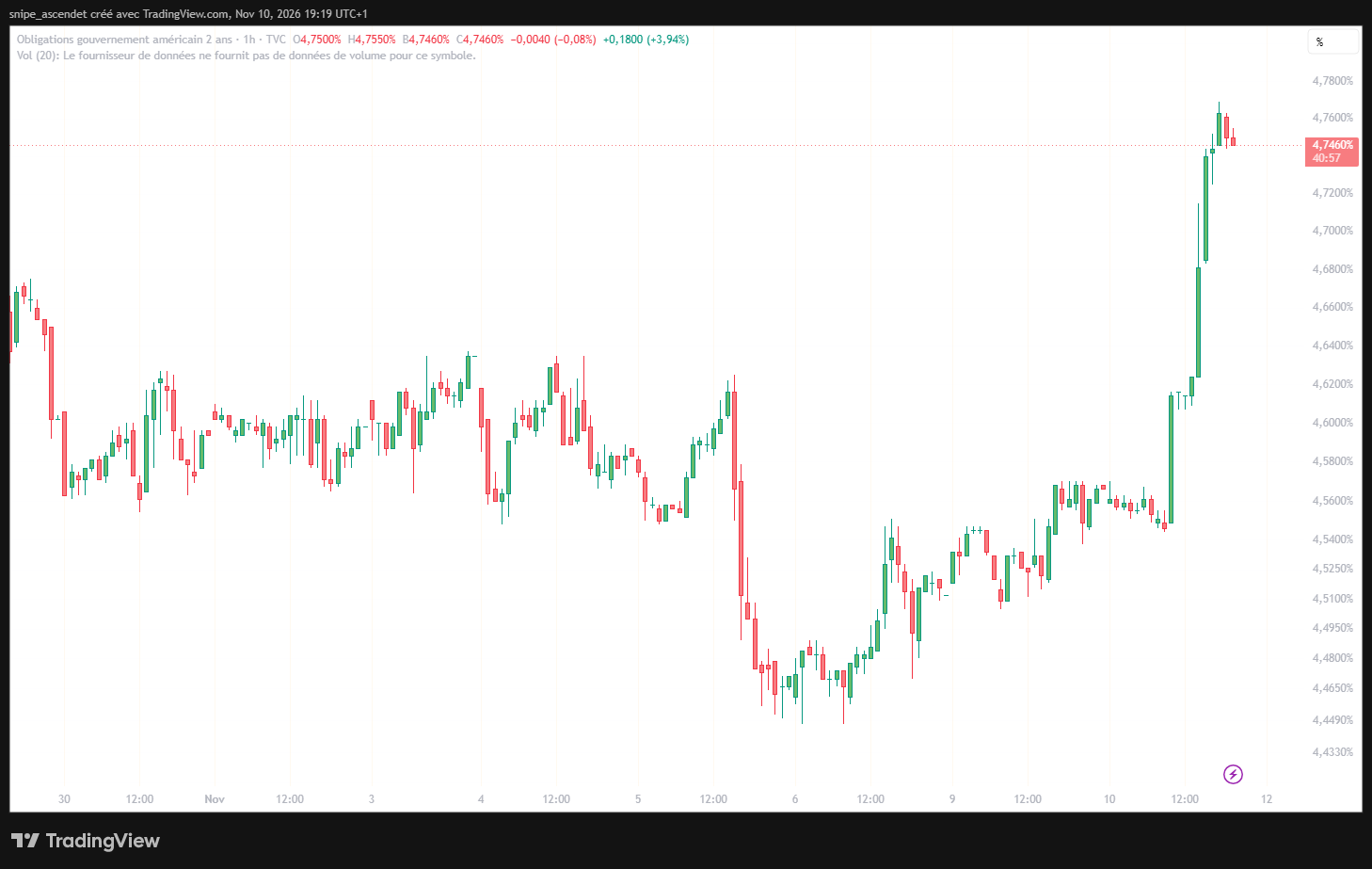
A yield increase of 0.180 percentage points equals 18 basis points. The chart also displays a relative move of +3.94%; this is the percentage change in the quoted yield itself, not a 3.94% gain on a two-year Treasury investment. The distinction matters because higher market yields generally imply lower prices for outstanding fixed-rate bonds.
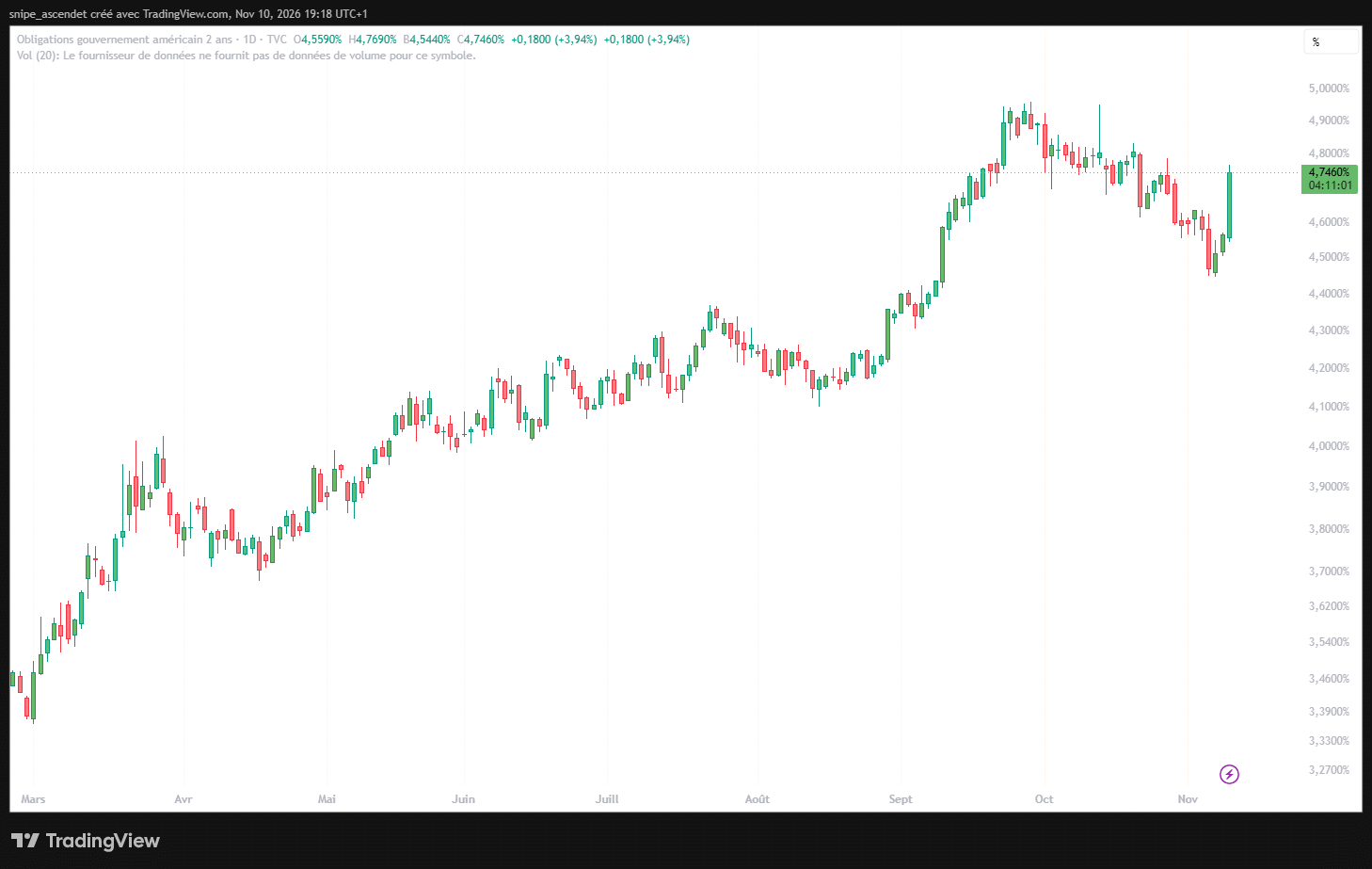
The longer daily view puts Tuesday’s reaction in context. US02Y had already climbed substantially from its March levels, briefly traded close to 5% in early October, pulled back in late October and early November, then rebounded abruptly following the CPI release. A single session does not establish a new multimonth trend, but it signals a material repricing of near-term policy risk.
The Federal Reserve Faces a More Difficult December Choice
Fed Governor Christopher Waller said before the CPI release that a 0.3% core monthly reading could warrant considering a 50-basis-point increase at the December 8–9 meeting. The result met that threshold, and Reuters reported that investors increased bets on a larger-than-usual hike. That is a statement about market pricing and one policymaker’s conditional comments, not a guarantee of a half-point move.
The bond market is pricing uncertainty about how high rates may need to rise and how long restrictive policy could last. In particular, repeated 0.3% core CPI readings complicate an argument that inflation is quickly returning to the central bank’s 2% objective. The Fed also weighs labor-market conditions, growth and additional inflation evidence. Its December decision remains contingent on incoming information.
Nasdaq Pressure: Why Higher Yields Hurt Growth Stocks
Higher Treasury yields raise the return available on relatively low-credit-risk assets and can increase the discount rates applied to future corporate earnings. That valuation channel is especially relevant for companies whose expected cash flows lie far in the future. FinanceToTheTop’s discounted cash-flow guide explains why rising risk-free rates can reduce theoretical valuations even if operating forecasts stay unchanged.
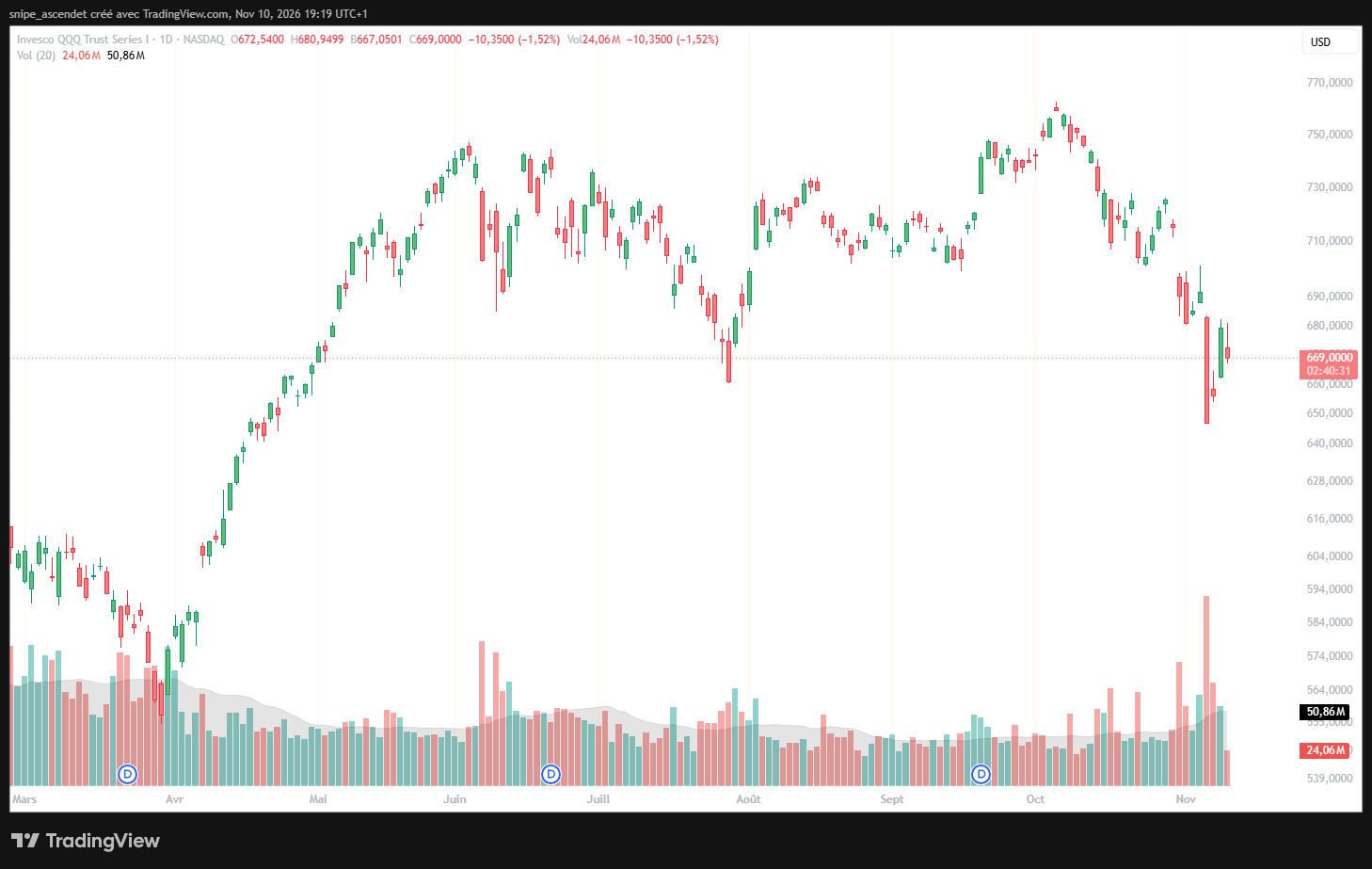
The supplied NASDAQ:QQQ daily screenshot showed the Nasdaq-100 tracking ETF around $669.00, down 1.52% during Tuesday’s session. The chart includes trading volume, but the day was unfinished when captured, so partial volume should not be compared directly with completed trading days. This move follows the fragile technology-sector recovery examined in DualFinances’ earlier Nasdaq rebound analysis.
The shock also complicates the stronger risk appetite seen on Monday. DualFinances’ November 9 market report described an equity rebound tied partly to reduced near-term geopolitical fears and lower oil prices. But oil relief alone does not offset persistent core services inflation. For additional background in French, Bourse24’s preview of the November 10 CPI and Nasdaq risks examined the stakes before the data arrived.
Three Scenarios for Rates and US Stocks
Bullish: Subsequent data soften
If the November producer-price report, future CPI readings and other inflation measures begin to cool, Treasury yields could retrace part of the November 10 surge. Lower discount-rate pressure would improve the backdrop for long-duration equities, provided corporate earnings also hold up.
Base case: Elevated yields and volatile trading
A succession of uneven inflation readings could leave the Fed on a gradual tightening path. Short-term yields may remain sensitive to each data release, while the Nasdaq alternates between recovery attempts and risk-off sessions. This case requires careful separation of yield changes from company-specific earnings news.
Bearish: Sticky inflation calls for faster tightening
If underlying prices remain firm and employment does not weaken, investors may assign a greater probability to a half-point December move or additional hikes in 2027. That would increase pressure on borrowers and highly valued businesses, particularly capital-intensive firms. DualFinances’ analysis of AI data-center financing details why refinancing risk matters when yields rise.
What Investors Should Watch Next
The next catalysts are the November 13 producer-price report, incoming Fed communication, and the December 8–9 policy meeting. Traders should also monitor whether US02Y holds the move toward 4.75%, whether the 10-year stays above 5%, and whether QQQ stabilizes when yields stop rising. The key takeaway is not that a single CPI print determines the entire cycle: it is that the October surprise quickly shifted the price of money across bonds and stocks.
Data note: TradingView snapshots were supplied on November 10, 2026, around 19:18–19:19 Paris time (13:18–13:19 ET). Bond yield symbols do not provide comparable exchange volume; QQQ volume is included only as displayed on the screenshot. All figures are subject to subsequent market movement.