

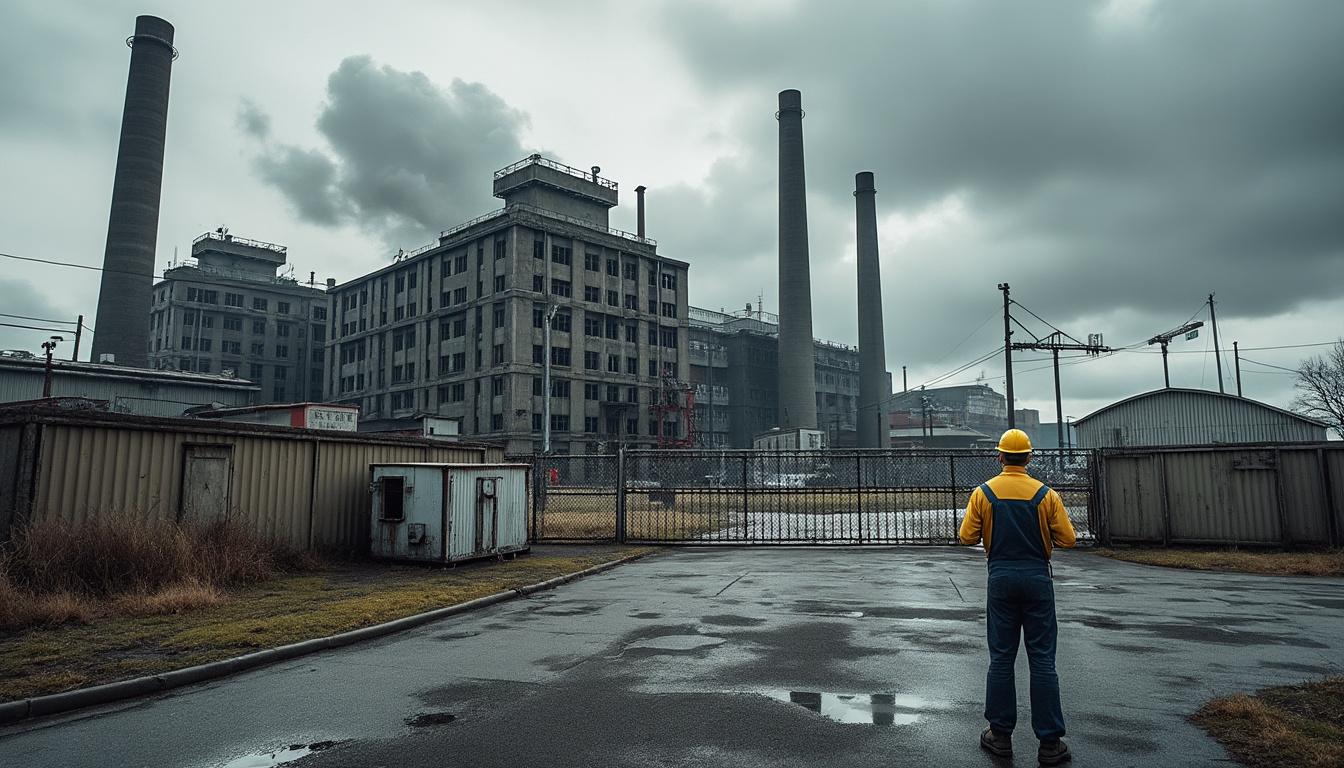
Just before the White House rolled out sweeping levies on imported goods on the so-called “Liberation Day,” officials highlighted a small February uptick of roughly 10,000 manufacturing jobs, framing that gain as the first step in a campaign to restore factory employment. The administration’s message was simple: impose tariffs, shield domestic producers from foreign competition, and watch factories and jobs return. By spring, however, the narrative frayed. Data show 72,000 manufacturing positions vanished after the April announcement, with losses continuing into December. The paradox is stark: manufacturing production has held steady or even risen in some segments, yet employment in the sector keeps falling. That contradiction points to deeper structural forces—automation, global trade shifts begun decades ago, and the limits of tariffs as a blunt instrument. This report examines why tariffs alone cannot reverse long-term job loss, how they interact with input costs and employer uncertainty, what this means for regions that voted on promises of a manufacturing revival, and which targeted policies and operational shifts could more realistically reshape industry and the broader economy.
Why Tariffs Were Promised To Revive American Manufacturing And What They Actually Do
Policy Rationale: The political logic behind imposing tariffs is intuitive. By raising the price of imported goods, policymakers hope to make American-made products more competitive and thus spur domestic hiring. President Trump framed the April levies as a way to bring factories and jobs “roaring back.” That promise rests on two assumptions: first, that production capacity still exists domestically to scale up quickly; second, that manufacturers will hire when faced with reduced foreign competition. Both assumptions are fragile.
Economic Mechanisms Behind Tariffs
Tariffs raise the cost of imports at the border. For final goods that directly compete with domestic output, higher prices can lead to increased sales for local manufacturers. But modern manufacturing relies heavily on imported intermediate goods—components, electronics, rare earth elements for batteries, and specialty chemicals. When those inputs rise in price because of tariffs, domestic production costs go up. Firms facing higher costs often respond by substituting capital for labor, optimizing processes, or delaying expansion rather than hiring.
Several studies and prominent economists have noted this dynamic. As Professor Gordon Hanson observed, tariffs “haven’t helped” reverse the long-term decline in manufacturing employment because the underlying drivers—automation and the long shadow of the China trade—are far more powerful than temporary protection.
Tariffs Versus Structural Change
Decades of structural change mean many industries are not simply dormant; they are transformed. Apparel and textile production, for example, has migrated to low-cost countries to such an extent that the U.S. no longer retains much capacity to scale output quickly. Rebuilding that capacity requires investment in capital, workforce training, and near-term incentives—far beyond a single tariff announcement.
Political promises often compress complex economic realities into digestible soundbites. The result is policy that may help narrow a trade deficit in a specific category but fails to address the mismatch between production technology and available labor skills. That is why, even after tariffs were implemented, manufacturing employment resumed its decline.
For local leaders, the policy takeaway is clear: tariffs can be one tool but cannot substitute for long-term investment in industry capacity, workforce development, and targeted incentives that address specific bottlenecks in the supply chain. Insight: tariffs change relative prices; they do not conjure factory floors or trained payrolls overnight.
Why Manufacturing Jobs Continue To Decline Despite Higher Output And Political Promises
Production Versus Employment: The U.S. is in a moment where output per hour in many manufacturing subsectors is high, yet the number of workers employed continues to drop. Part of the explanation is technological: firms have invested heavily in automation, robotics, and software systems that allow plants to produce more with fewer hands. Another part is the legacy of trade; supply chains reoriented to Asia and other regions have left gaps that tariffs alone cannot fix.
Automation, Productivity, And The Decline In Jobs
Automation reduces the marginal benefit of hiring additional workers. When a line can run continuously with fewer operators, companies prioritize uptime, quality control, and predictive maintenance over labor expansion. For instance, electric vehicle plants may expand production while hiring fewer people because battery assembly and testing are highly automated. Furthermore, when tariffs raise the cost of imported inputs, companies may respond by investing in further automation to insulate themselves from cost volatility.
Real-world illustration: consider Maya Rivera, a hypothetical plant manager in Ohio who inherited a mid-sized component facility in 2024. After the tariffs were announced last spring, Maya saw an initial uptick in demand for locally sourced parts. But rising costs on imported circuit boards and a shortage of skilled assemblers forced her to choose between investing in a new automated assembly line or opening new hire requisitions and training programs. She opted for the former to meet client deadlines and margin targets. The result: higher output with fewer new hires—an individual-level example of the national pattern.
Table: Timeline Of Key Events And Immediate Effects
| Event | Date | Immediate Effect On Jobs |
|---|---|---|
| White House highlights 10,000 job gain | February (Pre-Liberation Day) | Temporary optimism; limited hiring |
| Tariff announcement (“Liberation Day”) | April | Short-term protection for some sectors; 72,000 job losses followed |
| Input cost increases reported (EV batteries, electronics) | Summer–Fall | Firms defer hiring; accelerate automation |
| Seasonal hiring and retail upticks | November–December | Small, concentrated gains; not manufacturing-wide |
Sectoral Mismatch: Another complicating factor is that the jobs lost are not evenly distributed. High-skill manufacturing segments, like aerospace and advanced machinery, continue to require specialized labor. Low-skill segments, particularly textiles, are largely gone. That mismatch means even if tariffs pressure production to return, the available domestic workforce may not match the skills employers need.
Finally, there is the issue of certainty. Firms hate policy whipsaws. When tariffs appear unpredictable in scope and timing, employers delay hiring and investment. This hesitation was documented across multiple sectors, and commentators from the Center for Economic and Policy Research highlighted the uncertainty as a hiring deterrent. For policymakers looking to restore manufacturing employment, the lesson is that stable, targeted policy frameworks matter more than headline-grabbing levies. Insight: rising production is not synonymous with rising payrolls; productivity gains can decouple the two.
How Tariffs Change Supply Chains, Input Costs, And Hiring Decisions In Practice
Input Cost Transmission: Tariffs operate through channels that are often invisible to the public. For manufacturers reliant on complex, global supply chains, a tariff on a finished product can ripple backward through suppliers, increasing the price of intermediate goods. Take electric vehicles: while assembly may occur in the U.S., batteries and specialized components often depend on materials and subassemblies sourced globally. Tariffs on specific categories can therefore make domestic manufacturing more expensive without increasing the number of domestic component suppliers.
Examples And Employer Responses
Consider a midsize Midwest firm that produces HVAC components. The company imports sensor modules from a partner in Southeast Asia. After tariffs raise the landed cost of those modules, the firm faces a choice: eat the cost, raise prices to customers (and risk losing contracts), or redesign products to require fewer imported components. Many choose redesign or automation, both of which reduce immediate hiring needs.
Uncertainty compounds the problem. Investors and corporate boards are wary of committing to multi-year hiring and capital plans when trade policy can shift quickly. Economist Dean Baker and others warned that the worst outcome for growth is not just high tariffs but unpredictable tariffs. That hesitation shows up in slowed hiring, paused plant upgrades, and relocated expansion plans.
Employment Data And Broader Labor Market Trends
Manufacturing is not the only sector affected by these dynamics. Across the economy, job growth in 2025 and 2026 has been concentrated in healthcare and social assistance, while manufacturing, construction, and some professional services lagged. The Federal Reserve and other analysts noted modest job gains in some months, but not enough to reverse structural declines in factory employment. For workers, rising job security concerns and higher living costs create a pressure point; families weigh relocation, retraining, or exiting manufacturing altogether.
Policy uncertainty also affects financial markets and corporate strategy. A November employment report from the Federal Reserve and private-sector analyses highlighted how firms are tempering hiring expectations. Banks and consulting firms have published scenarios indicating that sustained tariff uncertainty could shave growth forecasts, prompting firms to raise cash reserves and delay payroll expansion.
Practical company-level remedies include diversifying suppliers, investing in local supplier development, and forming public-private partnerships to finance capital upgrades accompanied by training programs. Those steps require time and predictable policy, not abrupt tariff shifts. Insight: tariffs alter incentives across the supply chain, and the resulting corporate responses frequently reduce hiring rather than increase it.
Regional Case Studies: Furniture, Textiles, And Automotive — Who Wins And Who Loses?
Furniture And Textiles: These industries are instructive because they were central to the political case for tariffs. Historically, regions like North Carolina hosted large-scale furniture and textile manufacturing. Over decades, much of that production moved offshore. Tariffs can make imported furniture temporarily more expensive, but they cannot instantly recreate the specialized manufacturing bases and supply chains that have vanished.
Case: A Furniture Supplier In North Carolina
Maya Rivera’s cousin, Lena, runs a small furniture components firm near High Point. After tariffs were announced, she received inquiries from domestic assemblers seeking local sources. Lena could meet small orders immediately, but scaling to full production required investments in hardwood processing equipment and certified stain lines—investments that take months and capital. Lena considered hiring temporary workers during peak season, referencing trends like seasonal hiring boosts that benefit retail cycles, but recognized the long runway needed to convert interest into permanent manufacturing jobs. Her situation reflects many SME suppliers: demand may return incrementally, but hiring lags behind because capacity must be rebuilt.
Automotive: The auto sector demonstrates a split picture. Some assembly lines have attracted investment back to the U.S., but modern auto plants are capital intensive and need fewer workers per vehicle than in past decades. The Ford River Rouge Complex tour illustrated the political optics of a manufacturing revival, but analysts note that battery supply chains remain a bottleneck. When batteries or rare earth inputs are subject to higher tariffs, automakers often opt for vertical integration or substitute materials rather than immediate mass hiring.
Policy And Local Strategies
Regions attempting to revive manufacturing must coordinate workforce development, infrastructure investment, and supplier attraction. Successful strategies blend state incentives, federal grants for capital investment, and targeted training programs. The federal debate in 2025–2026 increasingly focused on whether tariffs should be paired with incentives to spur domestic input production—because without local suppliers, manufacturing hiring remains constrained.
Examples of practical initiatives include grant programs for SME equipment upgrades, tax credits for worker training, and procurement commitments from public agencies to anchor demand. These approaches recognize that jobs follow capacity and contracts more reliably than they follow temporary price protections. Insight: regional recoveries are possible, but they hinge on deliberate supply-chain rebuilding and workforce investments rather than tariffs alone.
Policy Alternatives And Practical Steps To Restore Manufacturing Employment
Beyond Tariffs: If the goal is to restore jobs, policymakers need a mix of measures that address both demand and supply. That means pairing trade measures with investments in workforce training, incentives for domestic supplier development, and tax policies that encourage onshoring of critical inputs. Tariffs alone are blunt instruments; when combined with targeted programs, they can be one piece of a larger strategy.
Concrete Policy Options
- Targeted subsidies for domestic production of critical components (batteries, semiconductors).
- Tax credits tied to hiring and training new workers rather than capital expenditures alone.
- Public-private workforce partnerships that create apprenticeship pipelines connecting community colleges and manufacturers.
- Supplier development funds to help SMEs upgrade equipment and meet certification standards.
- Predictable trade policy frameworks that reduce uncertainty for long-term investment decisions.
These ideas are consistent with recent commentary in the financial press and analyses by labor economists. They also align with corporate sentiment collected in 2025 and 2026 forecasts: firms are more likely to hire when they can predict demand and supply conditions for several years ahead. Bank and market reports, including outlooks on hiring and job security, show that hiring accelerates when employers see sustainable, multi-year incentives rather than short-term protectionism.
Financial And Private-Sector Measures
Private actors can also play a role. Venture capital and industrial investment funds can target manufacturing SME upgrades. Multinationals can commit to sourcing agreements with local suppliers to provide a guaranteed demand curve for firms investing in capacity. For workers, access to portable benefits and income support during retraining can make transitions less disruptive and more effective.
Relevant resources and reporting help clarify how these dynamics play out. For example, analyses of rising tariff impacts on employment, studies of employment volatility in November labor reports, and independent assessments of job-market security point to a need for integrated approaches that combine fiscal incentives, trade policy predictability, and workforce programs. See reporting on tariffs and employment trends, the JEC analysis of tariffs and jobs, and recent labor observations in the November employment summaries.
Policy design should also factor in household-level pressures. Rising living expenses and job insecurity influence worker mobility and willingness to retrain. Analysts have documented these pressures in pieces on job security and rising expenses and in broader market outlooks such as institutional employment forecasts for 2026. For manufacturing to regain meaningful employment, interventions must align supply, demand, and household resilience.
Actionable corporate steps include supplier diversification, investment in worker training tied to automation upgrades, and longer-term sourcing agreements that reduce the incentive to automate simply to shield against tariff volatility. For policymakers, the most realistic path combines stable, targeted trade policy with investments that rebuild the supplier base and equip workers for industry 4.0 jobs. Insight: sustainable manufacturing employment returns when policy certainty, supplier capacity, and workforce readiness converge.