


Anthropic launched Claude Whiteboards and Claude Sheets in beta on November 10, 2026, and made Claude Data generally available, moving its AI assistant deeper into workplace software traditionally dominated by Microsoft and Google. The products bring shared planning boards, AI-built spreadsheets, and connected business dashboards into Claude. For investors, the immediate question is not whether these first versions can replace Excel. It is whether AI-native applications can become the starting point for everyday corporate work and capture more enterprise software spending.
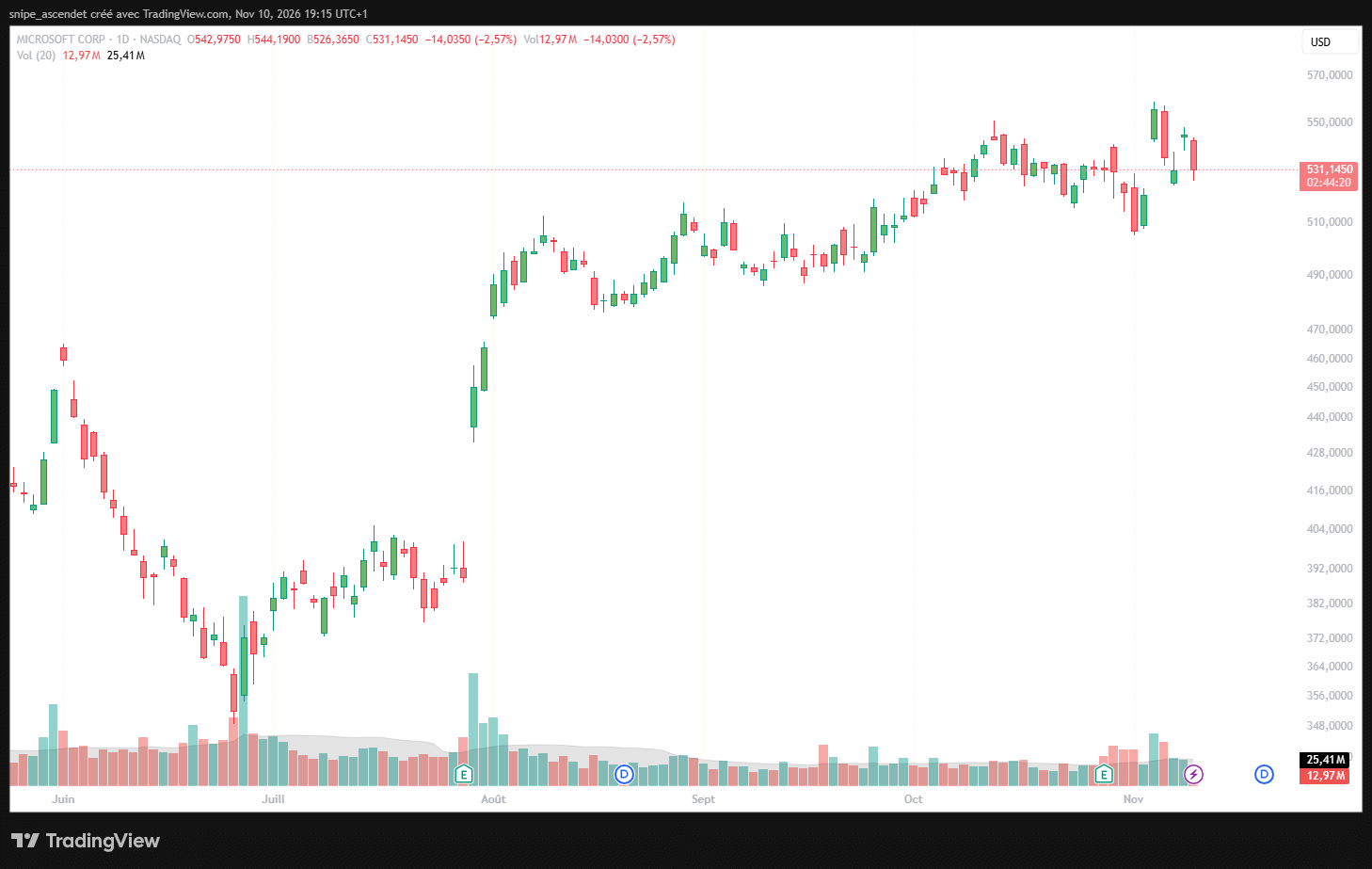
Microsoft (NASDAQ: MSFT) traded around $531.15, down 2.57%, in a TradingView screenshot taken near 1:15 p.m. Eastern on Tuesday. Alphabet, Salesforce, and a software-sector ETF were also lower. These are intraday quotes, not closing prices. The simultaneous declines do not prove that Anthropic caused Microsoft’s entire move. The larger issue is that Anthropic now competes with Microsoft’s business applications even while supplying models that run inside Microsoft Copilot.
What Anthropic Launched on November 10
According to Anthropic’s official announcement, three workplace tools are arriving together. Whiteboards and Sheets remain beta products, while Claude Data is the generally available successor to Claude Dashboards. They are available on paid plans, subject to enterprise administration and rollout settings.
| Product | What it does | Competitive overlap |
|---|---|---|
| Claude Whiteboards | Shared brainstorming, timelines, owners, and action items | Microsoft Whiteboard, Miro, planning tools |
| Claude Sheets | Spreadsheets with tabs, formulas, formatting, and dropdowns | Microsoft Excel, Google Sheets |
| Claude Data | Connected dashboards, certified metrics, narrated data stories, and sharing | Microsoft Power BI and business-intelligence products |
Whiteboards can organize a team’s ideas and export work to partner applications. Sheets can build a campaign tracker or hiring budget from a prompt, while users and Claude edit cells collaboratively. Data connects to warehouses or business systems and is designed to keep analytics and explanations together. Certified queries and live sharing in Claude Data are still beta features. The products differ in maturity, so treating them as a complete Microsoft 365 replacement would overstate what Anthropic announced.
Anthropic explicitly says Claude Sheets has simple spreadsheet functionality for now, with export to .xlsx or CSV when full Excel capabilities are needed. That qualification matters for finance teams relying on advanced models, macros, and deeply integrated workbooks. The launch also includes interactive connectors that open partner software inside Claude. A separate Claude Meetings beta will let the assistant participate in calls and help develop follow-up work, Reuters reported.
MSFT Stock Reaction: A Decline, Not Proof of Causation
The supplied Microsoft daily chart records $531.145, a drop of $14.035 or 2.57% relative to the previous regular-session close. The November 10 intraday range was approximately $526.37 to $544.19 at the time of capture. The day’s trading volume was incomplete. Microsoft’s price had already moved sharply across earlier sessions, so the new office tools should not be presented as the sole explanation for the day’s loss.
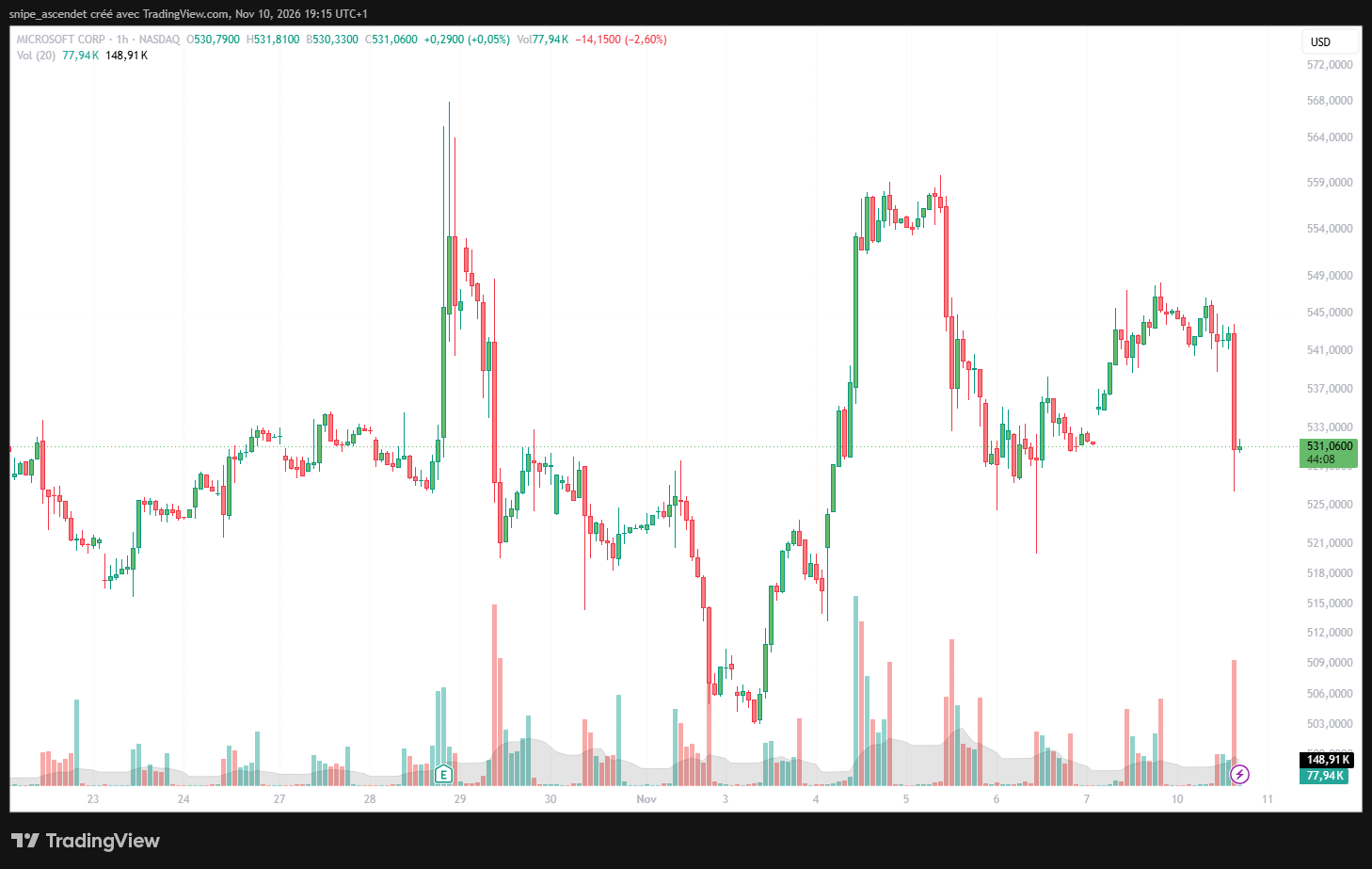
The hourly chart shows the recent swings more clearly, including a steep selloff into the November 10 session and an active hourly candle around $531.06. That quote differs slightly from the daily screenshot because the two images capture a moving market at different instants. The hourly chart documents price action and volume but cannot identify every contributing catalyst.
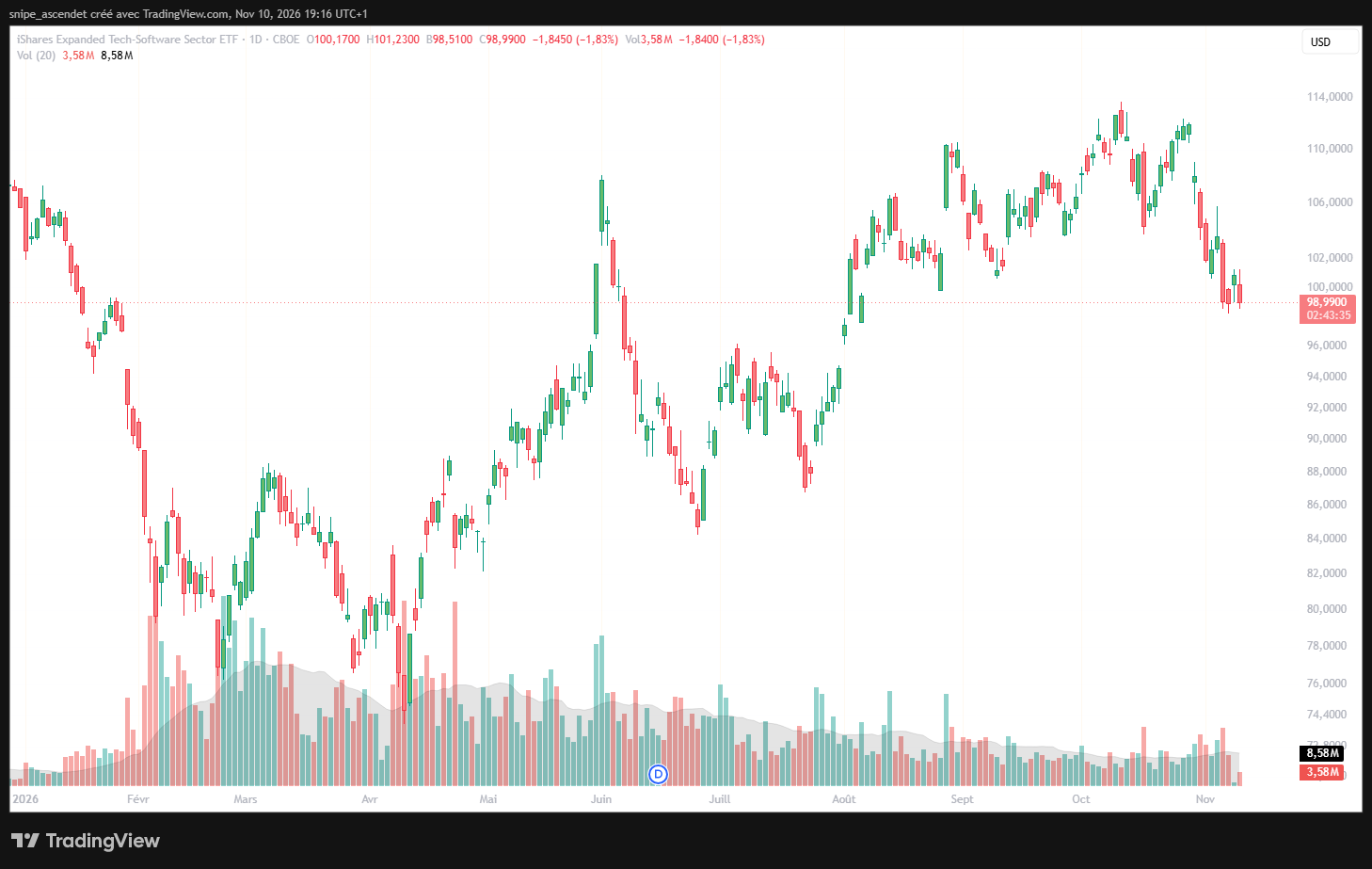
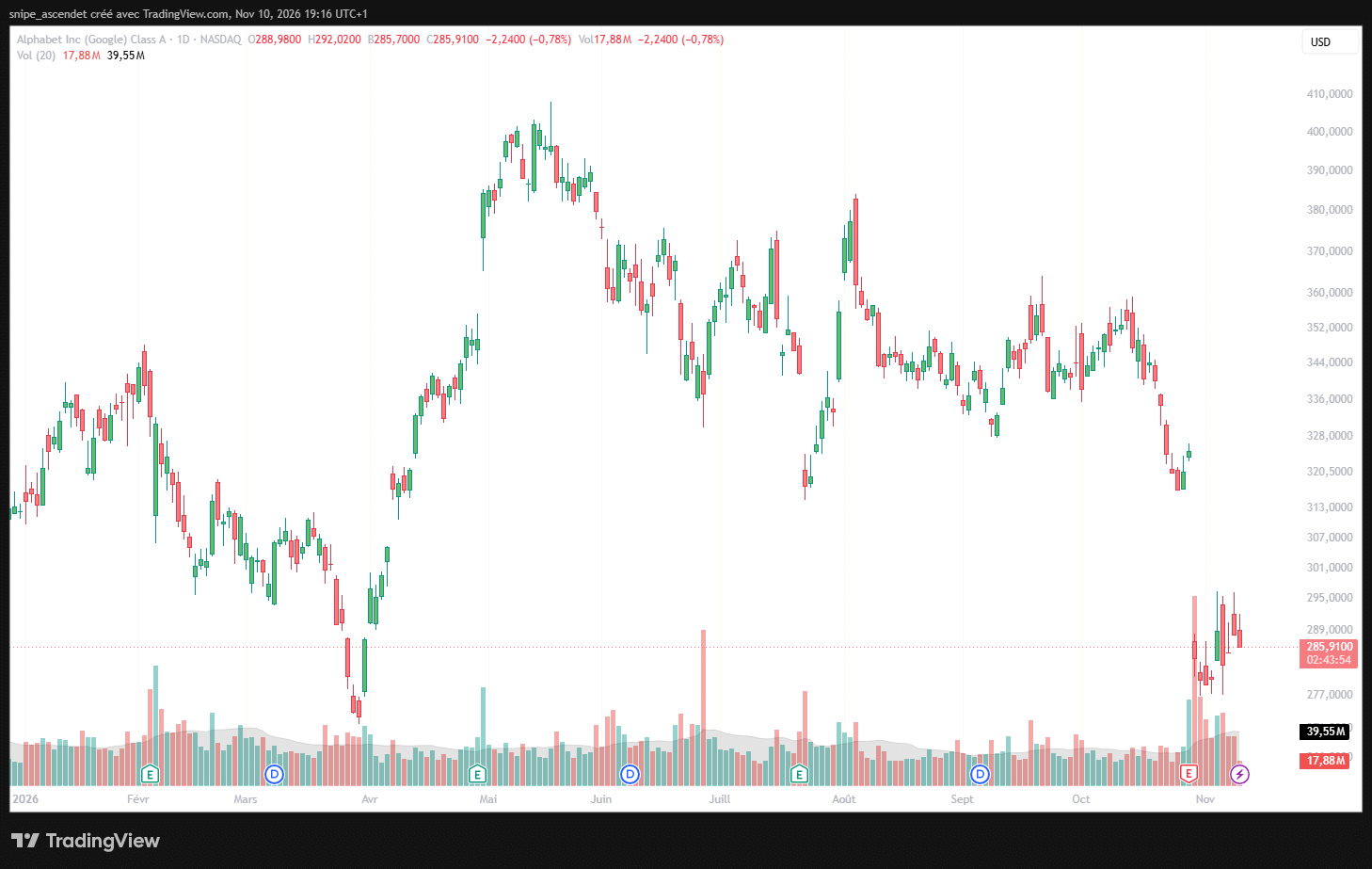
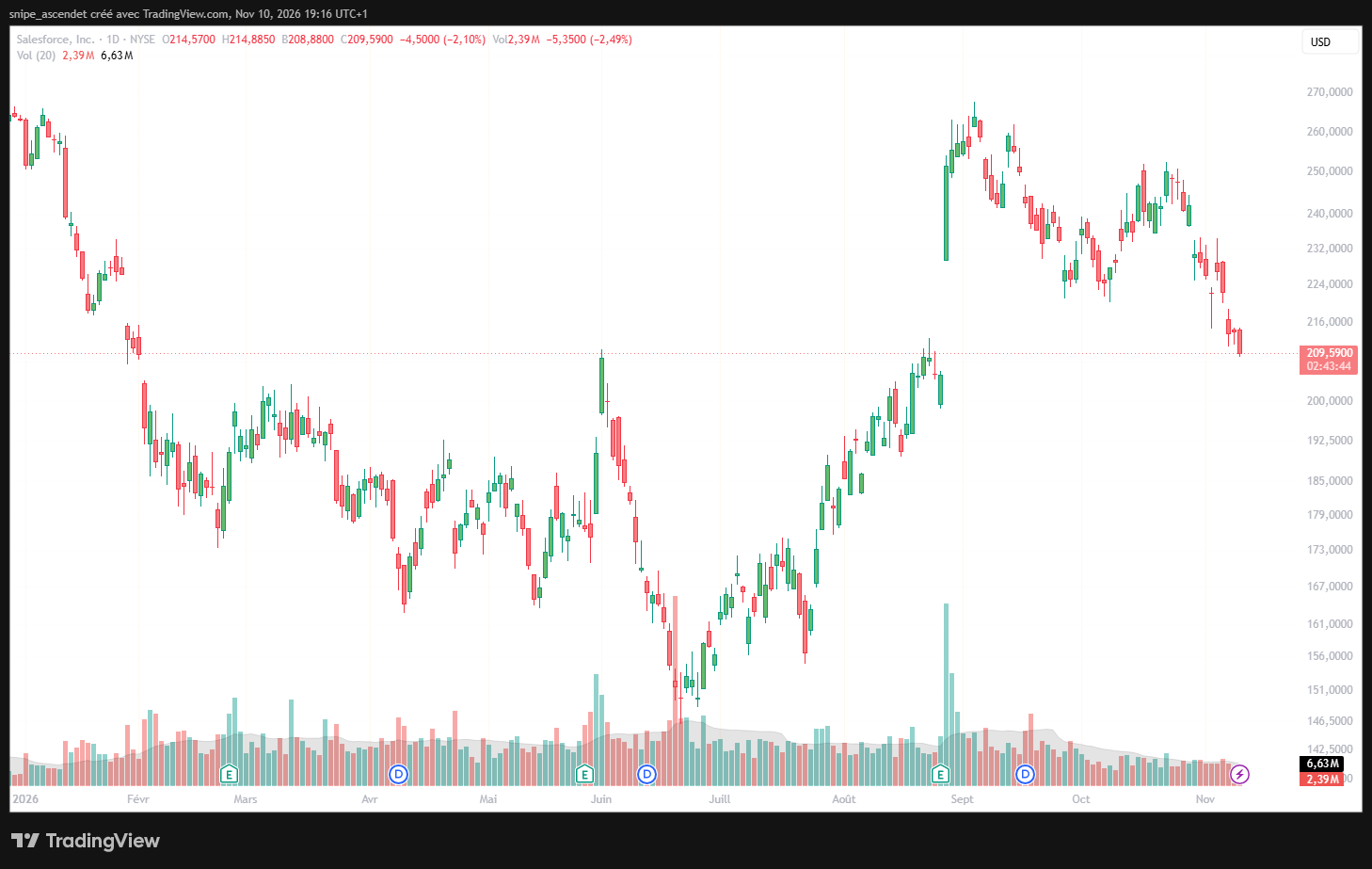
Other software exposures also declined near the same time. The iShares Expanded Tech-Software Sector ETF (CBOE: IGV) traded around $98.99, down 1.83%; Alphabet Class A (NASDAQ: GOOGL) was $285.91, down 0.78%; Salesforce (NYSE: CRM) was $209.59, down 2.10%. Those readings indicate broader weakness, although they do not measure a clean, event-driven return. For recent market context, DualFinances examined the fragile technology-stock rebound after the early-November selloff.
Microsoft’s Defense: Scale, Distribution, and Cash Generation
Microsoft’s competitive position is not measured by one day’s share-price movement. In the quarter ended September 30, 2026, the company reported $92.3 billion of revenue, up 19% year over year, and $45.9 billion of operating income, up 21%. Microsoft Cloud revenue rose 30% to $63.9 billion, while Microsoft 365 commercial cloud revenue increased 17% on a reported basis. These are reported business metrics, not estimates of how much any individual AI application contributes.
The fiscal 2026 annual report puts Microsoft 365 Commercial products and cloud services revenue at approximately $102.0 billion. Microsoft said paid Microsoft 365 Copilot seats exceeded 30 million by the end of that fiscal year. The distribution advantage spans procurement contracts, identity systems, security controls, employee training, data governance, and familiar workflows. A beta spreadsheet is not likely to displace that entire ecosystem overnight.
But displacement is not the only commercial threat. A team might begin planning, drafting, and analyzing in Claude and use an Excel workbook only as a final format. If this behavior spreads, Microsoft could retain many licenses while losing some of the incremental AI spending and daily engagement that support premium subscription growth. The important contest is over the entry point into the workflow, not simply the installed base of Office.
Alphabet and Salesforce Illustrate the Broader Software Risk
Alphabet faces direct overlap because Google Workspace includes its own spreadsheets, documents, and collaboration tools. Claude Sheets may attract users who prefer to describe a task and have the spreadsheet constructed for them. However, Alphabet has the Gemini ecosystem, Google Cloud, and a substantial existing customer base. The GOOGL chart covers an extended period in 2026, with a $285.91 intraday quote on November 10. Its broader price trajectory cannot be reduced to the day’s Anthropic announcement.
Salesforce’s exposure is different. It is primarily a CRM and enterprise workflow platform rather than a spreadsheet provider. Claude Data and interactive connectors could complement Salesforce by helping authorized users interpret their customer data. They might also compete for the AI interface through which employees query and act on that data. Salesforce was trading near $209.59, down 2.10%, in the submitted daily chart. Whether that reflects a lasting competitive problem requires evidence from customer behavior and future results, not a single session.
The companies most exposed to AI-native workspaces may not be those with the largest product catalogs. A vendor whose software owns hard-to-replace operational records or regulated business processes could remain essential even if a third-party assistant supplies the interface. A vendor whose differentiation lies mainly in displaying information may face stronger pricing pressure. This is a framework for evaluating software economics, not a claim that any named company’s revenue has already deteriorated.
The Microsoft-Anthropic Relationship Is Both Competitive and Cooperative
Microsoft and Anthropic already work together. Microsoft distributes Claude models through Foundry and makes them available in Microsoft Copilot experiences. On November 5, Microsoft announced plans to provide Claude model processing within the EU Data Boundary to eligible customers by the end of 2026. Anthropic’s partnership announcement also describes how Claude can work inside Excel.
That gives the relationship two directions. If an enterprise uses Claude through Microsoft’s cloud and productivity services, Anthropic gains model distribution without necessarily replacing a Microsoft application. If the same customer adopts Claude as its principal standalone workspace, Microsoft competes for the application layer. These outcomes can coexist. Neither the contract economics nor a change in customer spending attributable to today’s announcement has been established in the public product disclosures.
What This Means for Anthropic’s IPO and Business Model
Anthropic’s strategy is to give companies reasons to use Claude throughout a project rather than only for isolated answers. A whiteboard can become a task tracker, a tracker can connect to live data, and the analysis can become a dashboard or presentation. If customers adopt this workflow and expand paid seats, Anthropic could strengthen retention and enterprise revenue. Yet its launch announcement did not quantify incremental sales, customer conversion, or profit contribution from the three new tools.
This matters as Anthropic prepares for a public listing. DualFinances has analyzed its proposed Nasdaq IPO, and Bourse24 reviewed its infrastructure commitments (French-language article). Investors must distinguish adoption momentum from sustainable economics. More AI-powered workflows can generate more subscription value, but also more model-inference expense.
Capital intensity creates a second consideration. Our analysis of data-center financing risks describes why strong demand does not automatically translate into free cash flow. Investors can also review the differences between P/E and EV/EBITDA valuation metrics when comparing software economics, although conventional positive earnings multiples may not apply to an unprofitable company. The central question is how much durable profit remains after AI computing and distribution costs.
Three Scenarios Investors Should Monitor
Microsoft Holds Its Distribution Advantage
In the constructive scenario for MSFT, customers use Claude models through Copilot while retaining Excel, Teams, Power BI, and other enterprise applications. Anthropic’s standalone tools serve particular early-stage tasks, but established Office workflows remain the final system of record. Microsoft benefits from its cloud, subscriptions, and integration. Evidence supporting this case would include sustained Microsoft 365 commercial growth, expanding Copilot seats, and stable renewals.
Claude Becomes the Default Workspace
A more challenging scenario emerges if employees increasingly begin their work in Claude and use traditional applications only to export finished files. Microsoft could retain licenses but face slower growth in new AI application spending. Signals would include major improvements to Claude Sheets, independently documented enterprise deployments, and changes in procurement patterns. Product demonstrations alone would not establish that this scenario is taking place.
Software and AI Models Become More Interdependent
A third scenario is a fragmented market in which existing vendors supply data and workflows while AI assistants coordinate them. Anthropic’s connectors point in this direction. Under this model, cloud sourcing and product economics matter alongside application competition. The wider investment context includes Bourse24’s discussion of Microsoft’s reported cloud-capacity changes (French-language article). This is an industry structure to watch, not a prediction of a single winner.
What Comes Next for MSFT and Enterprise AI
- Claude adoption: verified paid usage, team retention, connector activity, and the progression of Sheets beyond simple spreadsheets.
- Microsoft execution: Copilot paid seats, Microsoft 365 commercial growth, Azure demand, security integration, and operating margins.
- Sector comparison: MSFT, GOOGL, CRM, and IGV over the same intervals, avoiding attribution based on one intraday candle.
- Anthropic economics: subsequent IPO disclosures, pricing, cash generation, infrastructure commitments, and cost per unit of useful work.
Claude’s new tools are a credible competitive move, but not proof of an immediate Microsoft 365 disruption. Microsoft enters the contest with a large, profitable enterprise platform; Anthropic is testing whether an AI-first interface can reorganize how teams get work done. Future adoption, monetization, and margins will determine which business captures the value.