


U.S. stocks ended Thursday, November 12, lower as Treasury yields climbed sharply, oil prices rebounded and Nvidia (NASDAQ: NVDA) faced a historic leadership transition. The 10-year Treasury yield reached 5.125%, while Nvidia recovered much of an intraday decline that had reached 14%. Investors now face another potential volatility catalyst: Friday’s Producer Price Index (PPI) inflation report.
US Stock Market Today: Major Indexes Finish Lower
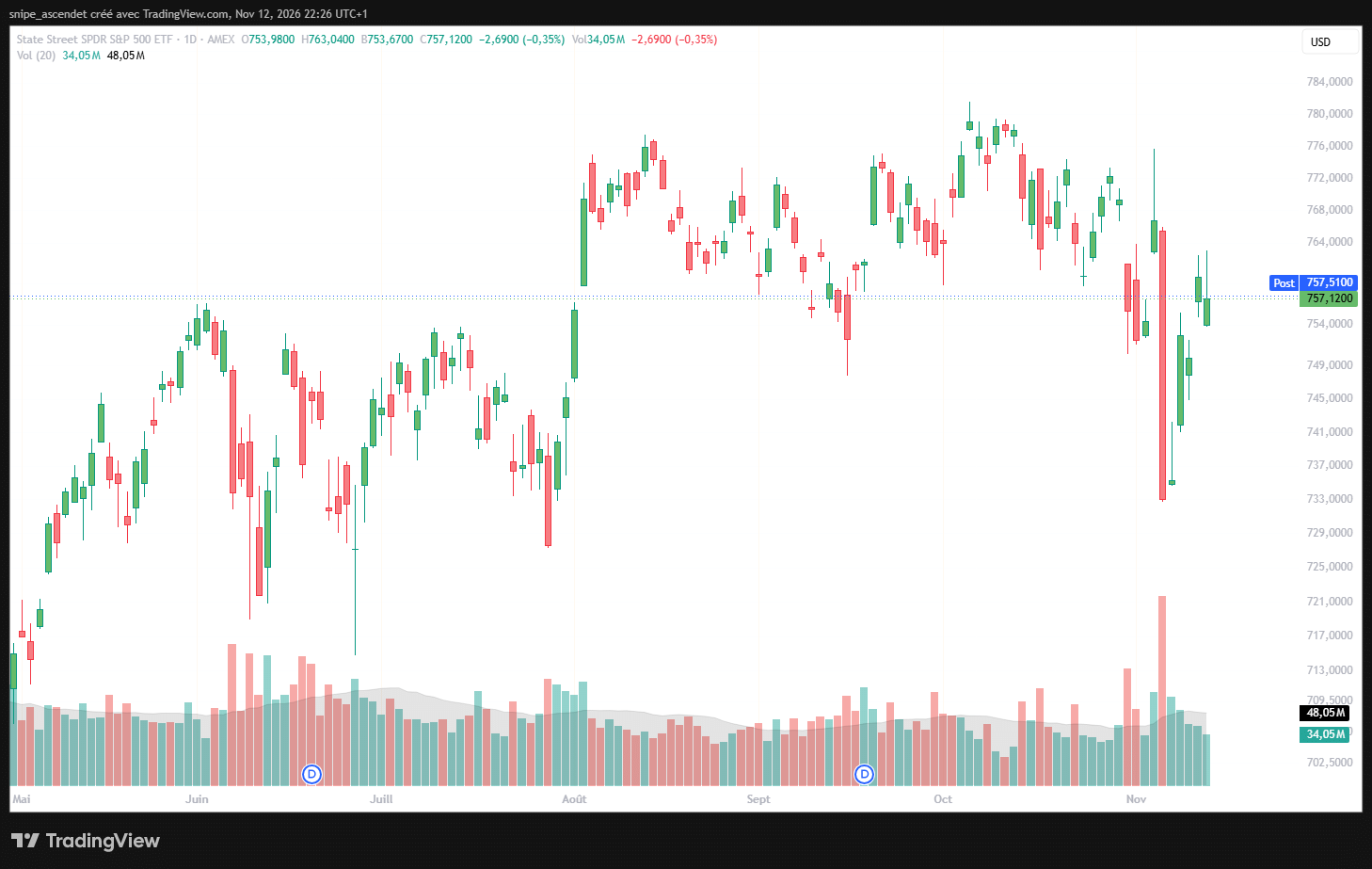
Wall Street recovered from substantial early losses, but the major indexes still closed in negative territory. The S&P 500 declined 0.35%, the Nasdaq Composite slipped 0.39%, and the Dow Jones Industrial Average lost 189.40 points, or 0.36%, according to Associated Press.
| Asset | Latest level | Daily change |
|---|---|---|
| S&P 500 | 7,592.40 | -0.35% |
| Nasdaq Composite | 25,366.09 | -0.39% |
| Dow Jones | 52,297.09 | -0.36% |
| SPDR S&P 500 ETF (SPY) | $757.12 | -0.35% |
| Nvidia (NVDA) | $166.86 | -4.34%* |
| US 10-year yield | 5.125% | +12.5 bps* |
| US 2-year yield | 4.881% | +13.5 bps* |
| US Dollar Index | 103.183 | +0.33%* |
| Brent crude futures | $95.82 | +3.30% |
*TradingView readings around 4:25–4:26 p.m. ET. Index levels are regular-session closes, and Brent futures reflect their settlement.
The relatively modest closing losses concealed significant volatility. The Nasdaq fell as much as 1.6% before recovering, while the S&P 500 briefly erased its initial decline. Investors appeared willing to buy selected technology stocks even as borrowing costs increased.
Nvidia Recovers After Jensen Huang’s Sudden Exit
Nvidia became the center of Thursday’s trading after the company confirmed that co-founder Jensen Huang had resigned as chief executive officer and board member, effective immediately.
The company appointed Chief Financial Officer Colette Kress as interim CEO while she continues serving as CFO. Longtime director Harvey C. Jones became Nvidia’s first board chair, and the company launched a search for a permanent chief executive.
Nvidia shares initially fell as much as 14%, briefly trading below $150, before recovering to approximately $166.86 by 4:25 p.m. ET, according to TradingView. The displayed session decline was 4.34%.
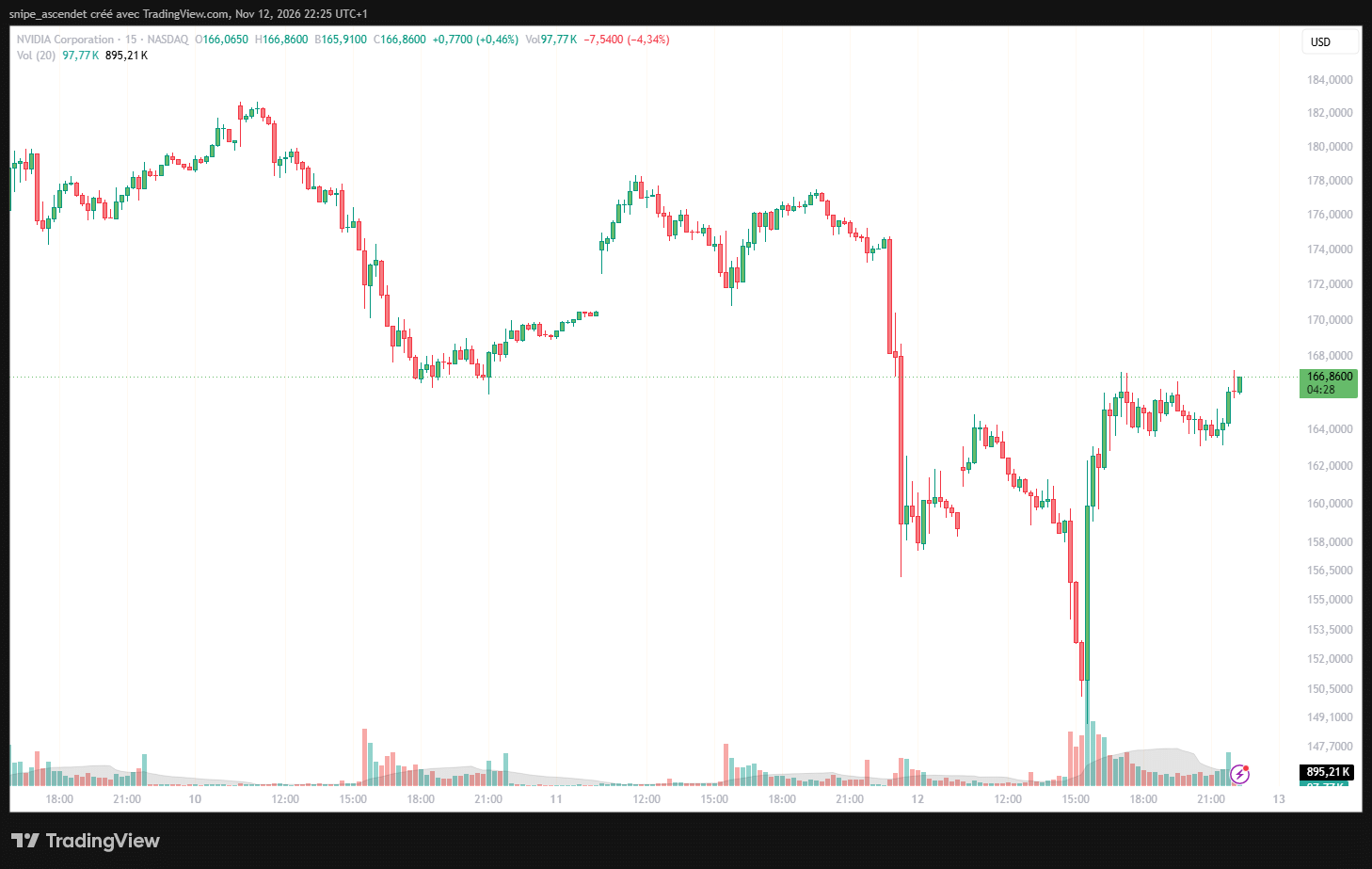
That recovery matters because investors distinguished the leadership disruption from Nvidia’s underlying business. Its position in AI accelerators, networking and data-center infrastructure remains significant, even as succession uncertainty introduces another risk.
The semiconductor market also showed signs of rotation rather than indiscriminate selling. Advanced Micro Devices (NASDAQ: AMD) gained 5.9%, while Broadcom (NASDAQ: AVGO) advanced 5.5%. Meanwhile, Nvidia customer CoreWeave fell 6.9%, according to AP’s market report.
For shareholders, the central questions now concern management continuity, product development, customer relationships and whether large AI infrastructure investments will continue as planned.
Nvidia’s next major financial event is its fiscal third-quarter 2027 earnings report on November 17, with a conference call scheduled for 5 p.m. ET. For additional context, DualFinances previously examined the Nvidia and Nebius AI stock selloff.
Treasury Yields Jump Above 5.1%, Increasing Pressure on Stocks
The bond market delivered another warning to equity investors. The 10-year Treasury yield climbed to 5.125%, while the more policy-sensitive 2-year yield reached 4.881%, according to TradingView. The respective session changes were approximately 12.5 and 13.5 basis points.
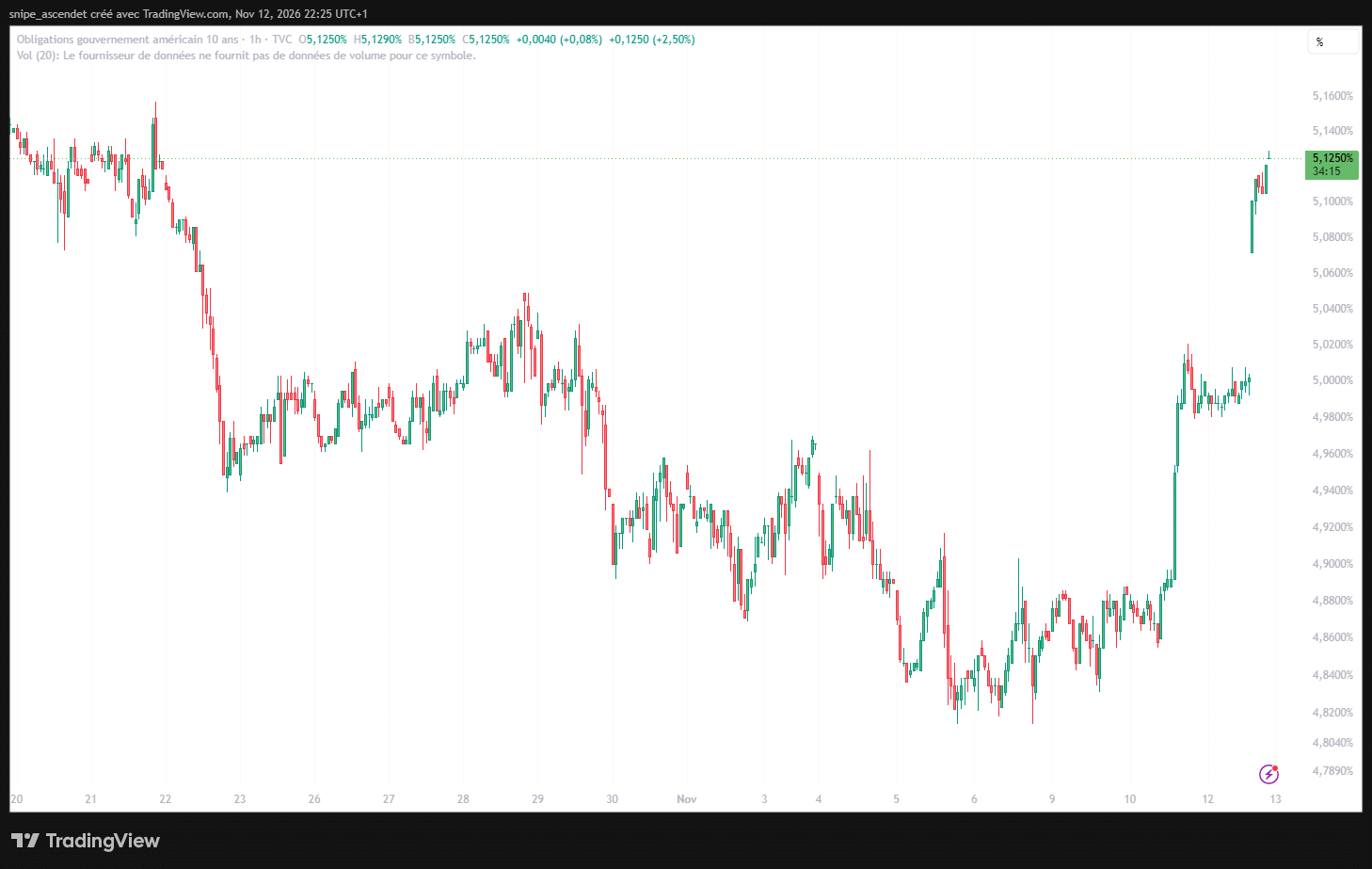
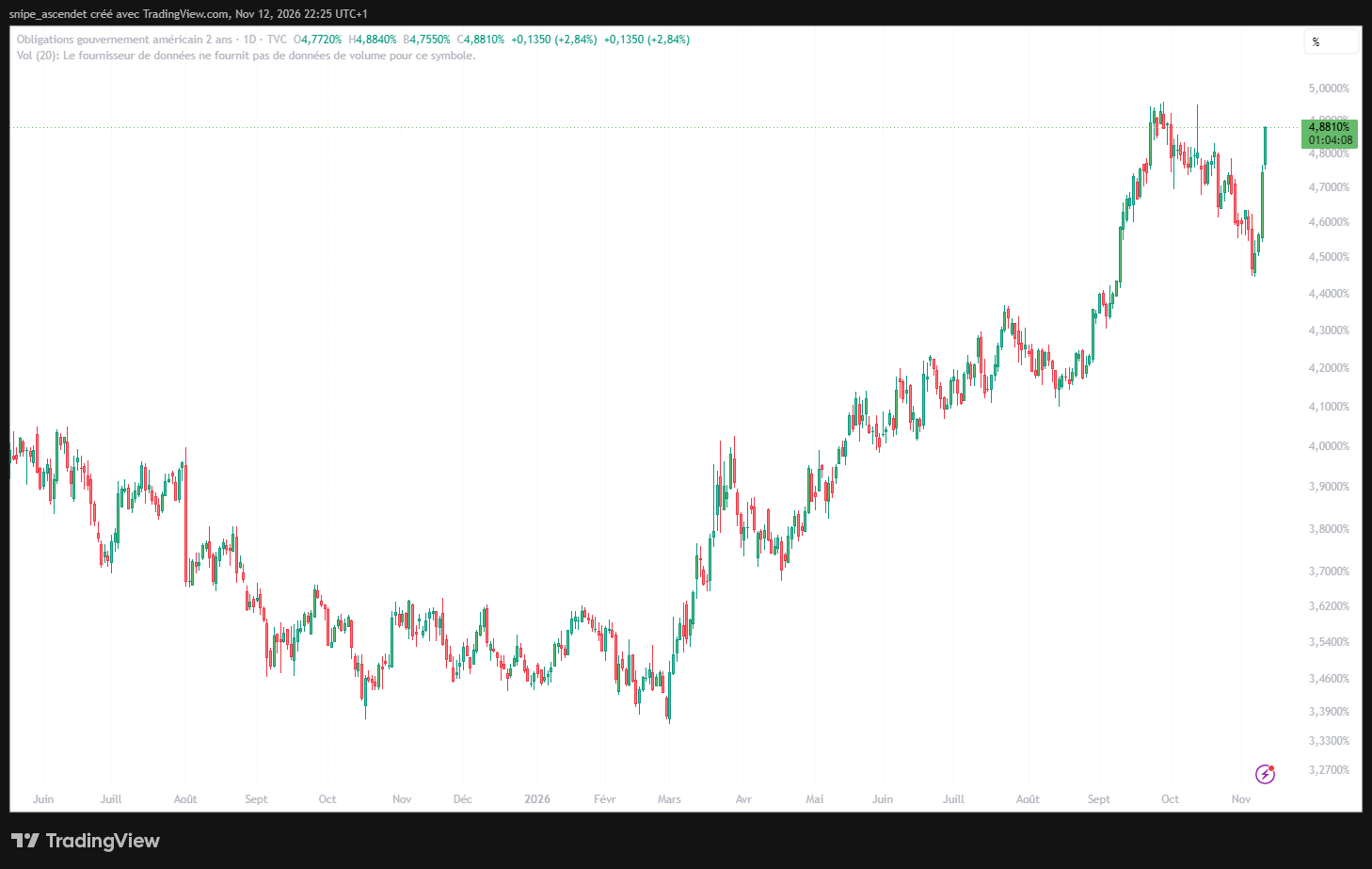
The move followed Tuesday’s hotter-than-expected inflation data. The Bureau of Labor Statistics reported that the October Consumer Price Index increased 0.4% month over month, with core CPI rising 0.3%.
Higher Treasury yields affect stock valuations through several channels. They increase financing costs for companies, make government bonds more competitive with equities and reduce the present value of expected future earnings. That last effect is particularly important for high-growth technology companies whose valuations depend heavily on profits projected several years ahead.
The pressure also extends to AI infrastructure businesses that finance data centers, electricity generation and specialized computing equipment with borrowed capital. Our earlier analysis of the U.S. inflation surprise and the Treasury yield surge explains the broader monetary-policy shift.
Oil Prices Rebound as Middle East Supply Risks Return
Oil moved sharply higher as investors reassessed the risk of supply disruptions in the Middle East. Reuters reported that Brent crude futures settled at $95.82 per barrel, up $3.06, or 3.3%. U.S. West Texas Intermediate futures finished at $88.74, a 2.6% increase. Separately, the Brent spot quote on TradingView reached $94.84, up 3.51%.
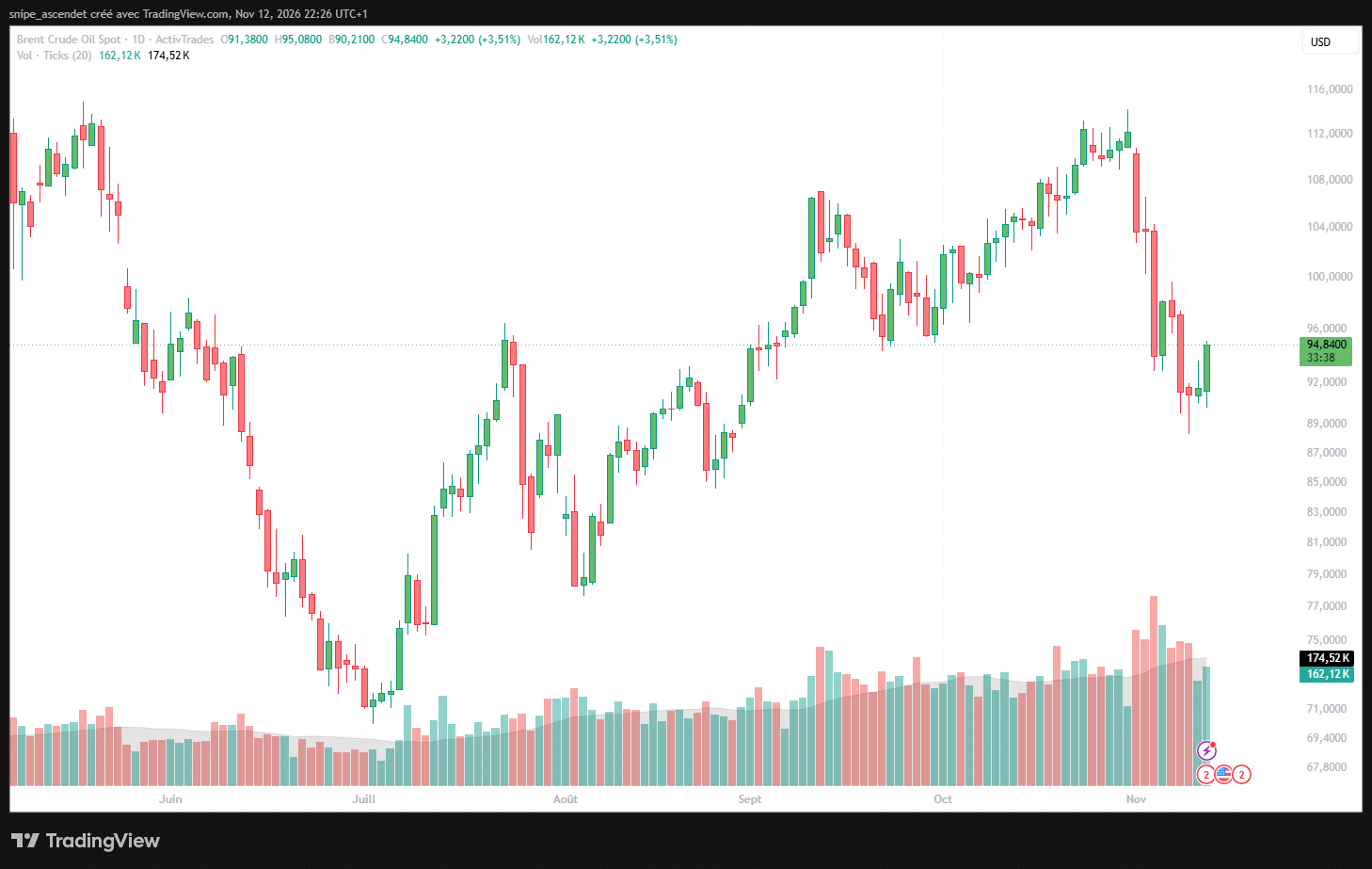
The rebound followed reports of attacks on Saudi energy infrastructure and continuing disruptions around the Strait of Hormuz. President Donald Trump’s statement that Washington no longer needed an agreement with Iran added to uncertainty surrounding the conflict.
Higher oil prices create a difficult combination for the Federal Reserve. They can raise gasoline, transportation and manufacturing costs while reducing consumers’ purchasing power.
Energy stocks benefited from Thursday’s move. ExxonMobil gained 1.8%, and Marathon Petroleum advanced 2.5%, helping offset weakness elsewhere in the S&P 500, according to Associated Press.
For investors, the immediate concern is whether an energy-driven inflation shock could keep interest rates elevated for longer.
The US Dollar Strengthens, Adding Another Headwind
The U.S. Dollar Index advanced 0.33% to 103.183 on Thursday, according to TradingView, extending its broader recent advance.
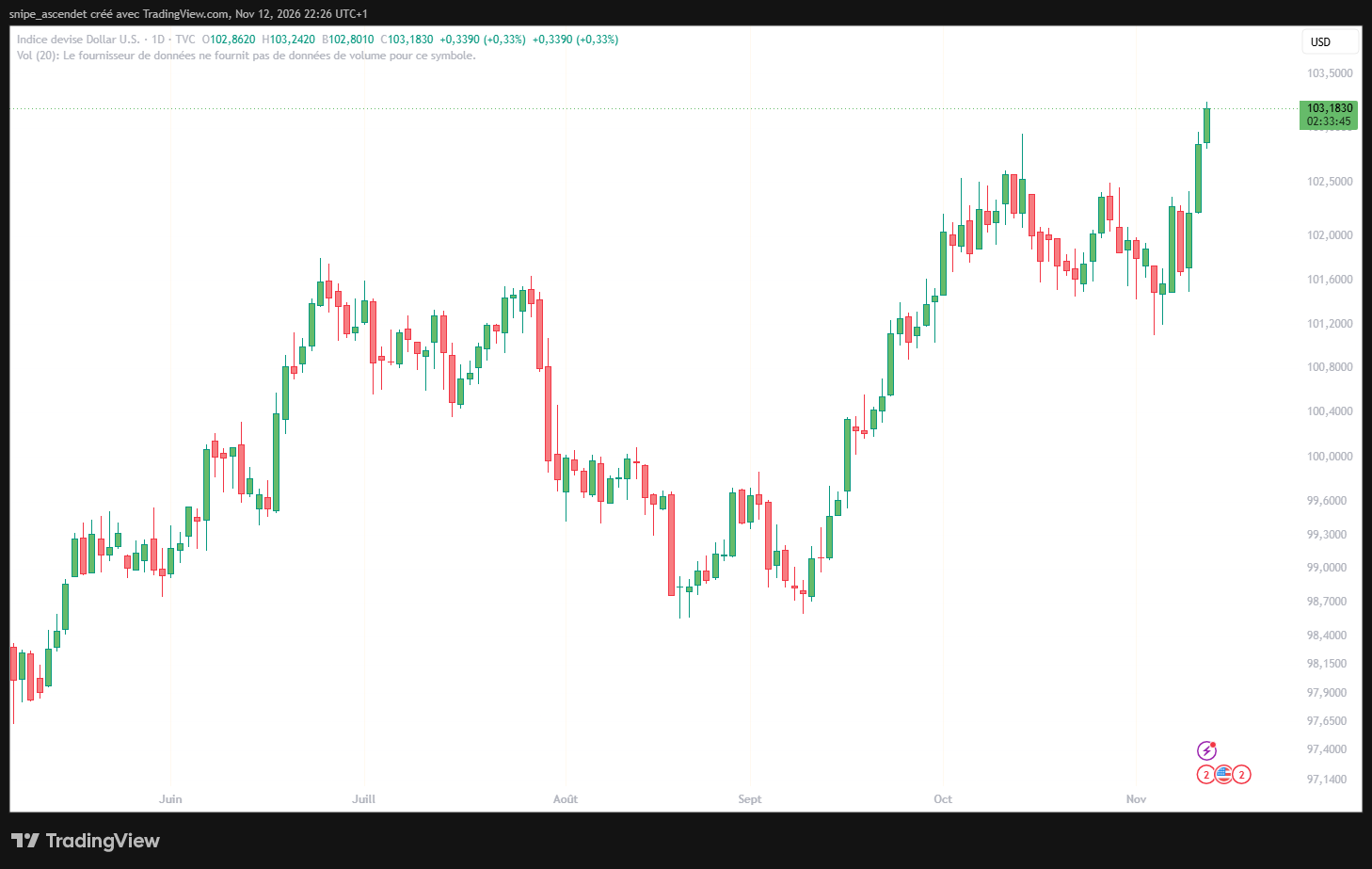
A stronger dollar can create additional pressure for American multinational companies because revenue earned in foreign currencies translates into fewer dollars, assuming other factors remain unchanged. Dollar strength can also tighten financial conditions internationally, especially for borrowers with dollar-denominated debt.
The combination of higher Treasury yields, a stronger dollar and rising energy prices presents a more restrictive backdrop for equities. Companies must demonstrate sufficient earnings growth and cash generation to absorb higher financing and operating costs.
Friday’s PPI Report Could Trigger Another Market Repricing
The next major test arrives Friday, November 13, at 8:30 a.m. ET, when the Bureau of Labor Statistics publishes October’s Producer Price Index.
The September PPI rose 1.3% month over month, reflecting substantial inflation pressure at the producer level. October’s report will help investors assess whether those pressures are continuing.
A hotter reading could push Treasury yields higher and increase expectations of additional Federal Reserve tightening. A softer reading could ease some of that pressure, particularly on technology and other rate-sensitive stocks.
Investors should pay attention not only to the headline monthly increase but also to core producer-price trends and the details of service-sector inflation.
The Federal Reserve’s next scheduled policy meeting takes place December 8–9, making upcoming inflation readings especially relevant to expectations for its next interest-rate decision.
What Investors Should Watch Next
Friday’s PPI report may determine whether Thursday’s bond selloff extends into another session. The 10-year yield above 5.1%, Nvidia’s stabilization following its leadership change and the direction of oil prices are three important signals for near-term market sentiment.
Investors should also monitor whether semiconductor gains broaden beyond Nvidia’s competitors and whether weaker economic sectors can withstand sustained borrowing costs. October existing-home sales fell 5.5% to their lowest annualized pace since August 2010, highlighting the pressure already visible in interest-rate-sensitive industries.
Bottom line
Wall Street limited its losses Thursday, but the underlying risks did not disappear. Nvidia’s rebound suggested that investors still see value in the AI industry, while higher Treasury yields, oil prices and the dollar reinforced concerns about inflation and financing costs.
Friday’s PPI report will be the next important test of whether equities can stabilize despite a more restrictive interest-rate environment.
Published November 12, 2026, 4:28 p.m. ET. For informational purposes only; not investment advice.